A prominent Republican senator has declared he will obstruct all future nominations to the Federal Reserve's board, following the dramatic news that the US Department of Justice has launched a criminal probe into the central bank's chair, Jerome Powell.
Political Standoff Over Fed Independence
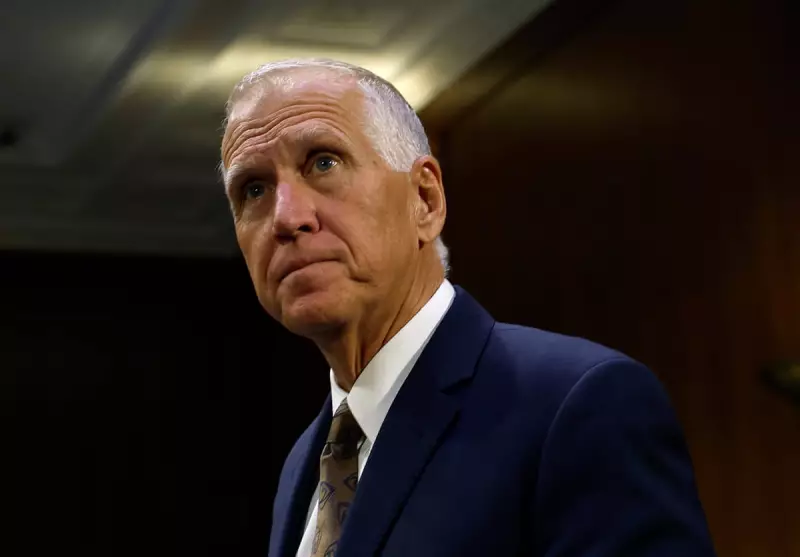
The pledge came from Senator Thom Tillis of North Carolina, a key member of the Senate Banking Committee which oversees Fed appointments. Tillis, who is retiring later this year, stated unequivocally on Sunday that he would oppose any nominee for the Federal Reserve, including the crucial upcoming chair vacancy, until the legal matter surrounding Powell is completely settled.
In a post on the social media platform X, Tillis framed the Justice Department's actions as a direct threat to the institution's autonomy. "If there were any remaining doubt whether advisers within the Trump Administration are actively pushing to end the independence of the Federal Reserve, there should now be none," he wrote, adding that the move now casts doubt on the independence of the Justice Department itself.

Subpoenas and Accusations of Political Pressure
The political firestorm ignited after the Justice Department subpoenaed the Federal Reserve on Friday. The investigation is reportedly rooted in testimony Powell gave to the Senate in June concerning the escalating costs of a renovation project at the Fed's headquarters in Washington.
Powell confirmed the subpoena on Sunday and issued a forceful response, alleging the probe is part of a broader pressure campaign linked to the administration's discontent with current interest rate policy. In a video released by the Fed, Powell asserted, "No one – certainly not the chair of the Federal Reserve – is above the law. But this unprecedented action should be seen in the broader context of the administration’s threats and ongoing pressure."
A Year-Long Campaign Over Interest Rates
The confrontation marks a new peak in tensions that have simmered since Donald Trump returned to office in January 2025. For over a year, Trump has publicly urged Powell to cut interest rates and has hinted at the possibility of removing him, though he has not taken that step. Powell's term as chair is set to expire in May, and Trump recently indicated to Politico that a successor's willingness to lower rates immediately would be a key criterion.
When questioned by NBC News on Sunday about the investigation, President Trump claimed no knowledge of it but criticised Powell's performance, stating, "I don’t know anything about it, but he’s certainly not very good at the Fed, and he’s not very good at building buildings." He denied the subpoena was related to interest rates, insisting the only pressure on Powell should come from the public due to rates being "far too high."
The Federal Reserve is designed to operate independently from the executive branch to insulate monetary policy from short-term political influence. Economists widely regard this independence as a cornerstone of economic stability and credibility. In his statement, Powell defended this principle, writing that "The threat of criminal charges is a consequence of the Federal Reserve setting interest rates based on our best assessment of what will serve the public, rather than following the preferences of the President."
The unfolding saga, set against the backdrop of the Dirksen Senate office building in Washington DC, presents a profound test for one of the world's most powerful financial institutions and raises serious questions about the separation of economic policy from political power.