Slovenia's Democratic Crossroads: Stability Versus Illiberal Shift
Across Slovenia's picturesque towns and regional roadways, a familiar political spectacle unfolds as campaign posters blanket lamp-posts, bus stops, and construction fences. This visual landscape signals the nation's imminent parliamentary elections scheduled for March 22nd, presenting voters with a fundamental choice about their country's democratic future.
The Current Government's Record
Remarkably, Slovenia's outgoing coalition government led by centre-left Prime Minister Robert Golob will complete a full term—an unusual achievement within the country's typically fragmented political system. Golob's Freedom Movement party achieved a stunning electoral debut in 2022, securing 41 of the 90 parliamentary seats, the strongest single-party performance since Slovenia's independence.
This landslide victory enabled Golob to form a coalition with the Social Democrats and left-wing Levica party, creating a government with 53 parliamentary seats and providing rare political stability. Despite limited governmental experience that occasionally led to visible improvisation, the administration delivered tangible accomplishments including rapid financial assistance following devastating 2023 floods, protective measures during the energy crisis, minimum wage increases, enhanced labor protections for cultural workers, and implementation of a long-delayed long-term care system.

"Many progressive policy innovations originated from the smallest coalition partner, Levica, which implemented measures targeting socially vulnerable groups despite controlling only three of twenty ministries," notes political observers.
The Illiberal Alternative
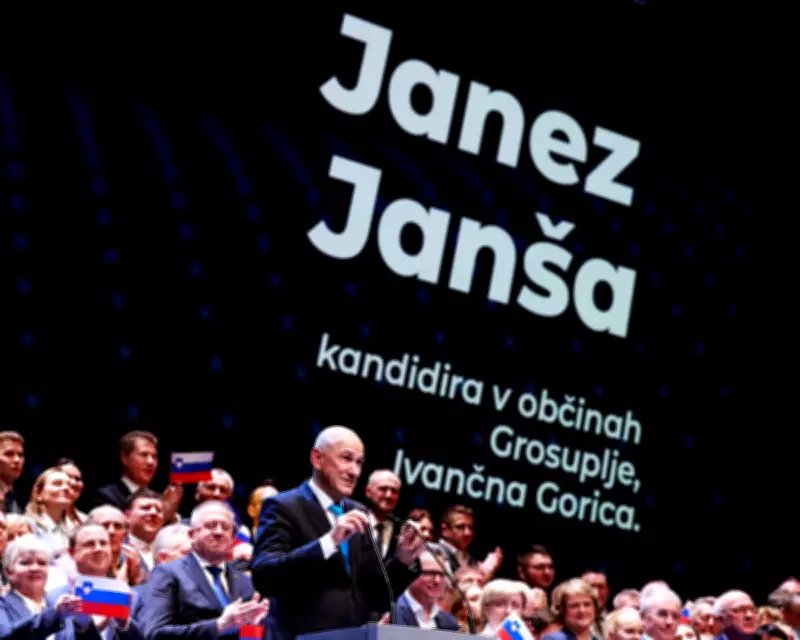
Despite these achievements, public support for Golob's Freedom Movement has gradually eroded, while the hard-right Slovenian Democratic Party consistently leads opinion polls by several percentage points. Unlike insurgent far-right movements elsewhere in Europe, the SDS represents the established pillar of Slovenia's political right, with veteran leader Janez Janša having served three terms as prime minister since 2000.
Janša's political evolution reveals a concerning trajectory toward illiberalism. His initial government in the mid-2000s operated as conventional conservatism, but subsequent administrations grew increasingly polarizing. His 2020-2022 tenure during the COVID-19 pandemic marked a pronounced illiberal turn characterized by suspended funding for the Slovenian Press Agency, sustained attacks against public broadcaster RTV Slovenija, attempts to reshape state institution supervisory boards, and open confrontations with journalists on social media platforms.
"The European Parliament issued formal warnings about Janša's attempts to hollow out institutional frameworks and undermine rule of law principles," recalls European affairs analysts.
Global Context and Domestic Appeal
The international political environment has transformed significantly since Janša's previous administration. The normalization of media hostility and institutional pressure exemplified by Donald Trump's presidency has provided practical templates for politicians seeking polarization and delegitimization of opponents. Janša, an avowed admirer of Trump's political style, operates effectively within this new paradigm.
Recent declarations by Janša that he would prefer governing with an outright majority—arguing that coalition-building wastes time better spent implementing policy—signal more than parliamentary impatience. In today's global climate, such statements indicate a desire to operate without the friction of democratic compromise.
Conversations with potential SDS voters reveal recurring themes: "At least he gets things done" and "We need order." This impatience with coalition bargaining and perception of liberal governments as procedurally weak creates fertile ground for tolerance toward concentrated executive power.
Potential Policy Directions
A new SDS-led government would likely implement decisive changes in several key areas:

- Migration policy emphasizing tougher border controls and securitized approaches framing mobility primarily as threat
- Deregulation initiatives promoting "business-friendly" environments
- Media and judiciary reforms potentially enabling tighter executive influence under language of "depoliticization"
Political scientists caution that illiberalism rarely violates democratic procedures outright during initial phases. Instead, it advances incrementally within legal frameworks, gradually reshaping institutions from within while maintaining democratic appearances.
Structural Choice Ahead
Slovenia's resilient civil society and embedded EU legal frameworks provide safeguards against democratic backsliding, but the current election represents more than routine democratic maintenance. The nation faces a structural choice between flawed pluralism and governance models where democratic norms can erode rapidly.
"The difference from Janša's previous administrations lies in the consolidated methods, narratives, and international alliances of illiberal politics," explains European democracy expert Ana Schnabl. "There now exists precedent, validation, and mutual reinforcement that didn't exist previously."
As Slovenians prepare to vote, they confront not merely a choice between center-left and right alternatives, but between preserving liberal democratic foundations or embracing governance approaches that systematically undermine them through gradual, legally-sanctioned erosion.