Starmer to Condemn Reform UK and Greens as 'Soft on Russia' in Munich Security Speech
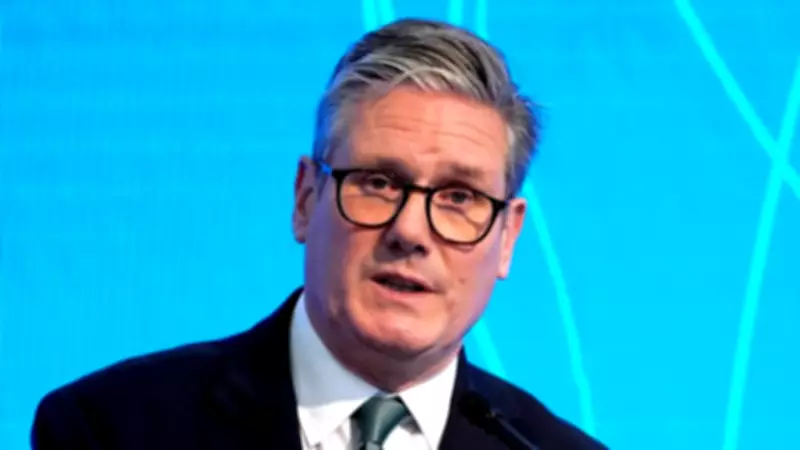
Prime Minister Sir Keir Starmer is set to deliver a scathing critique of political parties like Reform UK and the Greens, accusing them of being 'soft on Russia' and 'weak on NATO'. His remarks will be presented in a keynote address to global leaders at the Munich Security Summit on Saturday, emphasizing the urgent need for European solidarity against Russian aggression as the United States reduces its focus on the continent.
Call for European Unity Amid US Withdrawal
In his speech, Starmer will argue that the United Kingdom has moved beyond the divisive era of Brexit, declaring, 'We are not the Britain of the Brexit years anymore.' He will stress that British security is inextricably linked to European security, warning that turning inward would lead to surrender rather than control. The prime minister's comments come at a critical time, with Russia's full-scale war in Ukraine approaching its fifth year and the US shifting military assets away from Europe under the leadership of Donald Trump.
Defence Spending Timeline Under Scrutiny
Despite the strong rhetoric, Starmer is not expected to announce any acceleration of the government's pledge to increase core defence spending from just over 2.3% to 3.5% of GDP by 2035. Military officials have privately expressed concerns that this near-decade-long timeline, while agreed upon by all NATO allies, is too slow and unambitious given the escalating threats from Russia. They argue that Europe must take on a greater burden of its own defence as US priorities realign.

Attack on Political Extremes
Starmer will highlight the dangers posed by what he describes as the 'peddlers of easy answers on the extreme left and the extreme right.' According to pre-released excerpts, he will state, 'It's striking that the different ends of the spectrum share so much. Soft on Russia and weak on NATO - if not outright opposed.' He warns that these factions offer a future of division and capitulation, threatening to extinguish the lights across Europe once again.
Reform UK and Conservative Backlash
A spokesperson for Reform UK responded fiercely, labeling Starmer as a 'weak prime minister on the verge of being hounded out of office by his own party.' They criticized his failure to secure immediate funding for defence increases, asserting that Reform UK prioritizes rebuilding armed forces, standing up to China and Russia, and strengthening bilateral relationships. Meanwhile, Dame Priti Patel, the shadow foreign secretary, accused Starmer of 'rolling the pitch for greater EU integration and less control for the UK,' arguing that Britain should bridge the gap between the US and Europe without offering Europe a blank cheque.
Strengthening European Military Ties
The Starmer government is actively seeking to forge closer relations with European Union allies in military procurement, including missiles, warplanes, and drones. This move aims to repair ties strained by the UK's departure from the EU a decade ago. Starmer is expected to advocate for a vision of European security that promotes greater autonomy without heralding US withdrawal, emphasizing the need for enhanced burden-sharing within the transatlantic alliance.
Global Gathering at Munich Security Conference
The Munich Security Conference, a premier annual event on European security, will host key figures such as US Secretary of State Marco Rubio, leaders from Germany and France, and delegates worldwide, including China's foreign minister. Ukrainian President Volodymyr Zelenskyy is also in attendance, scheduled to deliver his own speech amid ongoing US-led efforts to broker a peace deal between Kyiv and Moscow.