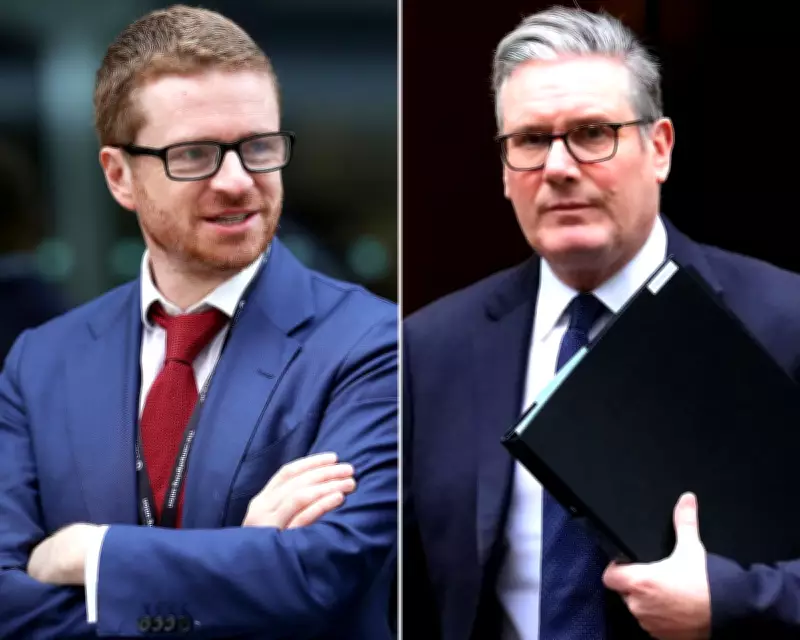
Starmer's Leadership Under Fire Following Key Adviser's Departure
Prime Minister Keir Starmer is engaged in a fierce struggle to reassert his authority over the Labour Party after accepting the resignation of his closest political adviser, Morgan McSweeney. The departure comes amid mounting anger within parliamentary ranks over Starmer's controversial decision to appoint Peter Mandelson as US ambassador, despite Mandelson's known associations with convicted sex offender Jeffrey Epstein.
The Resignation That Shook Westminster
After days of escalating pressure, McSweeney announced his resignation on Sunday, stating he took "full responsibility" for advising Starmer to proceed with Mandelson's diplomatic posting. In his resignation statement, McSweeney acknowledged that the appointment had "damaged our party, our country and trust in politics itself." He emphasised that "responsibility must be owned when it matters most, not just when it is most convenient" and described resignation as "the only honourable course."
Political Fallout and Leadership Crisis
The loss of McSweeney represents a significant blow to Starmer's administration. As the architect of Starmer's rise to power and the Labour Party's election strategy, McSweeney had become one of the most influential—and divisive—figures in recent British politics. Senior Labour sources now warn that the prime minister has been left dangerously exposed as he faces crucial policy challenges and upcoming by-elections that could determine his political future.

A source close to Downing Street revealed the severity of the situation: "Keir has just lost his firewall, on Mandelson and a whole load of other issues. Where does he think the anger gets directed next?" This sentiment was echoed by a Labour MP who commented: "The buck ultimately stops with the PM. All this has done has bought him a little more time but he's mortally wounded and it's not if, it's when he goes."
Mounting Pressure and Document Release
The political crisis is expected to intensify with the imminent release of hundreds of thousands of documents, including private WhatsApp messages and emails exchanged between Mandelson, Number 10 officials, and government ministers during his Washington tenure. According to well-placed sources, these documents will reveal that the Cabinet Office's propriety and ethics team had explicitly warned about the serious reputational risks associated with appointing Mandelson given his publicly documented connections to Epstein.
Internal Criticism and Divided Loyalties
Within Labour ranks, reactions to McSweeney's departure have been mixed. Some allies hope his resignation will help quell growing discontent among backbenchers and grassroots members who had become increasingly uncomfortable with his factional approach and the government's direction on key issues including immigration and welfare reforms.
However, political opponents and senior Labour figures have accused Starmer of allowing McSweeney to "carry the can" for a decision that ultimately rested with the prime minister's own judgment. McSweeney's allies have pushed back against this narrative, with one stating: "He gave his advice, but that's all it was. Keir made the decision."
Senior Voices Express Concern
The weekend saw a series of prominent Labour figures publicly criticise the Number 10 operation. Former Prime Minister Gordon Brown acknowledged Starmer's integrity but noted he had been "slow to do the right things." David Blunkett described the situation as "dire" for Starmer while warning against internal briefing wars, remarking: "When people see a party acting like ferrets in a sack they draw their conclusions."
Perhaps most damningly, a former New Labour cabinet minister observed: "Although there may be some satisfaction at Morgan's resignation, my concern is the problem is Keir, not his advisers."

Immediate Aftermath and Future Implications
Downing Street moved quickly to appoint Jill Cuthbertson and Vidhya Alakeson, McSweeney's deputies, as acting chiefs of staff with immediate effect. Starmer expressed his gratitude to McSweeney, stating he owed him a "debt of gratitude" for turning the party around after one of its worst defeats and playing a central role in their election campaign.
McSweeney becomes the second Downing Street chief of staff to resign, following Sue Gray's departure in 2024, in what represents the latest in a series of high-profile exits from Number 10 in recent months. Conservative leader Kemi Badenoch seized on the development, stating: "It's about time. But once again with this PM it's somebody else's fault... Keir Starmer has to take responsibility for his own terrible decisions. But he never does."
As Starmer navigates this profound political crisis, the fundamental question remains whether McSweeney's departure will stabilise his leadership or merely mark the beginning of a more serious challenge to his authority within a divided Labour Party.