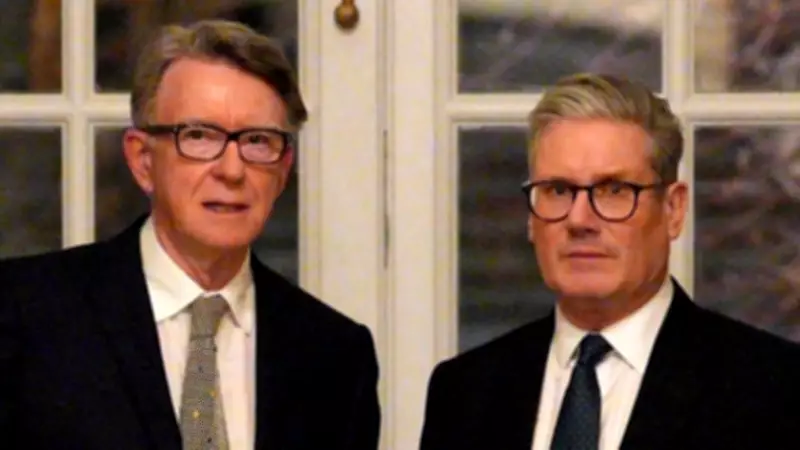
Prime Minister Sir Keir Starmer finds himself in a perilous political position following a dramatic parliamentary rebellion by his own Labour MPs, which forced a significant government climbdown over the release of sensitive files concerning Lord Peter Mandelson.
Commons Drama Forces Government U-Turn
The government had initially signalled its intention to release most documents relating to Lord Mandelson's appointment as UK ambassador to the United States, following revelations about his relationship with convicted paedophile Jeffrey Epstein. However, Sir Keir's original plan involved allowing his top civil servant to determine whether any documents should remain secret on national security grounds or to prevent prejudice to international relations.
Labour Backbench Rebellion
During a tense Commons session on Wednesday, senior Labour backbenchers including former deputy prime minister Angela Rayner intervened decisively, compelling the prime minister into a rapid reversal of his position. Conservative leader Kemi Badenoch seized the opportunity to accuse Sir Keir of attempting a "cover-up," further intensifying the political pressure.

MPs eventually backed a compromise arrangement that will see parliament's independent Intelligence and Security Committee determine the fate of the most sensitive files. This development leaves Sir Keir Starmer facing the most dangerous moment of his premiership to date, with Sky News political editor Beth Rigby describing the parliamentary atmosphere as a "tinderbox."
Police Investigation Complicates Release
Despite the parliamentary drama, it remains uncertain when any documents will actually reach parliament or be published by the government. The Metropolitan Police has advised that releasing specific documents could undermine their ongoing investigation into Lord Mandelson for alleged misconduct in public office.
The force stated clearly: "We therefore asked them not to release certain documents at this time." This police intervention has created significant frustration within Number 10, where officials had hoped the file release would support the prime minister's assertion that Lord Mandelson repeatedly misled him about the true nature of his relationship with Epstein.
Prime Minister's Public Regret
Speaking during Prime Minister's Questions, Sir Keir Starmer acknowledged his awareness of Lord Mandelson's connections to Epstein when confirming his appointment as US ambassador early last year. While insisting that proper due diligence had been conducted, the prime minister admitted: "What was not known was the depth, the sheer depth, and the extent of the relationship."
Sir Keir told MPs: "He lied about that to everyone for years, and new information was published in September showing the relationship was materially different from what we'd been led to believe. When the new information came to light, I sacked him." The prime minister added with evident regret: "I regret appointing him. If I knew then what I know now, he would never have been anywhere near government."
Scandal Origins and Developments
The controversy reignited last Friday when the US Department of Justice published over three million documents from the Epstein files. These included emails suggesting Lord Mandelson shared sensitive internal government information with the convicted paedophile financier during his service in Gordon Brown's administration.
This disclosure prompted the Metropolitan Police to launch their investigation into alleged misconduct in public office, following referrals from both the Cabinet Office and former Prime Minister Gordon Brown. Lord Mandelson subsequently resigned his Labour Party membership on Sunday night, denying any record or recollection of the payments mentioned in the documents but stating he wished to avoid "further embarrassment to the Labour Party."
Mandelson's Response and Context
In a statement addressing his past associations, Lord Mandelson expressed regret about his ties to Epstein, stating: "I was wrong to believe Epstein following his conviction, and to continue my association with him afterwards. I apologise unequivocally for doing so to the women and girls who suffered."

In an interview with The Times published on Monday, he referred to "a handful of misguided historical emails, which I deeply regret sending," and described Epstein as "muck that you can't get off your shoe." It's important to note that being named in the Epstein files does not automatically indicate wrongdoing, though the political consequences have proven substantial.
The combination of police investigation, parliamentary rebellion, and ongoing media scrutiny has created what political observers describe as the most serious crisis of Sir Keir Starmer's leadership, with the prime minister's authority significantly undermined by events he initially sought to control.