Starmer's Diplomatic Tightrope on Iran Amid Trump's Strikes
Prime Minister Keir Starmer is navigating a characteristically cautious diplomatic path in response to the recent attacks on Iran by the United States and Israel. The Labour leader finds himself under significant pressure from both ends of the political spectrum, with the ghost of the Iraq war continuing to haunt his party's approach to military intervention in the Middle East.
Balancing Act Between Political Pressures
Starmer faces conflicting demands from across the British political landscape. Those on the left are urging him to condemn US President Donald Trump's actions as "illegal" and unjustified, while voices on the right expect open support for the American-led operations. This delicate balancing act comes as British military planes are now actively defending UK interests in the region, though Starmer has explicitly clarified that such defensive activities are "in line with international law" and that the UK was not involved in the American and Israeli attacks.
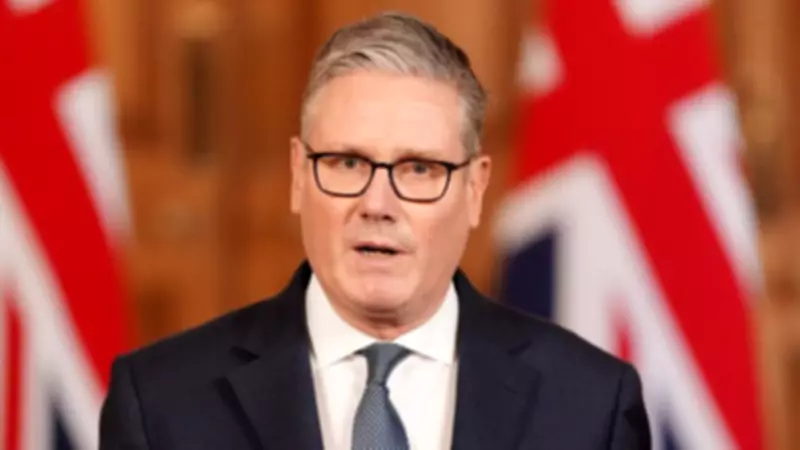
The Prime Minister's televised statement contained vehement condemnation of what he described as the "utterly abhorrent" Iranian regime, which he accused of murdering thousands of its own people, brutally crushing dissent, and posing a direct threat to the United Kingdom. While he expressed no direct backing for Trump's decision to strike Iran, Starmer made plain his agreement with the underlying rationale behind the action.

The Iraq War Legacy and Legal Considerations
Military intervention in the Middle East remains particularly sensitive for a Labour party still grappling with the legacy of the Iraq war. As a former human rights lawyer, Starmer brings a nuanced understanding of the legal and moral questions raised by unilateral attacks. His administration has reportedly previously blocked the United States from using UK bases over concerns about breaching international law, despite Trump's clear desire to utilize British facilities.
Starmer concluded his remarks by urging Iran to "give up their weapons programmes and cease the appalling violence and repression", though he notably stopped short of echoing President Trump's calls for regime change. The overall impression conveyed was of a UK government that applauds the ends while remaining cautious about the means employed.
Maintaining the Special Relationship
Not for the first time, the Prime Minister finds himself balancing on a diplomatic tightrope to maintain Britain's close relationship with the White House. Starmer has consistently placed the so-called special relationship at the heart of his foreign policy approach, and appears unwilling to risk further antagonizing Donald Trump beyond recent refusals regarding British military bases and the signing of the Chagos deal with Mauritius.
The Conservative opposition has accused Starmer of "sitting on the fence" regarding the Iran situation. However, as a Labour leader acutely conscious of the unforeseen consequences of military intervention worldwide and the chaotic uncertainty that violent transfers of power can engender, Starmer seems to have determined that maintaining a measured position represents the safest diplomatic option for now.
Recent developments include a phone call between Starmer and Trump, alongside conversations with leaders from Turkey and Kuwait. While details remain sketchy, Downing Street sources indicate they "discussed the situation in the Middle East" and the defensive operations being carried out by UK forces in the region. The brief conversation, described without particular cordiality, nevertheless represents a diplomatic connection that Number 10 will likely view with some relief given the complex geopolitical landscape.