Starmer's Liaison Committee Appearance: A Study in Controlled Diplomacy
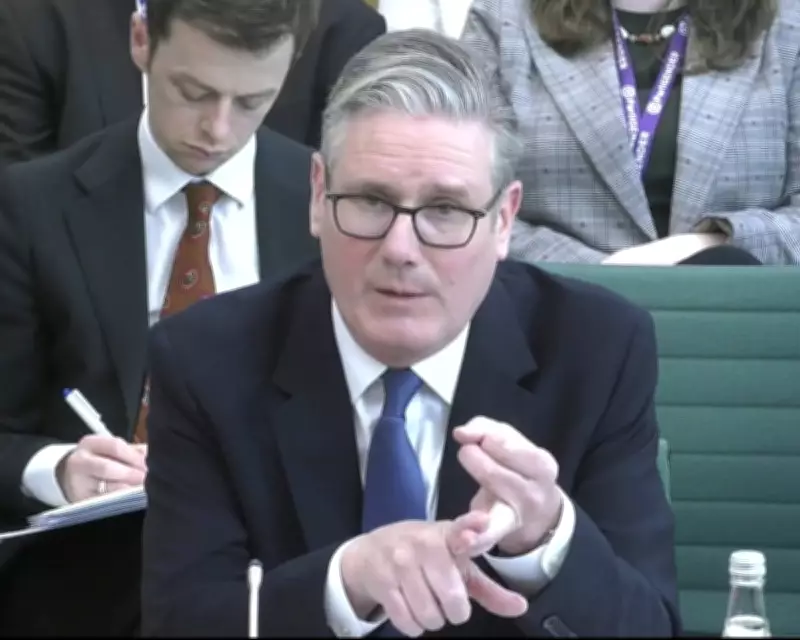
In a session that was largely soporific, just as he had intended, Keir Starmer appeared before the liaison committee, the supergroup of select committee chairs. Every prime minister hopes to emerge from such meetings having said nothing that makes headlines, and with Iran taking centre stage, Starmer played a blinder. His performance was a masterclass in avoiding controversy while navigating a volatile international crisis.
A Week of Contrasts in Political Posturing
What a difference a week makes. At last week's prime minister's questions, Starmer attempted to downplay his knowledge, feigning a poor memory about appointments like Peter Mandelson. Fast forward to Monday, and he was desperate to convince everyone that he had the inside track on Iran. He insisted he was in control, though his assertions were not altogether convincing.
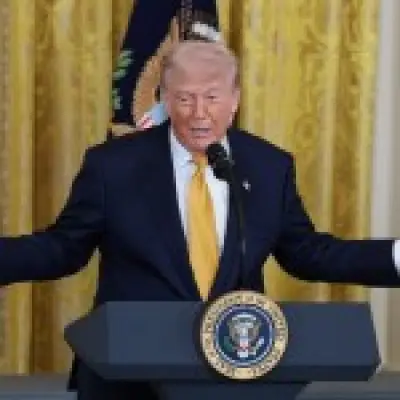
It's hard not to feel some sympathy for Starmer. The prime minister is expected to know more than the public, and most of the time, they do. State secrets are their lifeblood. However, the veil occasionally slips. Just days after threatening to obliterate Tehran's power plants, Donald Trump announced on Truth Social that he would delay the bombardment for five days due to constructive talks with Iran. No one, not even Starmer, knows what to think. Is this another example of Trump backing down, or will he change his mind and bomb Iran anyway? The unpredictability of the US president, described as an amoral narcissist, leaves everyone in limbo.

Starmer's Laser-Focused De-escalation Efforts
Early in the committee session, Starmer tried to reassure MPs that he had the bases covered, claiming prior knowledge of US-Iran discussions. But did he? In a war where lead countries have acted in bad faith, Trump's word might not mean much, and Iranian denials are equally unreliable. A little more reality crept in when Starmer admitted he had no idea how long the conflict could last. Without explicitly criticising Trump, he implied that the war's duration was in the US president's hands. It could end by the week's close or drag on for months. Starmer emphasised that he was laser-focused on de-escalating the situation, a phrase he repeated often.
The committee, composed almost exclusively of Labour MPs, chose not to push him too hard on uncontrollable factors. Instead, they focused on Britain's response, leading to a largely uneventful 90 minutes. Defence committee chair Tan Singh Dhesi briefly livened things up by questioning the UK's lack of warships in the area at the war's start. Starmer defended this, noting pre-deployed military hardware in the Gulf and the rapid readiness of HMS Dragon. Dhesi also raised concerns about Iranian missiles capable of reaching London, but Starmer downplayed the threat, suggesting those hit wouldn't know it, so it was best not to worry.
Spiky Exchanges and Political Point-Scoring
The spikiest exchanges came with the lone Tory, Bernard Jenkin, who questioned the defence investment plan. Starmer snapped back, blaming Conservative underfunding of the armed forces over 12 years. Jenkin, in no mood for dialogue, argued for a more aggressive stance, lamenting that if he were in charge, he would have built frigates and reopened oilfields. His frustration highlighted the political tensions simmering beneath the surface.
As the room grew stifling hot, much of the proceedings passed without incident. Reports were promised in due time, and no one asked about Mandelson or the king's state visit. Starmer outlined contingency plans for energy shortages, stated the war was unlawful for Britain but a US decision on legality, and affirmed Britain would not harbour war criminals. The session ended with committee chair Meg Hillier sympathising with Starmer for dealing with a volatile US president, code for madness. Starmer puffed up his chest, vowing to protect UK interests and never surrender, a moment that seemed to stir emotion in Jenkin.
In summary, Starmer's liaison committee jaunt was a calculated effort to avoid headlines, succeeding in its soporific aim while grappling with the complexities of the Iran crisis and Trump's unpredictability.