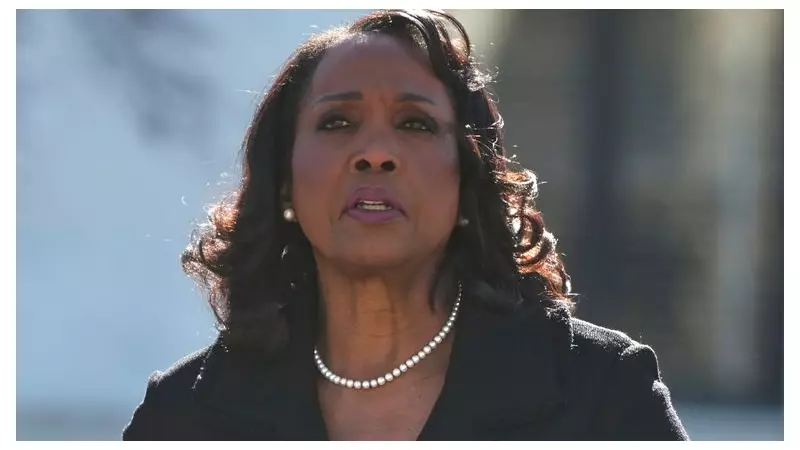
In a significant development for American economic governance, the US Supreme Court has indicated substantial support for maintaining Federal Reserve Board member Lisa Cook in her position, despite efforts by the Donald Trump administration to remove her from office.
Judicial Scepticism Toward Presidential Power
During Wednesday's hearing, six of the nine Supreme Court justices expressed reservations about the White House's attempt to dismiss Ms Cook from her role as a Federal Reserve governor. This represents a notable setback for President Trump, who has been seeking to exert greater influence over the nation's central bank.
The Allegations and Their Context
The administration moved last year to terminate Ms Cook's appointment, citing allegations of mortgage fraud. However, these claims have been vehemently denied by the Federal Reserve governor and have not resulted in any criminal charges being brought against her.

Financial markets and political observers have widely interpreted this move as part of a broader presidential effort to pressure the Federal Reserve into implementing more aggressive interest rate cuts. Such actions would contravene the central bank's established mandate for political independence.
Preserving Institutional Independence
Justice Brett Kavanaugh, one of three Trump appointees on the Supreme Court, articulated a crucial concern during the proceedings. He warned that allowing Ms Cook's removal to proceed would "weaken, if not shatter, the independence of the Federal Reserve."
This judicial perspective aligns with the institution's 112-year history, during which no sitting president has successfully fired a Federal Reserve governor. The central bank was deliberately structured to maintain independence from day-to-day political pressures.
Broader Implications for Monetary Policy
The Supreme Court's deliberations occur against a complex economic backdrop. The Federal Reserve implemented three interest rate reductions during 2025, balancing concerns about potential employment declines against inflationary pressures stemming from Trump administration trade policies.
President Trump has publicly advocated for accelerated rate cuts to stimulate economic growth. However, economists and financial markets remain cautious, noting that already robust economic expansion might limit the scope for further monetary easing this year.
Leadership Transitions and Political Dynamics
The case unfolds alongside significant leadership changes at the Federal Reserve. Current Chair Jay Powell is scheduled to conclude his second term in May, creating a vacancy that President Trump would typically nominate a successor to fill.
However, this process faces potential complications, with reports indicating resistance among Senate Republicans who would need to confirm any presidential nomination. This political dynamic adds another layer of complexity to the administration's relationship with the central bank.
Legal Pathways and Institutional Commitment
Following the Supreme Court arguments, Ms Cook reaffirmed her dedication to the Federal Reserve's foundational principles. She stated, "For as long as I serve at the Federal Reserve, I will uphold the principle of political independence in service to the American people."
The justices now face several options regarding the administration's emergency appeal. They could deny the request to dismiss Ms Cook, allowing her legal challenge to proceed through lower courts, or they might issue a more definitive ruling that could establish important precedents regarding presidential authority over independent agencies.
This case represents a critical juncture in the ongoing tension between presidential power and institutional independence within America's economic governance framework.