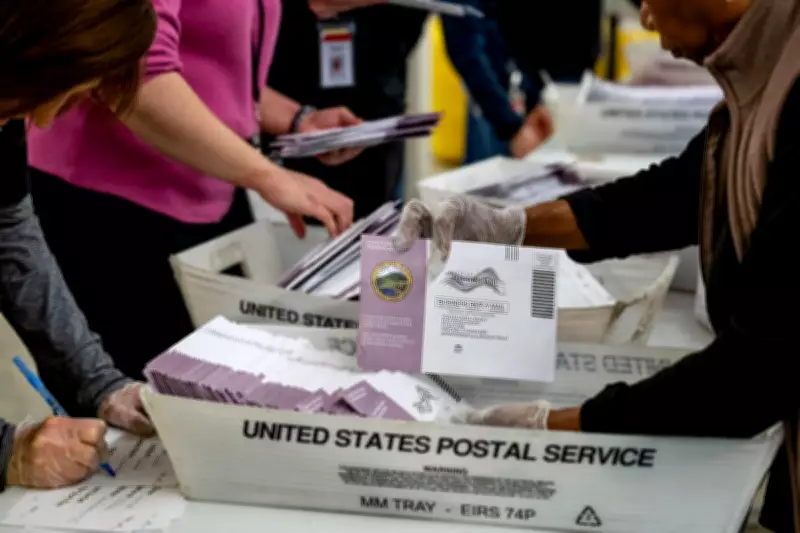
The US Supreme Court signaled on Monday a potential shift in how mail-in ballots are processed, with justices leaning toward restricting the counting of ballots that arrive after election day. This development could reshape election laws in more than a dozen states as the midterm elections approach, raising significant questions about voting access and procedural fairness.
Case Background and Legal Challenge
At the heart of the debate is Watson v Republican National Committee, a case challenging a Mississippi state law enacted in 2020 during the Covid-19 pandemic. Mississippi permits mailed ballots to be counted if they arrive within five business days after election day, provided they are postmarked by that date. The Republican National Committee argues this grace period violates federal statutes that designate the first Tuesday of November as election day, while Mississippi defends its authority to establish election procedures.
Broader Implications for State Laws
This case extends beyond Mississippi, affecting fourteen states, Washington DC, and three US territories with similar provisions. Some of these jurisdictions allow longer grace periods and do not require postmarks, making the court's decision pivotal for nationwide election administration. During oral arguments, conservative justices probed the limits of post-election ballot counting, questioning whether Congress intended to prohibit late arrivals given evolving election practices.

Judicial Perspectives and Arguments
Conservative justices, including Samuel Alito, expressed concerns about election integrity, citing fears that late-counted ballots could undermine public confidence by altering initial results. They also explored hypothetical scenarios, such as voters recalling ballots, though Mississippi's solicitor general, Scott G Stewart, countered that no historical examples exist. Stewart emphasized that states have flexibility in election management, as long as voters make their choices by election day.
In contrast, liberal justices like Elena Kagan offered more supportive inquiries, highlighting federal laws like the Uniformed and Overseas Citizens Absentee Voting Act that acknowledge grace periods. They suggested the challenge might inadvertently target early voting, a widespread practice. Kagan noted the plaintiffs' stance implies both casting and receiving votes must occur on election day, a standard that could disrupt established voting methods.
Real-World Voting Processes
Beyond late arrivals, many states continue counting mailed ballots after polls close due to signature verification and curing processes. This reality underscores the complexity of election administration, where timely results must balance with accuracy and inclusivity. The RNC, which lost in district court but won on appeal, frames the issue as a matter of clarity, arguing that ballots received after election day cause confusion and weaken electoral trust.
Stakeholder Positions and Political Context
Voting rights advocates, military groups, and overseas voter organizations have filed briefs supporting Mississippi, warning that eliminating grace periods could disenfranchise those facing unique voting barriers. They argue that such provisions are essential for ensuring all citizens can participate, especially in contexts like military service or international residency.
Politically, Republicans have grappled with mail voting, with figures like Donald Trump advocating for its abolition despite high usage among GOP voters. Restricting grace periods might inadvertently harm Republican candidates, highlighting the party's internal conflicts. Meanwhile, Trump's broader efforts to assert control over elections, including executive orders and voter ID bills, face legal hurdles and ongoing debate.
Conclusion and Future Outlook
As the Supreme Court deliberates, its ruling will not only affect Mississippi but also set a precedent for election laws across the United States. The outcome could influence voter turnout, election security, and the balance between state autonomy and federal oversight. With midterms looming, this case represents a critical juncture in the ongoing struggle to define democratic processes in an era of heightened political polarization.