Silence and Sorrow as Australia Pays Tribute to Bondi Attack Victims
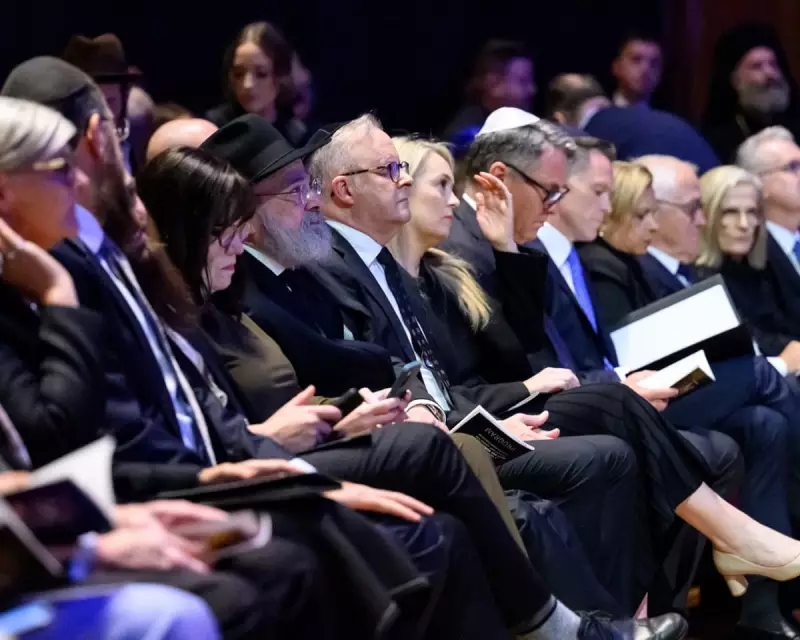
At precisely 7.01pm on Thursday evening, a profound hush fell over the 1,500 mourners gathered inside the Sydney Opera House. Television broadcasts paused, and gatherings across the nation grew still, as Australia observed a minute of silence on a national day of mourning. This solemn moment marked six weeks since the horrific terror attack in Bondi, where 15 people were gunned down during a Hanukah celebration, in what has been described as the worst such incident on Australian soil.
A Service of Light and Remembrance
The official national service, organised by the local Chabad of Bondi, carried the poignant theme "Light Will Win". On the main stage, typically reserved for performances, 15 candles were lit by family members and survivors, each representing a victim of the shooting. Among those participating were Larisa Kleytman, whose husband Alex survived the Holocaust only to be killed at age 87, and Valentyna Poltavchencko, mourning her 10-year-old daughter Matilda, the youngest victim.
In a touching display of resilience, survivor Ahmed al-Ahmed, a Syrian-born father who helped disarm one of the gunmen, lit the candle for Sofia Gurman, whose husband Boris died alongside her while trying to stop the attackers. The service also featured a surprise performance by 20-year-old pianist Leibel Lazaroff, a survivor who took to the stage just hours after being discharged from hospital, marking his first public appearance since the tragic event.

Community Healing and Acts of Kindness
Outside the Opera House, orthodox Jewish mourners offered tefillin to others, while in Bondi, a crowd gathered at the Pavilion to place stones of remembrance, adhering to Jewish tradition. Australians have been encouraged to perform mitzvah—small acts of kindness—as part of their mourning, from cooking meals for strangers to assisting neighbours. Senior Rabbi Yehoram Ulman of the Chabad of Bondi, who lost his son-in-law in the attack, emphasised the community's unbroken spirit, stating, "We don't fight darkness by shouting. We fight darkness by turning on the lights."
Political Apologies and Calls for Unity
Prime Minister Anthony Albanese addressed the memorial service with a heartfelt apology, drawing cheers from the audience. "I am deeply and profoundly sorry that we could not protect your loved ones from this evil," he said, acknowledging the broken promise of safety. His speech highlighted Bondi as a symbol of Australia's welcoming embrace and condemned the attack as an assault on all Australians.
The event also served as a moment of reclaiming space, with references to the 2023 pro-Palestine protest at the Opera House where anti-semitic chants were heard. Opposition leader Sussan Ley and NSW Premier Chris Minns both spoke of taking back the iconic venue for peace and unity, with Minns noting, "Tonight, we gather in our most important building to bring out the best in Australia."
Ongoing Vigilance and Memorialisation
Despite the return of tourists and locals to Bondi Beach, the memory of the attack lingers, evident in debates over the future of the heritage-listed footbridge used by the shooters and in temporary memorials like the menorah in Archer Park. The three tonnes of flowers laid after the event are being preserved for a permanent artwork, symbolising a lasting tribute to the victims.
As Australia continues to grapple with this tragedy, the national day of mourning on 22nd January, chosen to coincide with the shloshim—the one-month mark in Jewish mourning—signals a transition towards seeking meaning and purpose in the face of profound loss.