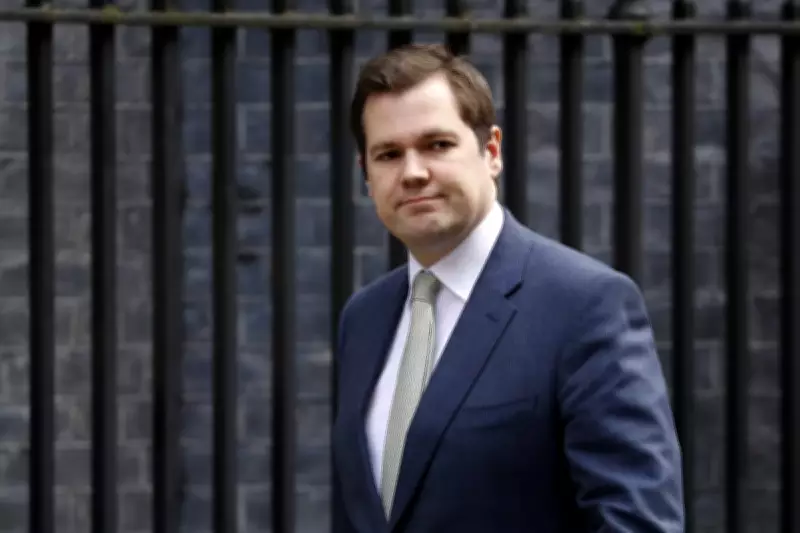
Senior Conservative figures have launched a scathing attack on former colleague Robert Jenrick following his high-profile defection to Nigel Farage's Reform UK party, branding the move a significant error driven by personal disappointment.
Philp Condemns Defection as 'Frustrated Ambition'
Shadow Home Secretary Chris Philp has publicly characterised Jenrick's decision to leave the Conservatives as "a mistake" stemming from what he described as "frustrated personal ambition." The senior Tory suggested the former immigration minister's actions were motivated primarily by his upset at not being selected as party leader following recent leadership contests.
Speaking during an interview on Sky News with presenter Trevor Phillips, Philp attempted to downplay the significance of recent defections while delivering pointed criticism of Jenrick's new political home. "Let's keep this in perspective," Philp stated. "We're talking about four members out of 121, and at least one of them, Robert Jenrick, acted out of frustrated personal ambition because he was disappointed about not becoming leader."

Questioning Reform UK's Policy Direction
Philp went further in his criticism, directly questioning whether Jenrick had properly considered the implications of joining Reform UK. The shadow cabinet member highlighted several controversial positions associated with Nigel Farage's party that he suggested should give any serious politician pause for thought.
"I think Robert should reflect on whether he really wants to join a party whose leader admires Vladimir Putin, blames Ukraine for being invaded, and believes in higher welfare spending while advocating for the removal of the two-child benefit cap," Philp argued. "This would essentially mean people with ten children could receive limitless welfare payments. That's the party Robert Jenrick has chosen to join, and I believe he's made a serious error in judgment."
The Conservative frontbencher contrasted what he described as his party's development of "credible policies" with Reform UK's approach, which he claimed lacked substantive policy proposals altogether.
Conservative Confidence Amid Defection Wave
Despite the recent departure of several prominent figures including former home secretary Suella Braverman, Philp expressed confidence in the Conservative Party's electoral prospects. The shadow home secretary insisted that the Tories remain competitive and determined to secure victory in the next general election.
"I believe we are fighting to win the next election, and I'm convinced we can win it," Philp declared. "While I don't want to overstate our position, the polling gap between Conservatives and Reform UK is gradually narrowing. When we examine underlying indicators like leadership preference, Kemi Badenoch consistently outperforms both Nigel Farage and Keir Starmer in terms of who would make the best prime minister."
Philp emphasised his commitment alongside colleagues including Badenoch and shadow chancellor Mel Stride, promising they would "move heaven and earth" to ensure Conservative success at the ballot box.
Criticism of Labour's China Engagement
The interview also covered international relations, with Philp launching a pointed critique of Labour leader Keir Starmer's recent diplomatic engagement with China. The shadow home secretary claimed Starmer had returned from his trip "empty-handed" in terms of substantive economic achievements.
"As far as I can determine, he secured a couple of minor agreements here and there, but nothing that would meaningfully shift economic indicators," Philp stated regarding Starmer's visit.
Espionage Concerns and Embassy Controversy
When pressed about the agreement Starmer secured with Chinese President Xi Jinping to lift sanctions on British MPs (most of whom are Conservatives), Philp acknowledged this represented a "small step in the right direction" but insisted it would do little to address fundamental security concerns.

"Considering the scale of China's espionage activities against Western nations, particularly targeting the United Kingdom, this agreement changes virtually nothing," Philp argued. "The Chinese government has essentially obtained what they wanted: a so-called 'super embassy' adjacent to the Tower of London that will undoubtedly serve as an operational base for espionage activities across the UK and throughout Europe."
Technology Theft Allegations
Drawing on his experience as technology minister, Philp detailed what he described as systematic Chinese efforts to acquire sensitive technological intellectual property. He claimed to have witnessed firsthand how Chinese entities systematically target advanced technologies through corporate and academic infiltration.
"They're pursuing semiconductor intellectual property and quantum computing capabilities on an industrial scale," Philp explained. "Their methods involve infiltrating companies and universities to extract sensitive technological information. Despite this well-documented pattern, the Labour government has granted them this substantial diplomatic facility that will inevitably facilitate further such activities."
The Conservative frontbencher's comments reflect growing tensions within British politics as parties position themselves ahead of the next general election, with internal defections and international relations emerging as key battleground issues.