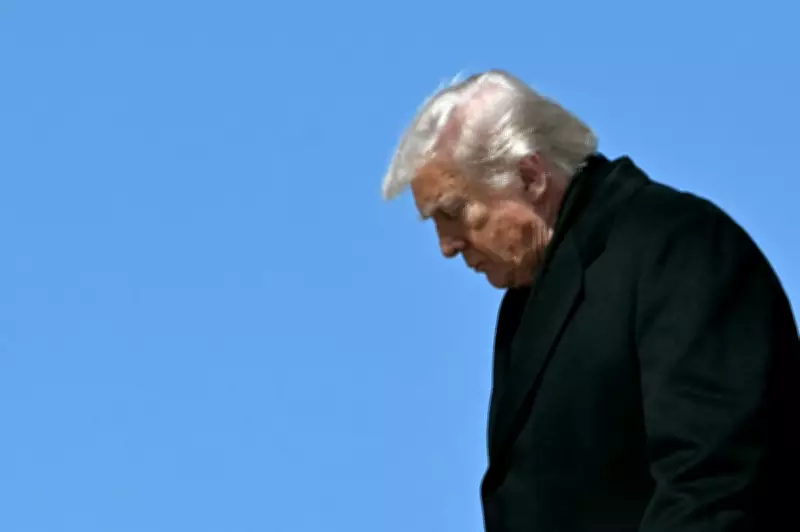
Trump's Double Standard on Health Transparency Draws Criticism
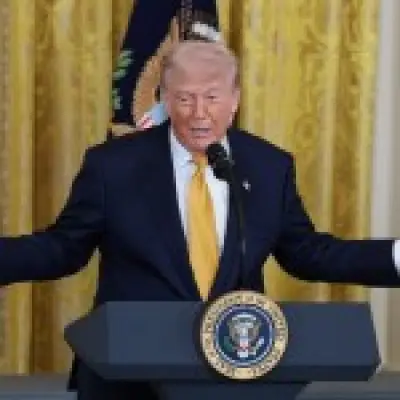
Former President Donald Trump has sparked controversy by publicly disclosing the terminal diagnosis of Republican Congressman Neal Dunn while simultaneously maintaining strict privacy about his own medical conditions. The incident occurred during a press conference with House Speaker Mike Johnson, where Trump revealed that Dunn would have been "dead by June" without intervention from White House physicians.
Shocking Disclosure During Press Conference
Trump's unexpected revelation about Congressman Dunn's health condition left many observers stunned, including Speaker Johnson himself. The disclosure came after Trump pressed Johnson for details about Dunn's medical situation, prompting Johnson to respond with apparent surprise: "OK, that wasn't public, but yeah, OK. It was grim, that's what I was going to say."
This public sharing of private medical information has drawn sharp criticism from etiquette experts and political strategists alike, who question the appropriateness of such disclosures from a former president. The incident highlights Trump's long-standing pattern of discussing others' physical conditions while being notably guarded about his own health matters.

Etiquette Experts Question Presidential Conduct
Rosalinda Oropeza Randall, a respected etiquette expert based in San Francisco, emphasized that there are extremely limited circumstances where disclosing someone's health information is acceptable. "I really don't think it's appropriate at almost any time," Randall stated, noting that while Trump's offer of medical help might have been generous, proper etiquette typically requires keeping such generosity private.
Randall expressed particular concern about Trump's tone during the disclosure, referencing his comment about helping Dunn: "I did it for him first and for the votes second. But it was a close second, actually." She observed that such statements can come across as "very cold and calculated" rather than genuinely compassionate.
Political Strategists Weigh In on Implications
Brittany Martinez, a Republican strategist and executive director of Principles First, characterized Trump's disclosure as "pointless" and inappropriate. "I think it's just inappropriate for a president of the United States to essentially out the healthcare diagnosis of a member of Congress," Martinez commented, while acknowledging that Dunn appears to be recovering well.
Despite the criticism, political observers doubt there will be significant consequences for Trump. Martinez noted that "the president has said much worse," and Hank Sheinkopf, a veteran Democratic strategist, described the behavior as "pretty much the story in Trumpland" that represents "another drop in the bucket" of similar incidents.
Contrast with Trump's Own Health Secrecy
The controversy becomes particularly striking when contrasted with Trump's approach to his own medical information. The former president has faced questions about a recent neck rash, which the White House attributed to "a very common cream" used as "a preventative skin treatment" prescribed by the White House doctor.
White House spokesperson Olivia Wales defended Trump's transparency, stating that "President Trump and his entire team have been fully open and transparent about the President's health, which remains exceptional." This assertion comes despite ongoing questions about Trump's medical disclosures and his administration's response to media inquiries about his health.
Broader Implications for Political Culture
Sheinkopf raised concerns about how such behavior from political leaders might influence public conduct more broadly. "It does lower the bar," he warned. "People in public life are supposed to be much more reflective of their behavior. They're supposed to be models for appropriateness and for integrity and decency."
The strategist emphasized that when leaders engage in questionable behavior, "it allows for behaviors that should not be tolerated, to be tolerated." This incident occurs against the backdrop of ongoing debates about healthcare accessibility and the expiration of Affordable Care Act subsidies, which have increased medical costs for millions of Americans.

Response from Involved Parties
Congressman Dunn's office declined to comment on Trump's remarks, though Dunn later posted a video stating he felt "lucky to be here." Speaker Johnson's representative noted that Dunn was "completely fine" with the disclosure and felt "very healthy" with "a great new lease on life."
The White House maintained its position that questions about Trump's health represent "false and slanderous allegations" from media outlets, while continuing to defend the former president's approach to medical transparency. As the debate continues, the incident raises fundamental questions about privacy, presidential decorum, and the evolving standards of political discourse in contemporary American politics.