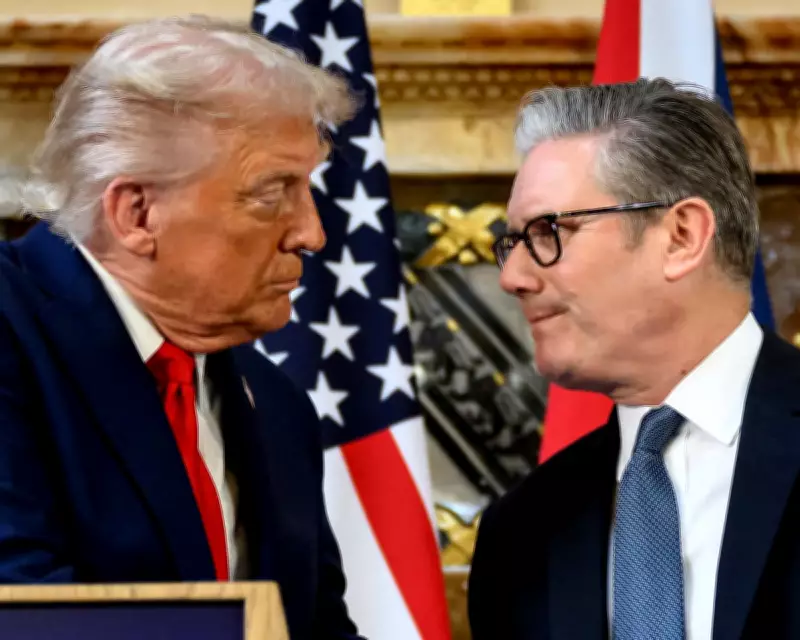
UK-US Tensions Escalate Over Iran Military Operations
In a dramatic turn of events, the United States did not share precise operational details or timings with the United Kingdom before conducting joint strikes with Israel on Iran, according to sources who spoke to the Guardian. This lack of communication occurred alongside Prime Minister Keir Starmer's initial refusal to grant permission for the US to utilize British military bases in the operation, sparking a public rift between the two allies.
Trump's Criticism and the Special Relationship
Former President Donald Trump has since launched a scathing attack on Starmer, condemning his decision to block access to UK bases and asserting that the special relationship between the nations is diminished. Trump notably remarked that Starmer is "no Churchill," emphasizing his disapproval of the prime minister's stance. In response, Starmer has since authorized the use of British bases for defensive strikes aimed at degrading Iran's missile capabilities, following retaliatory actions by Tehran in the Gulf region.
Government insiders revealed that while the UK and US typically align on military matters, it remains unclear whether the failure to provide advanced official notification was unusual. A Whitehall source confirmed that the UK anticipated imminent action through intelligence channels and equipment movements but was not briefed on the exact timing or specifics of the attack. This led to the evacuation of the UK embassy in Tehran on Friday, signaling awareness of impending strikes without detailed knowledge of their schedule over the weekend.

Starmer's Defense in Parliament
During Prime Minister's Questions, Starmer robustly defended his approach after facing criticism from Tory MP Gareth Bacon, who questioned whether his "dithering and equivocal response" had weakened the UK-US alliance. Starmer highlighted ongoing British military deployments, stating that American aircraft are operating from UK bases, British jets are protecting US lives by intercepting drones and missiles, and intelligence is shared daily to ensure safety. He asserted, "Hanging on to President Trump's latest words is not the special relationship," underscoring the tangible actions defining the partnership.
The prime minister detailed the deployment of various military resources, including radar systems, ground-based air defenses, counter-drone systems, and fighter jets such as F-35s and Typhoons. These assets have been active across the Middle East and Cyprus, with missions conducted overnight to defend regional allies like Qatar. Starmer's spokesperson later reinforced that all decisions are made with British national interests and citizen safety as top priorities, reflecting a steadfast commitment to strategic autonomy amid international pressures.