The Contagious Insanity of King Donald
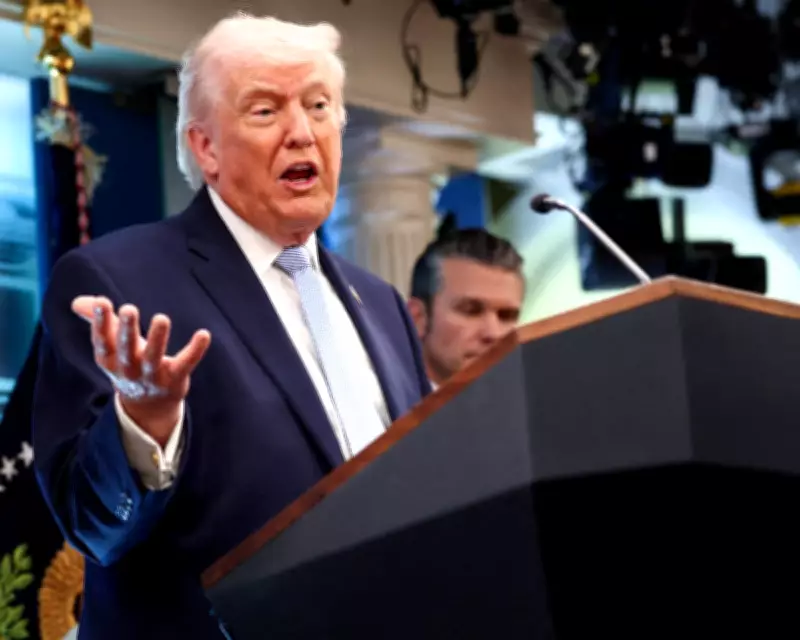
Earlier this week, Donald Trump held a press conference in the White House briefing room, but the real story unfolded in the aftermath of his latest geopolitical maneuvers. The American president, whose social media posts have included threats like "Open the Fuckin' Strait you crazy bastards or you'll be living in Hell," has created a reality where madness spreads like a virus.
A Ceasefire That May Not Exist
The most glaring example of this contagious insanity emerged during the two-week ceasefire with Iran. Remarkably, no one can agree on what was actually negotiated. Israel interprets the agreement as permission to continue bombing Lebanon, while the details remain frustratingly vague. This ambiguity has forced world leaders into the impossible position of treating Trump's actions as rational.
Secretary of Defense Pete Hegseth exemplifies this phenomenon, declaring the war a "total success" despite contradictory evidence. No regime change has occurred in Iran, nuclear facilities supposedly eliminated last year remain operational, and Iran now effectively controls the Strait of Hormuz. Hegseth's claim that "no Americans have been put in harm's way" ignores the thirteen servicemen killed in the past month.

Starmer's Impossible Position
British Prime Minister Keir Starmer faces particular challenges navigating this madness. While he avoided direct involvement in what many consider a war of doubtful legality, the ceasefire—or non-ceasefire—forces him into diplomatic contortions. "There is work to do," Starmer understated, attempting to make sense of a reality that might evaporate within twenty-four hours.
The timeline reveals the absurdity: Trump threatened Iran with "civilizational erasure and genocide" on Tuesday morning, only to announce a ceasefire hours later. By Wednesday, Iran proposed charging ships passing through the Strait of Hormuz, prompting Trump to suggest the United States should do the same—transforming a strategic waterway into a revenue stream.
The Diplomatic Charade
Starmer now races to the Middle East to bolster a ceasefire that Britain had little role in creating and possesses limited influence to sustain. The United Kingdom can urge cooperation during talks in Pakistan, but cannot enforce shipping freedom in the Strait of Hormuz without naval presence. This becomes displacement activity—action for action's sake—because engaging with Trump's reality is the only option available.
Spanish Prime Minister Pedro Sánchez stands as the notable exception, refusing to "applaud those who set the world on fire just because they turned up with a bucket of water." Other NATO leaders, however, must pretend Trump operates with coherent strategy, partly because acknowledging his instability proves too terrifying, and partly because they lack alternatives.
Madness Spreads Down the Chain
The insanity extends beyond direct Trump associates to opposition figures who mirror his tactics. Kemi Badenoch initially demanded British participation in the war, then spent weeks claiming she opposed it all along—echoing Trump's tendency to declare night as day. She now criticizes Starmer for military shortcomings while ignoring her own party's defense cuts.
Nigel Farage adds another layer of absurdity, recently pretending unfamiliarity with Trump despite their documented relationship. The Reform leader laments the deterioration of US-UK relations while remaining oblivious to his own role in damaging that relationship and Trump's broader hostility toward NATO.
No Escape from the Madness
This sickness permeates the entire political system. Merely engaging with Trump—whether defending or opposing him—compromises one's sanity. The world increasingly operates within a reality of Trump's making, where ceasefires might be illusions, victories might be defeats, and rationality becomes the casualty. As leaders collude with this insanity because they have no other choice, the prognosis grows increasingly grim. The madness shows no signs of abating, and the consequences promise to be severe.