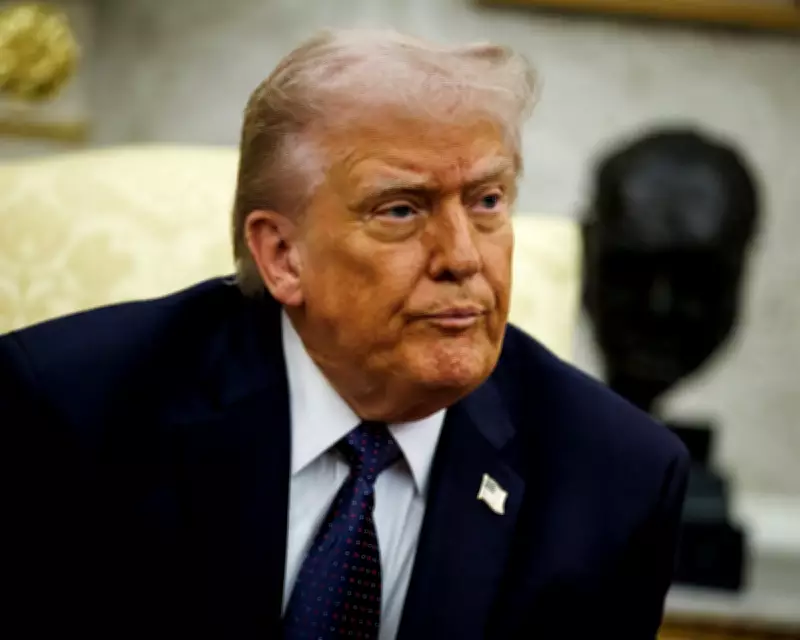
Trump's 'Quasi-Dove' Era Ends as Iran Strikes Reveal Hawkish Shift
Donald Trump's recent authorization of military strikes against Iran, resulting in the death of Ayatollah Ali Khamenei and escalating conflict across the Middle East, marks a stark departure from his long-professed image as a reluctant warrior. This aggressive move, executed without congressional approval, directly contradicts Trump's frequent campaign claim that he is "the only president in 72 years that didn't start a war."
From Campaign Rhetoric to Military Reality
Throughout his political career, Trump cultivated an image as a foreign policy dove who would avoid military entanglements. He repeatedly criticized previous administrations for what he called "stupid" wars and positioned himself as a dealmaker who preferred negotiation over military action. In 2016, he famously called George W. Bush's invasion of Iraq a "big, fat mistake" and declared that "regime change is a proven, absolute failure."
During his first term, Trump engaged in unprecedented diplomacy with adversaries including North Korea's Kim Jong Un and Russia's Vladimir Putin, reinforcing the perception that he represented a break from traditional hawkish foreign policy approaches. Supporters like JD Vance, a Marine Corps veteran, endorsed Trump specifically for his perceived reluctance to start new conflicts.

Historical Context Reveals Different Picture
However, a closer examination of Trump's history reveals a more complex relationship with military action. As far back as 1980, when asked about the Iran hostage crisis, Trump advocated for sending in troops, stating "I absolutely feel that, yes. I don't think there's any question." His criticism of the Iraq war emerged primarily after the conflict turned unpopular, rather than representing a principled anti-war stance.
During his first administration, Trump significantly increased drone strikes compared to his predecessor Barack Obama while relaxing rules of engagement and transparency requirements. The 2020 strike that killed Iranian commander Qassim Suleimani demonstrated his willingness to use military force, foreshadowing the current escalation.
Second Term Brings Unrestrained Approach
Trump's return to the White House has seen a dramatic shift in his foreign policy execution. The national security professionals who previously tempered his impulses—figures like John Kelly, Jim Mattis, and Mark Milley—have been replaced by loyalists including Pete Hegseth and Stephen Miller, who actively encourage more aggressive military postures.
This new environment has allowed Trump to pursue grand gestures like rebranding the Department of Defense as the "Department of War" and establishing his controversial Board of Peace. The president now openly expresses fascination with military power, frequently praising soldiers' appearances and comparing military operations to television entertainment.
Human Cost of Escalating Conflict
The current conflict with Iran has already produced significant casualties. A strike on Shajareh Tayyebeh school killed up to 168 people, including dozens of young girls aged seven to twelve. Iranian retaliation has claimed the lives of six U.S. troops, with the State Department now urging American citizens to evacuate from more than a dozen Middle Eastern countries as the conflict expands.
This represents the ninth time Trump has ordered military action since returning to office, with the Pentagon naming the Iran offensive "Operation Epic Fury." The administration has offered varying justifications for the war, with Secretary of State Marco Rubio suggesting the timing was influenced by Israeli concerns.
Revelation of True Foreign Policy Nature
The Iran conflict exposes what critics argue was always Trump's true nature: a hawk operating under dove's plumage. His 2015 statement at an Iowa rally—"I'm really good at war. I love war, in a certain way. But only when we win"—now appears more revealing than his later peace-oriented campaign rhetoric.

While Trump still shows no interest in traditional neoconservative nation-building or prolonged ground occupations, he clearly revels in dramatic demonstrations of American military power. The current Middle East escalation represents the most severe test of theories about Trump's supposed aversion to conflict, revealing a president less interested in his Board of Peace than appearing bored with peace itself.