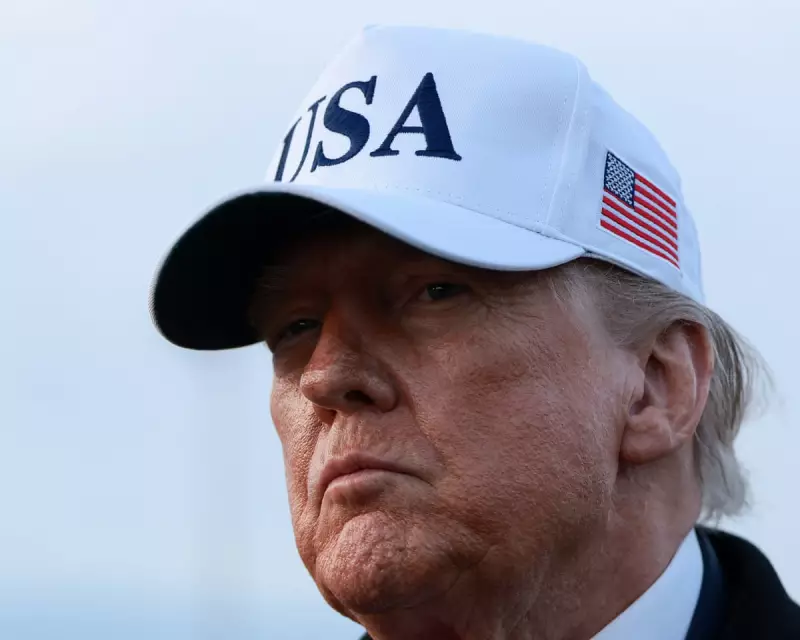
The foreign policy approach championed by former US President Donald Trump, which prioritises raw power over established international norms, risks plunging the world into a dangerous era of unchecked aggression and instability, a leading human rights expert has warned.
The Return of 'Gunboat Diplomacy'
Kenneth Roth, the former long-serving executive director of Human Rights Watch, argues that Trump's worldview represents a stark departure from the post-war international system. This system, however imperfect, was built on rules designed to constrain the behaviour of all states, big and small. Trump's philosophy, as articulated by figures like his former homeland security adviser Stephen Miller, holds that the 'real world' is governed solely by strength and power.
This thinking underpins what Roth terms the 'Donroe Doctrine', a reference to the hypothetical US invasion of Venezuela to oust Nicolás Maduro. It suggests a belief that as the world's pre-eminent military power, the United States should be free to act unilaterally. While spheres of influence have long been a reality—with the US dominant in the Americas, China in parts of Asia, and Russia in its neighbourhood—past actions were often cloaked in justifications related to security or democracy. Trump's vision, Roth contends, proposes a more unabashed return to great-power spheres enforced largely by coercion.

Eroding the Rules-Based System
The consequences of abandoning the rules-based order would be profound. The crime of aggression—the fundamental prohibition against invading other states—would be critically weakened. International institutions like the International Criminal Court (ICC) already struggle to hold powerful nations accountable. The ICC's jurisdiction over the crime of aggression is limited to citizens of states that accept it, which excludes the US, Russia, and China. Similarly, while the UN General Assembly can condemn acts of aggression, the Security Council's coercive power is neutered by the veto wielded by those same permanent members.
In this 'might-makes-right' environment, US allies and emerging powers would inevitably begin to hedge their bets. If an alliance with Washington feels like a feudal relationship with a capricious overlord, nations will seek balance. Europe, faced with transactional threats over NATO funding, might grow more accommodating towards Russia. Japan and South Korea could draw closer to Beijing. This realignment would harm human rights, economic predictability, and the stability of smaller states.
A Pyrrhic Victory for American Interests
Contrary to portraying US dominance as upholding democracy, Trump's policy highlights in Latin America illustrate a different focus. He backed Jair Bolsonaro despite his assault on Brazilian democracy, praised Nayib Bukele's erosion of the rule of law in El Salvador, and now eyes Venezuela's oil reserves. This agenda, Roth argues, is not designed to win hearts and minds.
The economic cost for America would be significant. A world where contracts can be broken and investments seized is bad for business. As the EU finalises a trade deal with Mercosur despite Trump's actions in Venezuela, it shows allies pursuing alternatives. China's Belt and Road Initiative often exceeds US development aid, and Beijing is already the largest trading partner for much of Latin America. Trump's unilateralism forfeits the soft power and economic benefits of a cooperative global order.
Furthermore, global challenges like pandemics and the climate crisis cannot be solved unilaterally. Even US military supremacy has limits; a protracted conflict with China would strain a US manufacturing base that is now half the size of China's. Coordinated responses, such as to China's chokehold on rare-earth minerals, become impossible if allies are alienated.
Roth concludes that while damaging, Trump's flouting of international norms need not be permanent. Finding every conceivable way to repudiate this lawlessness is essential for redeeming the law in the future. The task for those who believe in a rules-based system is to resist this shift during Trump's potential tenure, preserving the framework that has, for decades, helped curb conflict and protect borders.