Trump's Dual Strategy to Erase History and Avoid Accountability
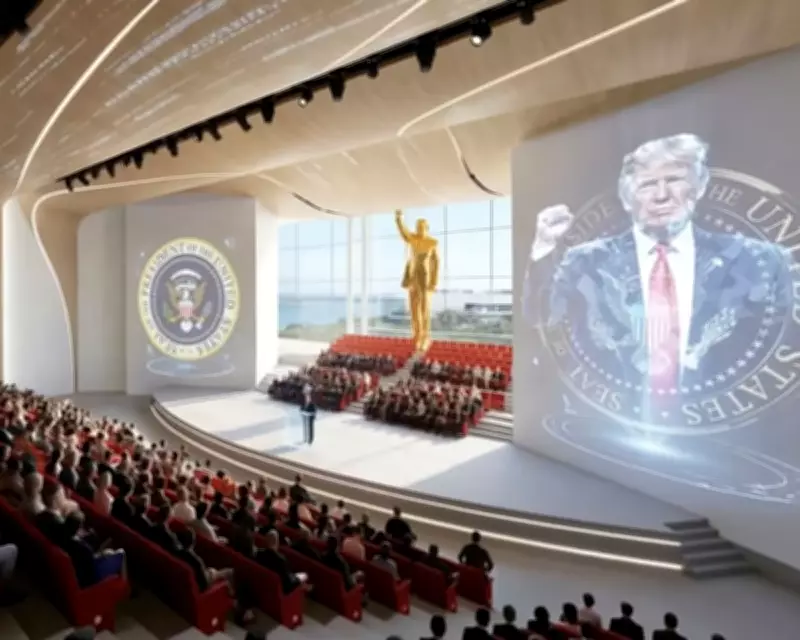
Last week, the Trump administration unveiled two seemingly disparate developments that together form a coordinated assault on presidential accountability and historical transparency. First, a 52-page Justice Department legal opinion declared the 1978 Presidential Records Act unconstitutional, authored by T Elliot Gaiser, an Ohio-based election denier and former clerk to Justice Samuel Alito. Second, the administration released AI-generated visuals of Trump's planned "presidential library"—a waterfront skyscraper in Miami's Biscayne Bay that appears more hotel complex than repository of historical documents.
The Legal Assault on Presidential Record-Keeping
Gaiser's opinion, widely criticized by legal experts as being in breathtakingly bad faith, argues that Congress has no authority to require presidents to preserve records. He claims such requirements serve "no legislative purpose" and could "impede" executive functioning. This directly challenges legislation born from the Watergate scandal, when Congress first passed the Presidential Recordings and Materials Preservation Act in 1974 to secure Richard Nixon's materials after he attempted to destroy evidence.
The Supreme Court subsequently upheld Congress's authority in this area, emphasizing "the American people's ability to reconstruct and come to terms with their history." The broader Presidential Records Act followed, establishing norms that remained uncontroversial until the Trump administration. Trump's documented indifference to archiving—taking White House documents to Florida post-presidency and facing felony charges for mishandling classified materials—now finds theoretical justification in this radical legal opinion.

The Symbolism of a Non-Library Presidential Complex
Meanwhile, Trump's planned Miami structure reveals deeper intentions. As Trump himself stated: "I don't believe in building libraries or museums." The design reportedly features golden statues and a 747 jet in the atrium rather than spaces for scholarly research. This aligns with what critics describe as Trump's preference for self-aggrandizement over historical preservation, raising questions about what presidential accomplishments would even be displayed.
The administration has taken concrete steps to undermine archival integrity, including firing the U.S. Archivist—the first woman to hold the position permanently—and replacing her with political loyalists. Ironically, Trump has even consulted with the president of the Richard Nixon Foundation, whose namesake's actions originally inspired the records preservation laws now under attack.
Broader Patterns of Historical Erasure
These developments fit within a broader pattern during Trump's second term. The administration has removed historical databases from government websites, including justice department records about January 6 insurrectionists. Trump has pardoned violent participants while removing officials who investigated them from the FBI and Justice Department. As one Department of Homeland Security official reportedly boasted, they could act with impunity knowing Trump would grant pardons.
This creates what experts describe as "politically motivated amnesia"—a conscious prevention of accountability that threatens democratic norms. The concern extends beyond academic historians to the fundamental public right to governmental transparency and historical reckoning.
Potential Counterstrategies and Constitutional Challenges
Democrats and accountability advocates face significant challenges in responding. They can push for record preservation and attempt to shame those scrubbing historical information, though this may have limited effect against what critics call "the most shameless administration in U.S. history." Some propose truth commissions modeled after the January 6 committee, which successfully documented violence that some political actors now wish to forget.

The presidential pardon power presents particular difficulties. Originally adapted from British monarchy with expectations that abuse would lead to impeachment, the power now operates in a context where the Supreme Court's 2024 immunity decision grants presidents virtually total protection. Legal challenges to "corrupt pardons" appear unlikely to succeed, leaving constitutional amendment as a distant possibility.
As the nation confronts these challenges, the fundamental question remains: How can society preserve what the Supreme Court called "the American people's ability to come to terms with their history" when facing coordinated efforts to erase it? The answer may require not just political resistance but fundamental rethinking of accountability mechanisms in what some scholars already term "the post-Trump Reconstruction era."