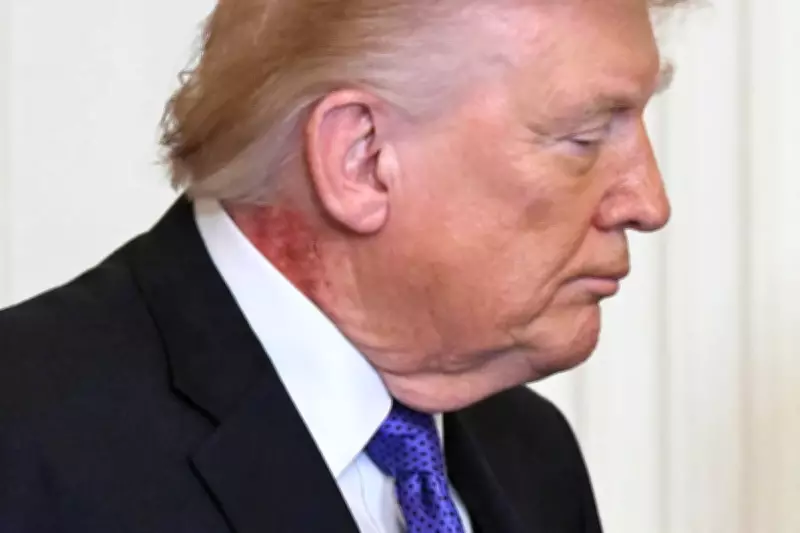
President Donald Trump was observed with a noticeable rash on the side of his neck during the Medal of Honor Ceremony at the White House on Monday, sparking renewed discussions and speculation about the president's overall health condition. The visible redness prompted immediate questions from observers and media outlets regarding its cause and implications.
Official Explanation from the White House
In response to the growing curiosity, Trump's personal physician, Dr. Sean Barbarella, issued a formal statement clarifying the situation. According to the statement, the rash resulted from a cream that President Trump is applying as a preventative skin treatment. Dr. Barbarella emphasized that this is a very common cream, though he did not disclose its specific name or the exact reason for its use.
The doctor further explained that President Trump is using the treatment for a duration of one week, and the associated redness is anticipated to persist for several weeks. This explanation aimed to address public concerns directly, though it left some details unanswered, fueling ongoing debates about transparency.

Broader Context of Trump's Health Scrutiny
This incident adds to a series of health-related observations that have drawn attention in recent months. In February 2025, Trump was first seen with what appeared to be makeup on his hand, followed by multiple appearances with bruises on his hands. Additionally, he appeared drowsy during a cabinet meeting in December and at an event promoting lower costs of GLP-1 weight-loss medications.
White House press secretary Karoline Leavitt previously addressed the hand bruises, attributing them to the president's rigorous work schedule and constant handshaking. She stated, "President Trump has bruises on his hand because he's constantly working and shaking hands all day every day."
Past Health Disclosures and Statements
In July of last year, the White House announced that Trump had been diagnosed with chronic venous insufficiency after he noticed swelling in his legs. A memo from the White House described this as a benign and common condition, particularly in individuals over the age of 70, based on diagnostic vascular studies and bilateral lower extremity venous Doppler ultrasounds.
During a January interview with the Wall Street Journal, Trump commented on his health, mentioning that he takes more aspirin than his doctors recommend, citing its blood-thinning properties. He asserted, "They say aspirin is good for thinning out the blood, and I don't want thick blood pouring through my heart. I want nice, thin blood pouring through my heart. Does that make sense?" He also claimed that his health is otherwise perfect.
In the same interview, Trump expressed frustration with the scrutiny of his health, particularly regretting a cardiovascular and abdominal advanced imaging scan he underwent during a routine check-up in October. He reflected, "In retrospect, it's too bad I took it, because it gave them a little ammunition. I would have been a lot better off if they didn't, because the fact that I took it said, 'Oh gee, is something wrong?' Well, nothing's wrong."
Implications and Public Reaction
The neck rash incident has intensified the ongoing public and media focus on Trump's health, raising questions about the balance between privacy and transparency for public figures. While the White House has provided an explanation, the lack of specific details about the cream and its purpose continues to fuel speculation and debate among analysts and the general public.
This event underscores the heightened attention given to the physical well-being of political leaders, especially in an era of constant media coverage and public scrutiny. As Trump continues his duties, such health-related discussions are likely to persist, influencing perceptions and political narratives.