Trump's Save America Act: A Comprehensive Voting Overhaul Faces Senate Hurdle
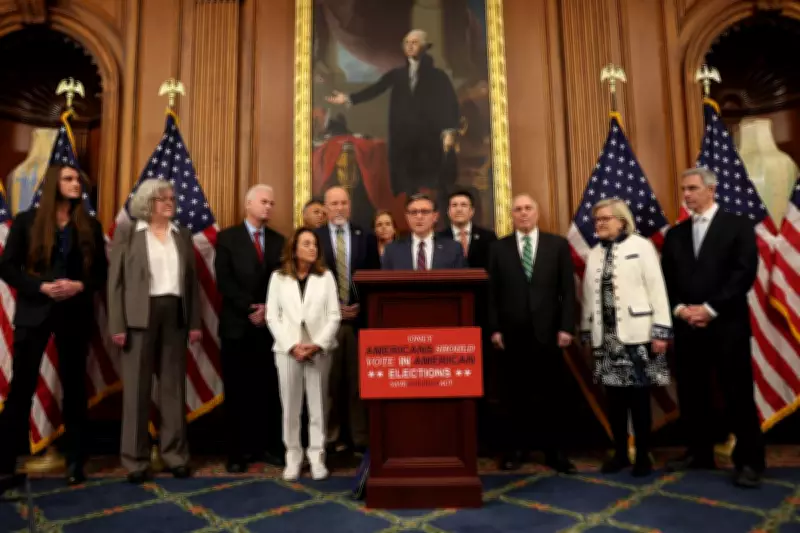
Donald Trump has vowed to block all other legislation until Republicans pass the Save America Act, a massive voting bill that would impose strict new requirements on all American voters. The legislation, set for a Senate vote next week, includes documentary proof of citizenship mandates, stringent voter ID rules, and legal liabilities for election officials, potentially creating chaos in the midst of a federal midterm election year.
Key Provisions of the Save America Act
The bill would require voters to show proof of citizenship, such as a passport or birth certificate, in person at elections offices when registering or making any changes to their registration. This could end voter registration drives and disproportionately affect rural, elderly, and younger voters who may lack access to these documents. Xavier Persad, senior policy counsel at the American Civil Liberties Union, warns that "every voter would be affected, regardless of political affiliation," with tens of millions potentially disenfranchised.
Additionally, the act mandates a "valid photo identification" for both in-person and mail-in voting, with copies required for mailed ballots. Gréta Bedekovics, director of democracy policy at the Center for American Progress, describes this as the strictest voter ID regime, comparable only to Ohio's current law. The bill also imposes criminal penalties on election officials for registering voters without proper documentation and allows private citizens to sue officials, which could overwhelm election offices.

Prospects for Passage and Political Implications
Despite Trump's threats, the Save America Act is unlikely to become law. Senate leaders acknowledge they lack the 60 votes needed to overcome a filibuster, with a vote scheduled for next week expected to fail. David Becker, director of the Center for Election Innovation & Research, notes that sweeping election reforms by one party historically fail, emphasizing the need for bipartisan support, as seen in the 2006 Voting Rights Act renewal.
Even if the bill does not pass, its rhetoric may fuel false election narratives. Trump has used the legislation to promote conspiracies about noncitizen voting, and advocates fear it could be used to dispute election results. Bedekovics warns that the bill relies on a "false narrative of voter fraud" and could sow doubt about the upcoming midterms.
Impact on Voters and Election Systems
The Save America Act would require states to regularly submit voter rolls to the Department of Homeland Security, creating what Bedekovics calls a "federal surveillance system of voters." This could lead to erroneous removals of eligible citizens from voter lists. The bill's immediate effective date upon signing would force states to overhaul registration systems rapidly, retrain workers, and educate voters, causing significant disruption.
Trump has also mischaracterized the bill, claiming it includes bans on mail-in ballots and transgender issues, though these are not in the current version. Another related bill, the Make Elections Great Again Act, proposes stricter mail voting rules but has not advanced due to lack of Republican support.
In summary, the Save America Act represents a controversial effort to tighten voting rules, but its passage is doubtful. However, the debate surrounding it may have lasting effects on election integrity discourse and voter confidence in the democratic process.