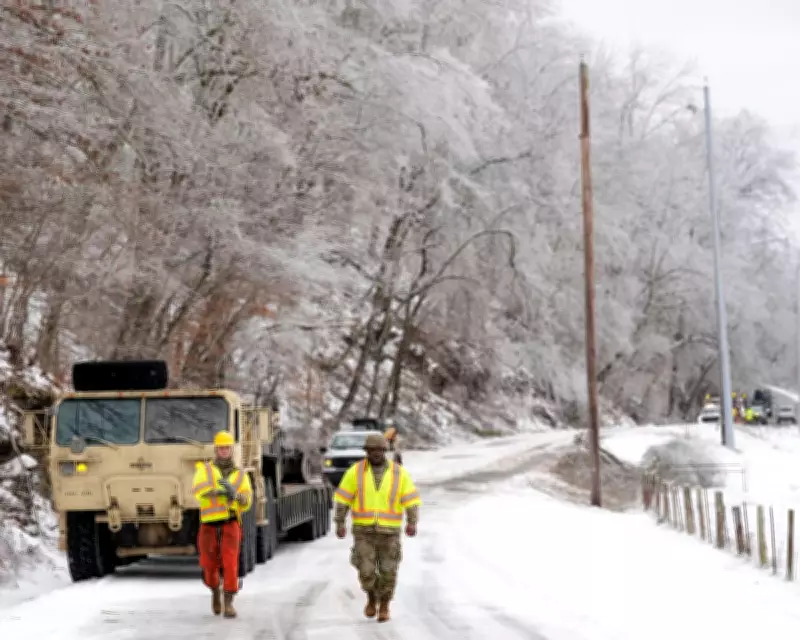
National Guard members have been deployed to clear trees felled by extreme winter weather in Nashville, Tennessee, as the United States grapples with a devastating cold snap. The severe conditions, which began last week, have now claimed at least 85 lives across multiple states, according to an Associated Press tally. As the storm system shifts, further freezing temperatures, snow, and blizzards are set to assail the East Coast this weekend, prompting emergency declarations and widespread concern.
Escalating Crisis Across Southern and Eastern States
The frigid blast, driven by Arctic air, has caused car crashes, hypothermia, and other fatal incidents, with icy roads exacerbating the dangers. This follows a previous snowstorm that blanketed much of the country, compounding the challenges for residents and authorities alike. Both North Carolina and South Carolina have declared states of emergency in anticipation of the worsening weather.
Governor Josh Stein of North Carolina urged vigilance, stating, "As another round of winter weather moves into North Carolina, this time possibly bringing snow, I urge everyone to stay alert and take precautions." The death toll includes at least 10 people found dead outside in New York City, 13 confirmed fatalities in Tennessee, and nine in Louisiana, highlighting the widespread impact of the cold.

Power Outages and Infrastructure Strain
More than 190,000 homes and businesses were without electricity as of Saturday morning, primarily in Mississippi and Tennessee, according to the outage-tracking website poweroutage.us. In the Nashville area alone, over 54,000 customers faced power loss, leading to significant frustrations among residents.
Terry Miles, a 59-year-old construction worker from Nashville, described the dire situation: his home has been without power since the initial storm struck, forcing him to use a fish fryer for heat and raising fears of carbon monoxide poisoning. "I'm taking a chance of killing myself and killing my wife, because – why?" he expressed after attending a utility news conference.
Tennessee Governor Bill Lee voiced "strong concerns" with the Nashville Electric Service, demanding clearer timelines for restoration and better transparency. The utility has defended its response, citing the unprecedented nature of the storm, while Mississippi officials noted this is the state's worst winter event since 1994.
Unusual Weather Patterns and Regional Challenges
Experts suggest that rising global temperatures may be weakening the polar vortex, allowing Arctic air to spill further south, a counterintuitive effect of climate change. This has led to unusual scenarios, such as Myrtle Beach, South Carolina—a city with no snow-removal equipment—expecting up to 6 inches of snow. Mayor Mark Kruea indicated authorities would "use what we can find" to manage the situation.
Forecasts predict subfreezing weather into February, with heavy snow anticipated in the Carolinas, Virginia, and northeast Georgia. Some areas of North Carolina could see up to a foot of snow, while blizzard conditions are possible from Maryland to Maine by Saturday night. The cold is even expected to reach as far south as Florida, with temperatures nearing the teens in Nashville.
Health Risks and Community Responses
Medical experts have warned of increasing risks of hypothermia and frostbite, particularly in southern regions where residents may lack adequate warm clothing. Dr. David Nestler, an emergency medicine specialist at the Mayo Clinic, emphasized these dangers, noting that frostbite is a significant concern in unprepared areas.
Deaths have been reported from Texas to New Jersey, with roughly half occurring in Tennessee, Mississippi, and Louisiana. While some fatalities are attributed to hypothermia, others are suspected to involve carbon monoxide exposure from improper heating methods, though officials have not released full details.
In response, Mississippi has opened about 80 warming centers, with National Guard troops delivering supplies by truck and helicopter. North Carolina has mobilized hundreds of National Guard soldiers to assist with road preparations and other emergency measures.

Local Impacts and Preparations
In Wake Forest, North Carolina, residents like José Rosa faced challenges securing propane for heating, visiting multiple locations before finding supplies. "I'm here in this cold weather, and I don't like it," Rosa remarked, reflecting the widespread discomfort and urgency.
Coastal areas are also at risk, with residents in Dare County, North Carolina, worrying that unoccupied houses in communities such as Rodanthe and Buxton could collapse into the Atlantic Ocean due to the storm's effects.
As the US East Coast braces for more blizzards and freezing conditions, the combined toll of fatalities, power outages, and infrastructure strain underscores the severity of this winter weather event. Authorities continue to scramble with preparations, while communities remain on high alert for further developments.