A newly declassified legal opinion has revealed that the US Justice Department authorised the Trump administration to use military force to capture Venezuelan President Nicolás Maduro, while explicitly declining to determine whether the dramatic operation would violate international law.
Legal Memo Sidesteps International Law Questions
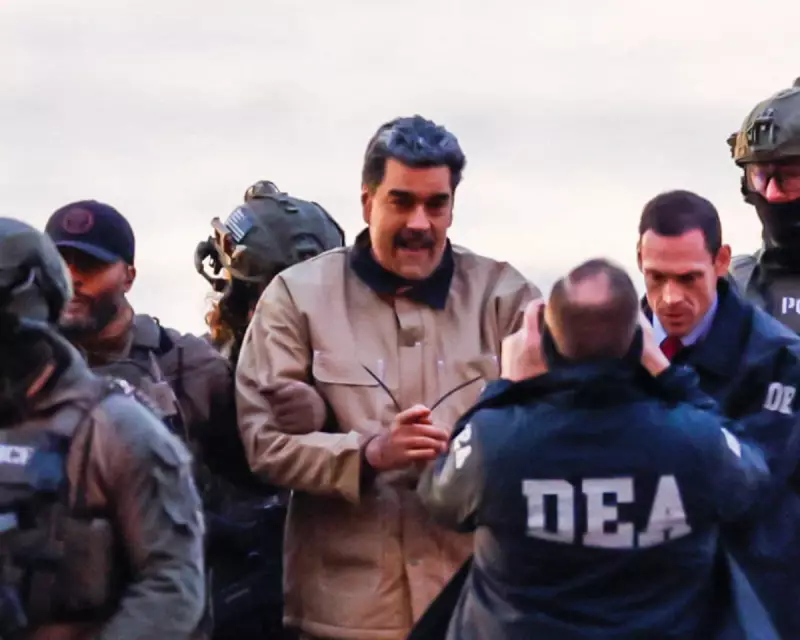
The 22-page memo, written by T Elliot Gaiser of the powerful Office of Legal Counsel (OLC) and released publicly on Tuesday, provided the legal framework for the covert raid, codenamed Absolute Resolve, which took place on 5 January 2026 in New York. While the memo briefly acknowledged the United Nations Charter, which prohibits the use of force in another country without consent or a UN mandate, it stopped short of a definitive judgement.
"To be clear, we have not reached a definitive conclusion about how international law would apply to Absolute Resolve," Gaiser wrote. "We do not reach the question because it is unnecessary to address the issue." The memo effectively argued that as long as President Donald Trump had the domestic legal authority to order the mission, the question of international law was moot.

Controversial Precedent from Panama Invasion Cited
In taking this stance, the OLC memo relied heavily on a highly controversial legal opinion from 1989. That document, signed by then-Assistant Attorney General William Barr, asserted that a US president had the inherent constitutional authority to "override" an international treaty like the UN Charter to conduct "forcible abductions" abroad.
That opinion was used to legally justify the US invasion of Panama and the capture of its leader, Manuel Noriega. Barr later served as Attorney General under Trump and is known for advocating expansive executive powers. Legal experts have long criticised the 1989 memo as legally flawed, noting that treaties ratified by the Senate hold the same force as domestic law, which the president is sworn to uphold.
National Interest Test and Limited Congressional Role
The memo justified the operation by stating it served multiple US national interests. It cited Maduro's 2020 indictment on drug trafficking charges and concerns that his fraudulent 2024 election win threatened regional instability. The OLC applied a two-part test, finding the mission served a national interest and was not of the scale or duration to constitute a "war in the constitutional sense," thus not requiring prior congressional approval.
Gaiser did caution that using the military would initiate an armed conflict under international law and that "boots on the ground" operations typically need lawmakers' consent. However, because the administration assured him the mission was solely to capture Maduro with no plan for a sustained occupation, he concluded Trump could act alone. The memo also referenced past precedents where the military assisted the FBI in arrests abroad, including operations related to the 1998 Africa embassy bombings and the 2012 Benghazi attack.
The release of the memo comes as the US Senate prepares to vote on a war powers resolution aimed at forcing Trump to seek congressional approval for any further military action in Venezuela. Despite the complex legal and diplomatic questions raised, the manner of Maduro's capture is not expected to impact his upcoming criminal trial, as US courts have consistently ruled that how a defendant is brought to court does not affect the case against them.
This memo marks the second major legal interpretation provided to the Trump administration for its campaign against Venezuela. The Guardian previously reported that the OLC had secretly approved strikes on cocaine-trafficking boats in international waters, arguing that targeting drug cartels' funding was akin to disrupting their "war-sustaining operations."