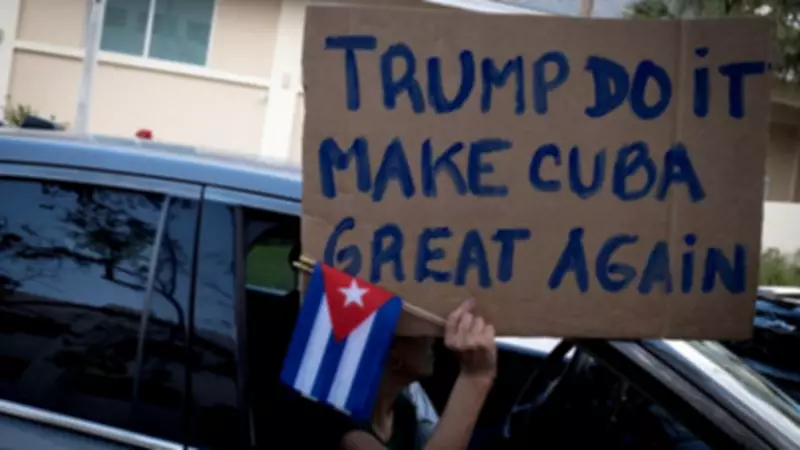
In a stark warning that has escalated geopolitical tensions, Republican Senator Lindsey Graham has declared that Cuba's communist regime faces imminent collapse, with its days "numbered" following recent US-led military actions in Iran. The South Carolina senator, a close ally of former President Donald Trump, made the provocative statement during a television appearance, hinting that Havana could be the next target in a widening campaign against adversarial governments.
Graham's Threat Follows Deadly Iran Airstrikes
Senator Graham's comments came in the wake of a joint US-Israeli airstrike that killed Iran's Supreme Leader Ayatollah Ali Khamenei at his compound on Saturday morning. The attack triggered a series of retaliatory strikes across the Middle East, with Iran firing missiles at US military sites and Gulf allies including the United Arab Emirates, Qatar, Bahrain, and Britain's Akrotiri airbase in Cyprus.
"The Iranian regime, the mother ship of international terrorism, is about to collapse," Graham asserted during his appearance on Fox News's Sunday Night in America. "The captain of the ship, the ayatollah, is stone-cold dead." He then turned his attention to Cuba, stating ominously: "Cuba's next. They're going to fall. This communist dictatorship in Cuba, their days are numbered."

Fuel Embargo Creates Humanitarian Crisis in Cuba
The threat against Cuba comes as the Caribbean nation grapples with severe fuel shortages resulting from a US embargo imposed last month. The Trump administration's executive order, which imposed trade tariffs on countries exporting oil to Cuba, has created what international charities describe as a humanitarian crisis marked by acute oil shortages.
United Nations human rights experts have condemned the US action, accusing Washington of "serious violation of international law and a grave threat to a democratic and equitable international order." In response to the crisis, neighboring countries Mexico and Canada have dispatched humanitarian aid to Cuba, with Mexican ships delivering essential supplies to the beleaguered nation.
Trump Administration's Increasing Pressure on Cuba
The current tensions represent an escalation of long-standing US pressure on Cuba, which has been under a strict trade embargo since 1962. The Trump administration has significantly intensified this pressure in recent months, beginning with the kidnapping of Venezuelan President Nicolas Maduro by US forces at the start of the year.
Last week, Cuban authorities reported that their forces shot and killed four Cuban nationals aboard a US-registered speedboat that entered Cuban waters and opened fire on a patrol vessel. Six other Cuban citizens were injured in the confrontation and subsequently detained. While US Secretary of State Marco Rubio confirmed no US government personnel were involved, he vowed: "We are going to have our own information on this, we are going to figure out exactly what happened."
Trump's 'Friendly Takeover' Comments Add to Uncertainty
Adding to the uncertainty surrounding US intentions toward Cuba, former President Trump told reporters outside the White House on Friday that there was a possibility of a "friendly takeover of Cuba," though he provided no details about what this might entail. Trump revealed that Secretary of State Rubio was engaged in "discussions with Cuban leaders at a very high level" and noted that "the Cuban government is talking with us."
"They have no money. They have no anything right now," Trump observed. "But they're talking to us, and maybe we'll have a friendly takeover of Cuba." These comments, combined with Senator Graham's explicit threats, have created an atmosphere of heightened anxiety about potential US actions against the long-isolated communist nation.
The situation remains fluid, with no clear indication whether military operations against Cuba are actually being planned or if the threats represent political posturing. However, the combination of economic pressure through embargoes, diplomatic maneuvering, and now explicit warnings from influential US politicians suggests Cuba faces its most serious challenge in decades as it navigates this latest geopolitical storm.