In a significant move during her brief tenure, Venezuela's acting president Delcy Rodríguez has unveiled sweeping reforms, including a comprehensive amnesty plan for political prisoners and the closure of a notorious detention facility. These announcements mark a dramatic shift in the country's political landscape following the recent removal of Nicolás Maduro.
Amnesty Proposal Aims to Heal Decades of Conflict
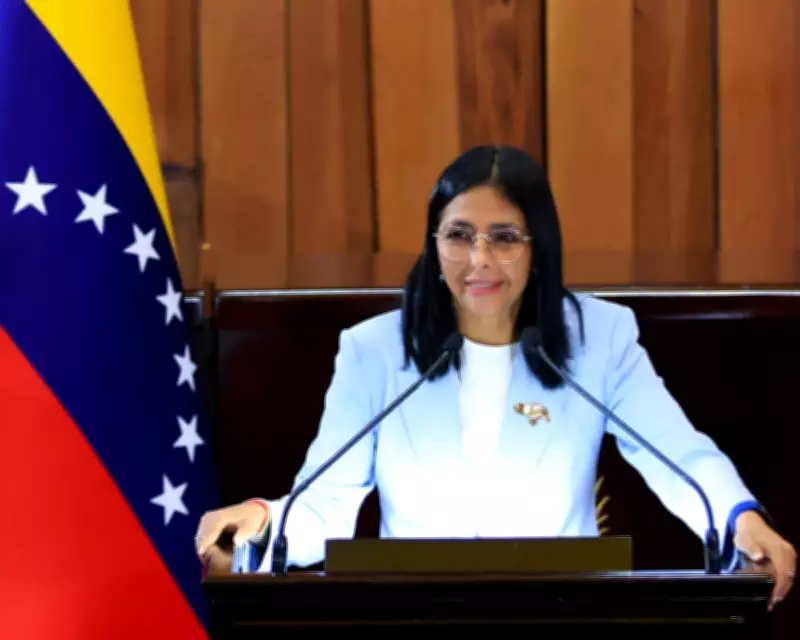
Addressing the Venezuelan supreme court on Friday, Rodríguez declared her intention to introduce a "general amnesty law" that would cover the entire period from 1999 to the present. This timeframe encompasses the presidencies of both Hugo Chávez, who took office in 1999, and his successor Nicolás Maduro, whose authoritarian rule and disputed elections have been widely condemned.
"This law will serve to heal the wounds left by political confrontation, fuelled by violence and extremism. It will allow us to put justice back on track in our country," Rodríguez stated during her speech, which was attended by senior government officials. She also announced plans for a "major national consultation for a new judicial system," signalling broader institutional reforms.

Closure of Notorious El Helicoide Prison
In a parallel development, Rodríguez revealed that the infamous El Helicoide prison in Caracas would be shut down. Human rights organisations have long documented allegations of torture against political detainees within this facility by Maduro's intelligence services.
The massive structure, originally constructed as a shopping mall, is set to be transformed into a "sports, cultural and commercial centre for police families and neighbouring communities," according to Rodríguez. This decision has been met with relief by families of inmates, such as Betsy Orellana, a 63-year-old mother who expressed joy at the prospect of her son's potential release after six months of silence.
US Pressure and Economic Reforms
Rodríguez, who previously served as Maduro's vice-president, has acted swiftly since assuming power less than four weeks ago. Her administration has implemented changes aligned with US demands, earning praise from President Donald Trump. Notably, she and her brother, National Assembly President Jorge Rodríguez, have enacted legislation opening Venezuela's crucial oil sector to private investment—a key condition set by the Trump administration.
This move was quickly followed by a relaxation of US sanctions targeting Venezuela's oil industry. Additionally, on 8 January, just days after Maduro's capture in a US military operation, the government agreed to release inmates deemed political prisoners by rights groups. However, organisations like Foro Penal have criticised the slow pace of these releases, reporting fewer than 300 prisoners freed since that date.
Opposition Reactions and Diplomatic Shifts
Venezuelan opposition figures have responded with cautious optimism to these developments, though concerns persist about the continued influence of Maduro's allies. Nobel Peace Prize laureate and opposition leader María Corina Machado emphasised that Rodríguez's amnesty proposal was driven by US pressure rather than voluntary action.
Opposition lawmaker Tomás Guanipa, whose two brothers are imprisoned, expressed hope that the amnesty would mark the end of "an era of repression" and pave the way toward democracy. Meanwhile, US authorities confirmed the release of all known American prisoners in Venezuela, including Peruvian-American Arturo Gallino Rullier, who was reportedly en route to the United States.
In a clear indication of improved relations, the Trump administration has lifted a ban on US flights to Venezuela and is preparing to re-establish diplomatic presence in Caracas. Seasoned diplomat Laura Dogu has been appointed as the US charge d'affaires for Venezuela and is expected to arrive in the capital shortly, signalling a potential thaw in bilateral ties after years of estrangement.