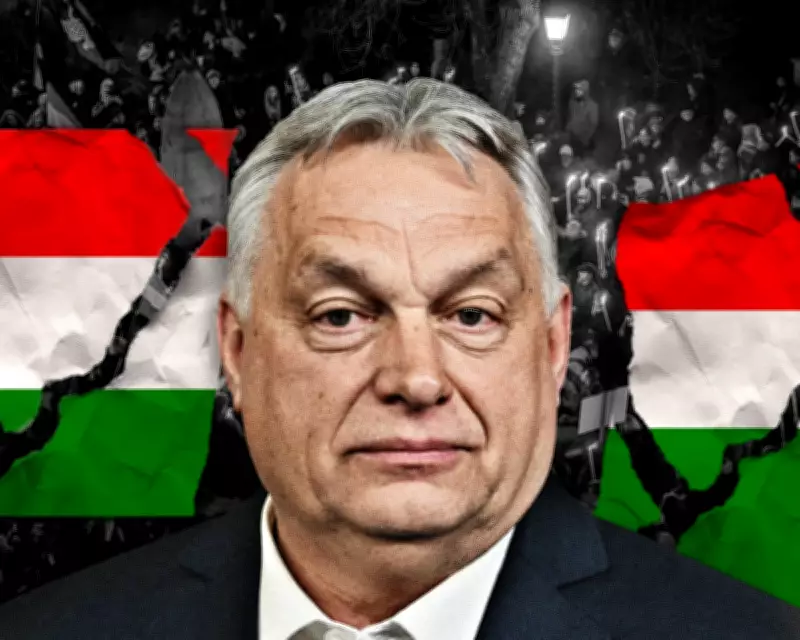
Young Hungarian Voters Poised to Challenge Orbán's 16-Year Rule in Pivotal Election
As Hungary approaches a critical general election on 12 April, a seismic shift is underway among the nation's youth. A recent poll reveals that 65% of voters under the age of 30 are planning to cast their ballots against Prime Minister Viktor Orbán, the right-wing populist who has held power for 16 years. This new generation, often dubbed "Generation Orbán," came of age during a period marked by declining press freedom, accusations of electoral autocracy, and Hungary's status as the EU's most corrupt country. Now, they are emerging as the primary driving force for political change, with many voting for the first time.
A Generation Defined by Disillusionment
For young Hungarians like Ákos, a 20-year-old aspiring teacher, the stakes could not be higher. "If things remain the same, or get even worse, I can't see a future here," he confessed, expressing a sentiment echoed by peers. Ákos was just four years old when Orbán first took office in 2010, and his entire life has been shaped by the prime minister's transformation of Hungary into an "illiberal democracy." Similarly, Boldi, a 22-year-old student, cited a lack of opportunities and stalled social mobility as devastating factors. "I think anything is better than a party that had 16 years to change things and just made it worse," he stated bluntly.
In interviews across Budapest, young voters conveyed deep hopes that their country is on the brink of historic change. Betti, a 24-year-old cashier, noted the palpable energy in the air: "With all of the marches and gatherings that are happening, it kind of feels like history is being made." However, she also highlighted the stark divisions in Hungarian society, with some still swayed by government propaganda, such as claims that Ukraine is a top enemy. "It's kind of depressing knowing that there are people around you who just don't want things to get better," she added.

The Rise of Péter Magyar and Youth Mobilization
The election pits Orbán against an unprecedented challenge from Péter Magyar, leader of the Tisza (Respect and Freedom) party. Polls suggest Orbán is trailing in voter support, largely due to this youth-driven movement. Nóra Schultz, a Budapest-based political analyst, explained that the shift away from Fidesz—once a youth-founded pro-democracy party—is one of the election's biggest stories. "Now, in the most reliable polls, Fidesz has below 10% support among people under the age of 30," she said.
Schultz attributed this change to a combination of domestic concerns, including the rising cost of living and housing access, as well as a pro-EU stance that clashes with Orbán's alignment with Russia. Social media has played a crucial role, with independent journalists and opposition politicians using platforms like TikTok to circumvent Fidesz's control over 80% of traditional media. On TikTok, young women have posted videos lip-syncing to Magyar's speeches or showcasing nail art with party branding, a trend absent for Fidesz.
The candidates' approaches to courting youth differ sharply. Magyar actively engages young people as political actors, urging them to join his movement, while Orbán emphasizes government benefits like aid for first-time homebuyers. "Magyar treats young people as political actors. Orbán is more like: 'Be happy about what you've been getting,'" Schultz noted.
Skepticism and Challenges Ahead
Despite the momentum, skepticism remains among young voters. Jani, a 21-year-old film student, clarified that support for Tisza is often more about opposition to the current system than enthusiasm for Magyar. "It's not like all the youngsters are Tisza activists," he said. "It's more like everybody is against this system and Tisza is the only option we have. I don't sympathize with Péter Magyar at all, but I have no choice so I will vote for him."

Concerns also persist about electoral fairness, with accusations that the system has been gerrymandered to favor Orbán. Additionally, Fidesz maintains strong support among voters aged 65 and over, as well as in rural areas, complicating the opposition's path to victory. Betti expressed anxiety about Orbán's potential reaction to a loss, given his strongman reputation and influence on global far-right movements. "I think they've already realized that it's over for them, but I don't think they will go down without a fight," she warned.
Even if Magyar succeeds, young Hungarians are realistic about the challenges ahead. Betti acknowledged that undoing Orbán's legacy will be difficult: "We know that, even if we change governments, the next four to eight years are going to be hard because they just absolutely took the country to shit. There's no other way to say it. It's going to be hard, but it's probably still going to be better."
A Hopeful Outlook for Change
Amid the uncertainty, optimism shines through. Ákos, reflecting on his generation's aspirations, said, "I'm pretty hopeful. Like most of my generation, I'm awaiting change. Change in the government, change in the system, and a change in people's thinking." He emphasized the need for unity in a divided Hungary: "I would certainly hope that the divisions between Hungarians will diminish over time, so that we realize that we are not each other's enemies. And that we have to share this country and work to make it a better place together."
As the election nears, the voices of young Hungarians underscore a pivotal moment in the nation's history. Their mobilization against Orbán's long-standing rule highlights a profound desire for renewal, driven by economic struggles, corruption, and a yearning for a more democratic future. Whether this wave of opposition will be enough to unseat the prime minister remains to be seen, but one thing is clear: Generation Orbán is ready to make its mark.