Historic Chess Collection of German Grandmaster Heads to London Auction
The extensive chess memorabilia collection of German grandmaster Lothar Schmid, widely regarded as the largest and most significant private collection of its kind, will be auctioned at Sotheby's in London next month. This remarkable assemblage contains over 50,000 artifacts spanning several centuries, offering a comprehensive journey through the rich history of chess.
The 1972 'Match of the Century' Artifacts
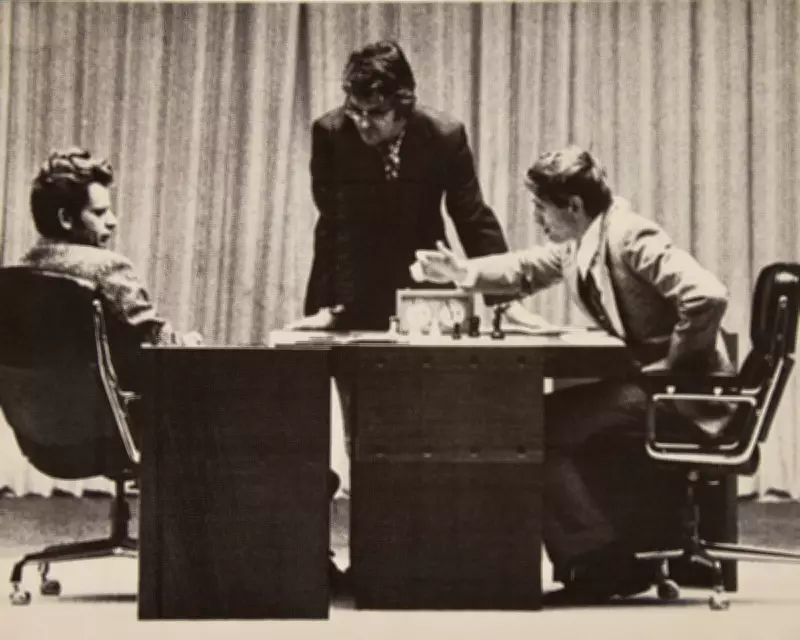
Among the most notable items are souvenirs from the legendary 1972 World Chess Championship in Reykjavik, famously dubbed the "Match of the Century." This historic encounter pitted Soviet champion Boris Spassky against American challenger Bobby Fischer during the height of the Cold War. Schmid served as chief arbiter for this globally significant match, and his personal collection includes original score notes from both players, along with other memorabilia from this iconic showdown.
Bernhard Schmid, Lothar's son, reflected on his father's passion for chess and collecting. "He was crazy for the game and everything to do with it," he recalled. "He traveled to five continents to acquire artifacts he had fallen in love with, once going to South America for a book he told us children was as expensive as a house."

Rare Books and Historical Treasures
The auction features several extraordinary literary treasures, including what is considered the oldest existing book on chess. Repetition of Loves and the Art of Chess, written by Spanish chess master Luis Ramírez de Lucena around 1497, represents the first comprehensive description of chess rules and strategy. Sotheby's estimates this rare volume will fetch at least £70,000.
Another fascinating item is documentation related to the Mechanical Turk, the famous chess-playing automaton unveiled to Habsburg Empress Maria Theresa in 1769. This mysterious device toured Europe and America for over eighty years before its secret was revealed—it actually contained a skilled human chess player operating its movements through an intricate system of magnets and levers.
The Collector's Background and Legacy
Lothar Schmid's ability to amass such a valuable collection stemmed from his family's ownership of Karl-May-Verlag, the publishing house responsible for the popular adventure novels of German writer Karl May. Schmid later managed this successful business, providing him with the resources to pursue his collecting passion.
Despite remaining an amateur throughout his career, Schmid achieved the rare distinction of becoming a grandmaster in both over-the-board chess and correspondence chess. He represented West Germany in eleven Chess Olympiads between 1950 and 1974, establishing himself as one of Germany's foremost chess players.
Bernhard Schmid described his father as "a very charming person, very urbane" who was uniquely positioned to referee the 1972 championship. "When they were looking for a referee it had to be someone who was measured and politically neutral," he explained. "He knew and respected both men well and was well liked himself, so he was considered to fit the bill."
Enduring Appeal of Chess Collections
Sotheby's specialist Gabriel Heaton emphasized the rarity of such collections coming to market. "To have something that has engrossed humanity for centuries is particularly compelling in our world," he noted. "It's based not on luck but pure strategy, and is also nicely predictable because everyone knows what the rules are. That's quite anchoring."
Heaton also pointed to the recent resurgence in chess popularity, fueled by pandemic lockdowns and cultural phenomena like Netflix's The Queen's Gambit, which has created renewed interest in chess history and memorabilia.
The collection remained stored at Schmid's expansive home in Bamberg, southern Germany, until recently. Following his death in 2013, his three children have decided to sell the collection through Sotheby's London auction.
Bernhard Schmid recalled how his mother, Ingrid, had "patiently endured" her husband's collecting habit. "Like everyone who knew him, she saw it as his little addiction, but in a positive sense," he said. "Some people buy property, my father bought chess books and artifacts."

The auction promises to attract international attention from chess enthusiasts, historians, and collectors alike, offering a unique opportunity to own pieces of chess history that span from the game's medieval origins to its most famous modern confrontation.