Scarborough's Youth Confront Isolation with Creativity and Resilience
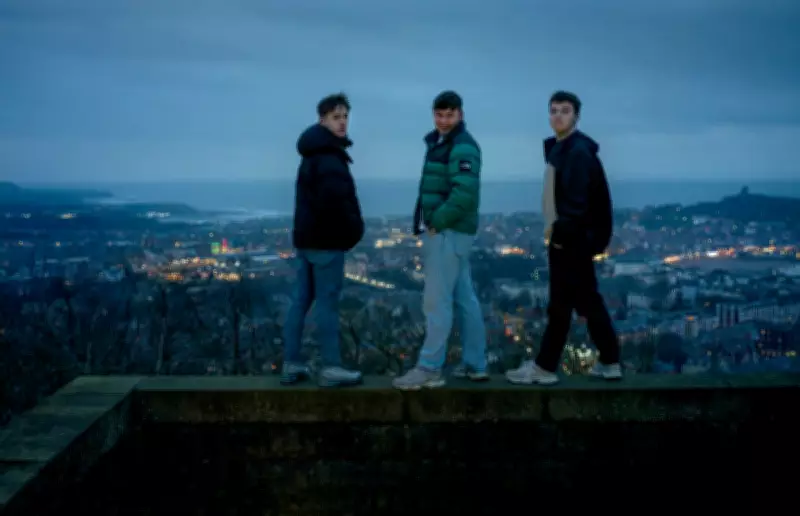
After a stormy day in Scarborough, a historic Yorkshire seaside resort, the waves have calmed, but the challenges facing its young residents remain turbulent. Keane, 19, Charlie, 17, and Jack, 17, gather at Oliver's Mount, overlooking the town, to discuss their aspirations and the realities of growing up in a place hemmed in by the sea and inadequate infrastructure.
A Tale of Two Worlds: Money and Aspiration in Coastal Life
Keane, who recently visited a drama school in London, recounts an encounter that highlighted the economic divide. "I heard a girl on the phone talking about inheritance," he says, imitating a posh accent. "That's planets away from here. We make money, we don't wait for it." This distinction is crucial for the trio, who emphasize how financial constraints shape life choices in Scarborough compared to more affluent areas.
Keane, who re-sat his English GCSE and faced school troubles, initially considered an apprenticeship urged by his father, who valued early earnings. However, he pivoted to drama A-levels at a local college, inspired by a last-minute visit. "Many of my mates took apprenticeships in trades here or in York," he notes, working as a hospital cleaner to save funds. "Higher education isn't common—it's about money."

Feral: A Love Letter to Home Amidst Media Misrepresentation
At the Stephen Joseph theatre, the teens rehearse for the Young Company drama programme. Keane's play, Feral, serves as a poignant response to a 2023 Daily Express article that labeled Scarborough a "battleground" with "feral" youths. The monologue, which won awards at the Scarborough Fringe festival, explores the dilemma of leaving for opportunities versus staying rooted in community love.
Charlie reflects on judgment from outsiders: "People call me a tramp for living in Eastfield, but they don't know me." Eastfield, a deprived area once part of Scarborough, holds a special place for Jack, who lives with his grandparents in town. Rob Salmon, head of creative engagement at Stephen Joseph, stresses, "When money is scarce, choices vanish. It's vital that local voices define their narrative."
Geographic and Transport Barriers: Feeling Trapped by the Coast
Scarborough's location on the North Yorkshire coast exacerbates its isolation. An hour from York and Hull, with half its potential area lost to water, the town struggles with connectivity. The A64 road remains a single carriageway, and train services to York are infrequent, despite decades of pleas for improvement. Alison Hume, Labour MP for Scarborough and Whitby, criticizes these links for stifling growth, leaving the town "stuck in the slow lane."
David Skaith, mayor of York and North Yorkshire, identifies transport as a key issue: "Access underpins everything. Many on the coast feel trapped, especially young people, due to poor connectivity." Emily, 29, from arts charity Arcade, argues that better rail links to York could incentivize staying in Scarborough, boosting local contributions.
Arts as a Catalyst for Community and Hope
Daisy, 19, commutes from Bridlington for her job at Arcade, valuing stable employment over seasonal work. The charity fosters arts engagement, such as a workshop with Hull rapper Chiedu Oraka, who collaborates with children in Barrowcliff to compose songs about their home. "I hate how these places are portrayed," Oraka says. "There are hidden gems here—kids with so much to say."
Back at the theatre, Keane rehearses a scene from Feral where his character boards a train to Leeds, symbolizing the bittersweet pull of departure. "When Adam leaves, part of him stays in Eastfield," Keane explains. "That's true for me too—a piece of me will always remain here." This sentiment echoes the broader struggle of youth in coastal towns, balancing dreams with deep-rooted pride in their origins.