London Estate Regeneration 'Leading to Evictions, Worse Living Conditions and Fewer Social Homes'
Green Party London Assembly Member Zoe Garbett has issued a stark warning, asserting that regeneration schemes across the capital are "sideline residents and prioritise high-end market housing." In a newly released report, she argues that despite recent City Hall reforms, Londoners continue to suffer from what she describes as "the same failed model of estate regeneration."
Reforms Fall Short in Protecting Residents
Since 2018, landlords seeking to demolish social homes have been required to conduct resident ballots, with Mayoral guidance also mandating a net increase in affordable housing and full rights for social tenants to return or remain. However, Ms. Garbett contends that the system "continues to sideline residents and prioritise high-end market housing over meeting local needs," leading to a process she terms "degeneration."
An estimated 139 estates in London are currently slated for demolition and redevelopment or are undergoing regeneration. Since 1997, 160 estates, comprising 55,000 households, have been regenerated. Research from the London Assembly Housing Committee in 2015 revealed that 50 estates regenerated between 2004 and 2014 resulted in a net loss of approximately 8,300 social rent homes, even as site density doubled.

Democratic Deficit and Community Impact
In her report, titled "Left to Rot," Ms. Garbett highlights a "democratic deficit," where residents lack the time, resources, or accessible information to engage effectively in regeneration processes. She warns that communities are left feeling neglected, with affordable housing classifications—such as shared ownership and intermediate rent schemes—failing to alleviate housing waiting lists in the same manner as traditional social housing.
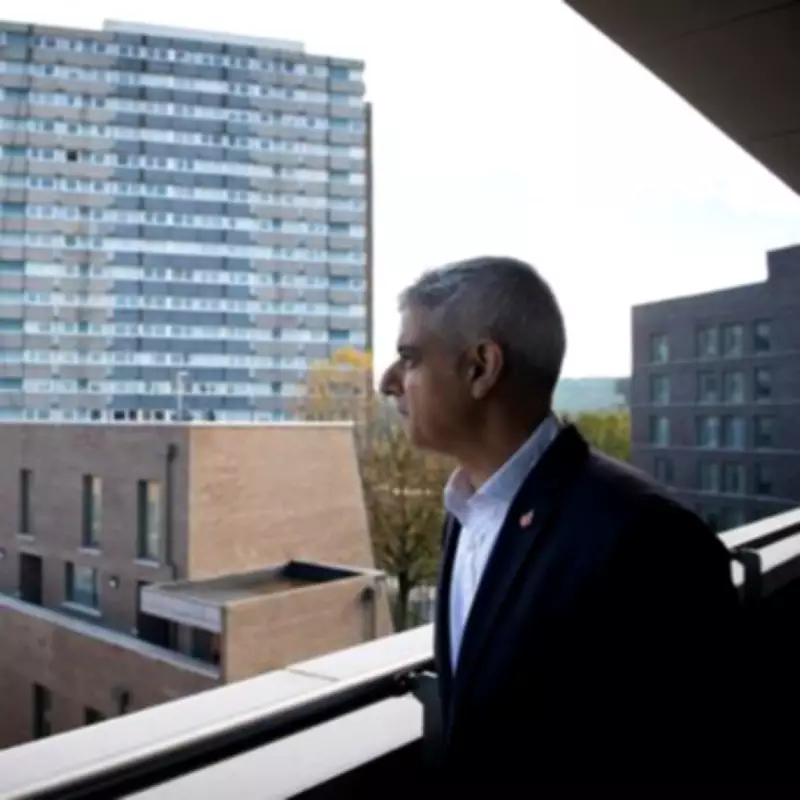
When questioned about the report in City Hall, Mayor Sadiq Khan acknowledged the concerns, stating, "We're the only place in the country that requires... an affirmative ballot before regeneration can take place." He emphasized that planning and funding requirements in London mandate the replacement of demolished affordable homes with the same or greater amount, pledging to review the report and engage with residents on a cross-party basis.
Case Study: Trouble in Thamesmead
One prominent example is the Lesnes Estate in Thamesmead, famous for its appearance in the 1971 film A Clockwork Orange. Bexley Council approved plans in December allowing housing association Peabody to demolish the 1960s estate and construct up to 1,950 new homes. While many residents have left, several long-term occupants are resisting relocation, feeling threatened despite Peabody's offers of financial support.
Housing activist and Lesnes resident Andrea Gilbert criticized Peabody's communication, noting that residents remain uncertain about their futures and face prolonged delays in securing suitable replacement homes. One resident, Adam Turk, has launched a legal challenge against the approval, citing unlawful environmental information in planning documents.
Peabody defends its plans, arguing that redevelopment will benefit the Thamesmead community by increasing available housing by nearly 230%, from 596 to 1,950 homes. A 2020 ballot indicated that 70.2% of Lesnes Estate residents supported inclusion in wider regeneration plans, with 65.4% participation. The housing association offers compensation at market value plus 10% and equity contributions to bridge price gaps for relocating residents.
Calls for Urgent Action
Ms. Garbett welcomed Mayor Khan's recognition of the issue but expressed concern that existing policies still fail to protect residents from "truly awful experiences." She cited reports of residents feeling "left to rot" and describing democratic processes as a "joke" due to lack of fairness and transparency.
The report recommends reforming resident ballots to enhance landlord accountability, establishing a 'Community Plan Fund' to promote resident-led regeneration, and imposing conditions on Greater London Authority funding to prevent displacement. Ms. Garbett urges the Mayor to read the report, consult with affected residents, and take immediate action to address these critical housing issues.