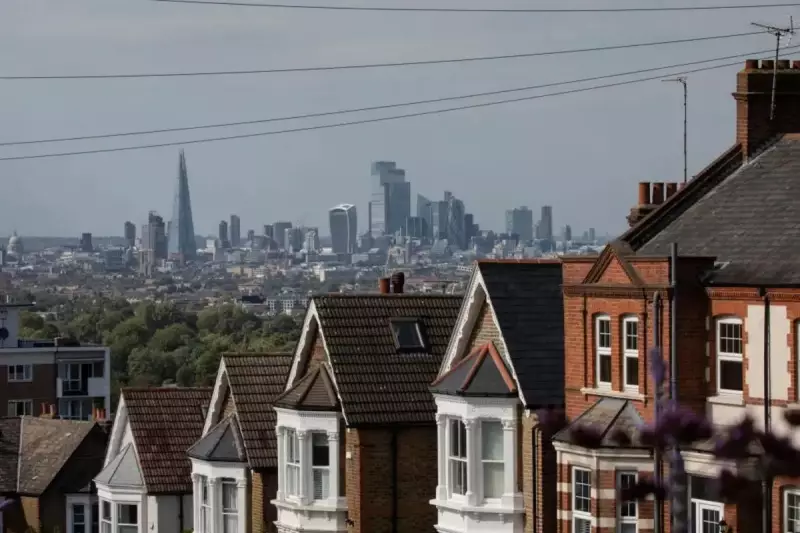
London's property market has recorded a significant annual price drop, with the capital's housing sector feeling the immediate impact of political and fiscal uncertainty surrounding the recent Budget.
Capital Bears the Brunt of Budget Turmoil
According to the latest data from the Office for National Statistics (ONS), the average house price in London for October 2025 was £547,000. This figure represents a 2.4 per cent decline compared to the same month the previous year, underscoring a marked downturn in the capital's market resilience.
Property analysts directly link this slump to the prolonged period of speculation and instability in the lead-up to the Autumn Budget. Amy Reynolds, sales head at Richmond agency Antony Roberts, explained the sensitivity of the London market, stating that even minor shifts in economic expectations can drastically affect buyer activity and sentiment.

Richard Donnell, executive director at Zoopla, concurred, highlighting the dual pressure of higher stamp duty costs and the chilling effect of Budget uncertainty on purchasers, which collectively drove annual price falls across London.
A Tale of Two Markets: London vs. The UK
While London struggled, the broader UK housing landscape told a different story of stabilisation. After a turbulent autumn dominated by Budget rumours, the national market showed signs of returning to normal.
The ONS reported that the average UK house price rose by 1.7 per cent year-on-year to £270,000 in October 2025. This growth, though slightly down from the two per cent rate recorded in September, indicates underlying market strength.
England saw a one per cent annual increase, taking the average price to £292,000. The standout performer was the North East of England, where house price inflation hit five per cent, pushing average values to £163,000.
Experts view these figures as proof of a fundamentally resilient property sector, which weathered speculation over a potential stamp duty overhaul and uncertainty preceding the incoming Renters Rights Act.
Policy Impact and Future Confidence
The Budget itself introduced specific measures that are now shaping the market. Chancellor Rachel Reeves announced a new mansion tax surcharge on properties valued above £2 million, while avoiding more radical reforms to the council tax system.
Looking ahead, estate agents anticipate a surge in activity post-Christmas. The traditional 'Boxing Day bounce' is expected to be amplified by post-Budget relief and a clearer policy environment for buyers.
Further confidence is predicted to come from monetary policy. The market is poised for a boost from an interest rate cut, widely expected from the Bank of England. Paresh Raja, CEO of Market Financial Solutions, stated that such a cut would provide a "meaningful" confidence lift for buyers and investors.
Jeremy Leaf, a north London estate agent and former RICS chair, noted that the current "up-a-bit, down-a-bit" pattern in prices could have been far worse given the intense pre-Budget speculation. He, along with other experts, suggests the outlook, particularly for London, is becoming more constructive as buyers adjust to new norms and borrowing costs.