In a landmark decision that has captured attention across Georgia, residents of McIntosh County have overwhelmingly rejected a zoning amendment that would have permitted significantly larger residential properties on Sapelo Island. This citizen-led referendum represents only the second instance in Georgia's history where voters have directly challenged county planning policy through such a mechanism.
A Community's Stand Against Encroaching Development
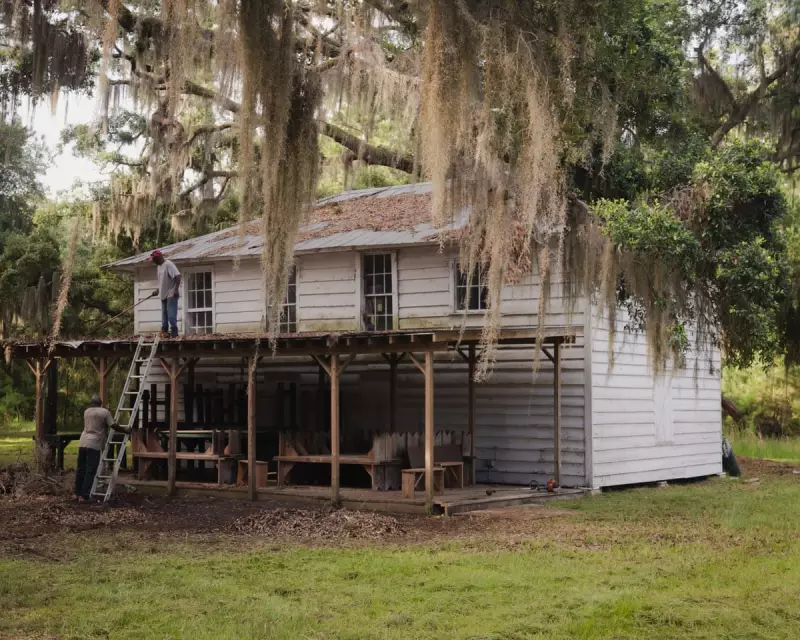
At the heart of this historic vote lies Hogg Hummock, a modest settlement on Sapelo Island that serves as the last remaining sea island community of Gullah Geechee people in Georgia. These residents are descendants of enslaved West Africans who worked plantations along the southeastern coast. Following emancipation, their ancestors were granted this land partly because its marshy conditions were considered less desirable than other island areas.
"If you ain't lazy, you can live good here," remarked 70-year-old Ire Gene Grovner, a ninth-generation resident who was skinning a raccoon behind his home when speaking to reporters. Grovner gestured toward his chicken pens and winter collard greens, embodying the self-sufficient lifestyle that has sustained this community for generations.

The Referendum That Made History
The zoning amendment in question would have increased the maximum permitted residential square footage in Hogg Hummock from 1,400 to 3,000 square feet. Proponents argued this would allow for property improvements, but opponents feared it would open the floodgates to developers constructing large vacation homes that would fundamentally alter the community's character.
Unofficial results revealed a decisive outcome: nearly 85% of the 1,869 county voters opposed the zoning increase. This referendum became possible after more than 2,000 registered voters in McIntosh County signed petitions demanding a direct vote on the matter.
"Every county in the state of Georgia is looking at these results," observed Kathleen Russell, editor of the Darien News. She noted that the successful referendum establishes a precedent that could empower residents across the state to challenge zoning decisions through direct democracy.
Preserving Culture and Environment
The stakes extended far beyond property sizes. Community members argued that allowing larger houses would inevitably raise property taxes, potentially pricing out the remaining Gullah Geechee residents whose numbers have dwindled from approximately 500 in the early 20th century to just 30-40 today. Many family members have moved to the mainland but maintain strong ties to the island, with some planning to eventually retire there.
Nick Macías, assistant operations director at the University of Georgia Marine Institute on Sapelo Island, highlighted the environmental significance of the decision. "Sapelo is an ecologically important island you don't find anywhere in the world," he explained after casting his ballot. He noted that the island contains Georgia's only healthy communities of marsh grass, a keystone species crucial to the coastal ecosystem.
Increased development "would put stress on the carbon footprint of the island and displace Gullah Geechee people," Macías warned. "When it comes to preserving the culture, it comes down to the next generation being able to live there."
Legal Battles and Uncertain Future
The path to this referendum was neither simple nor straightforward. Proponents first had to overcome legal challenges from county officials who argued that zoning rules weren't covered by language in Georgia's constitution. Only a September state supreme court decision finally authorized Tuesday's election.
Even with their decisive victory at the polls, residents face continued uncertainty. McIntosh County attorney Adam Poppell has suggested that voters rejecting the zoning increase doesn't automatically revert conditions to the previous 1,400 square foot limit. Instead, he claims the election result leaves Hogg Hummock with "no zoning" whatsoever.
Dana Braun, attorney for the Hogg Hummock residents who mounted the referendum effort, indicated that another lawsuit would likely follow if the county persists with this interpretation. "The county apparently loves paying lawyers for losing battles," he remarked pointedly.

A Rare Exercise of Democratic Power
Referendums of this nature remain "incredibly rare in the majority of the south," according to Chris Melody Fields Figueredo, executive director of the Ballot Initiative Strategy Center. She attributes this scarcity to historical resistance: "States where formerly enslaved people lived, the state governments did not want those people to exercise their power."
The ability to stage such referendums in Georgia stems from provisions in the state's constitution. Once a sufficient percentage of a county's registered voters signs a petition—the threshold varies by population—residents can demand a direct vote on policies enacted by their elected representatives.
Fields Figueredo describes this process as "a form of holding power accountable, where systems of governance are challenged."
Personal Connections and Cultural Heritage
Among those voting was Samuel, a trucker who took time off work to cast his ballot. Connected to Hogg Hummock through his wife's family, he recalled first visiting as a teenager: "They showed me medicine for toothaches, using plants." Regarding the community's struggle, he affirmed, "I'll fight for it till the end. They deserve it. It's their place."
Bobby Gene Grovner, Ire Gene's 67-year-old brother, is renovating his home with plans to leave it to his two daughters. "These ones who come with a pocketful of money, it ain't gonna work," he declared, referring to developers eyeing the community's land. Despite the victory, he acknowledged the exhaustion of constant legal battles: "It's tiring to have to fight in courtrooms and government halls for my community."
The Southern Poverty Law Center has filed an ongoing case asserting that the proposed zoning amendment was discriminatory. "The people in Hogg Hummock feel like they've been shut out," explained SPLC attorney Miriam Gutman. "They want to pass their land onto their children and grandchildren. They want to be part of the conversation about the community's future."
As Ire Gene Grovner finished preparing his raccoon and turned toward his chicken pens to collect the morning's eggs, he offered his definitive position on Hogg Hummock's future: "I ain't planning on goin nowhere." This simple declaration encapsulates the determination of a community that has successfully used democratic processes to protect their ancestral home, cultural heritage, and way of life against formidable pressures.