Would you consider living in an abandoned police station, a deserted hospital, or a disused office building if it meant saving hundreds of pounds each month? This unconventional housing option, known as property guardianship, is gaining traction across the UK as more people struggle with exorbitant rents and limited affordable accommodation.
What Exactly is Property Guardianship?
Property guardianship represents an innovative arrangement where individuals reside in otherwise vacant buildings under licence agreements rather than traditional tenancies. The concept operates on a simple premise: guardians provide security for property owners by occupying empty spaces, while benefiting from significantly reduced living costs compared to conventional rentals.
Unlike standard tenants who sign lease agreements and pay monthly rent, guardians typically enter into 28-day rolling licence arrangements and pay licence fees instead. This system gained national attention approximately a decade ago, partly through television programmes like Channel 4's Crashing, though initial coverage often focused on concerning stories about substandard living conditions.

The Legal Landscape and Living Conditions
Property guardians operate within a distinct legal framework that offers fewer protections than traditional tenancies. Guardians can be asked to vacate premises with just 28 days' notice - half the minimum period required for standard tenants under section 21 notices. Property owners retain the right to conduct inspections at any time, and while deposits are usually required, they don't necessarily need protection through official schemes.
Although industry standards have improved through organisations like the Property Guardian Providers Association, guardianship properties only need to meet basic housing standards and health and safety requirements. Guardians have reported living in diverse spaces including former morgues, hospitals, cathedrals, schools, and office blocks, often sharing facilities with multiple other occupants.
Personal Stories: Three Guardians Share Their Experiences
Cherise Woods: The Artist Saving for Home Ownership
Cherise Woods, a 30-year-old artist and designer, turned to property guardianship in 2024 after facing eviction from her previous rental due to rat infestation. She now occupies a converted office space in Somerset, paying £614 monthly including allocated parking and communal cleaning services. While she shares bathrooms and kitchens with approximately fifteen other guardians on her floor, the arrangement has enabled significant savings toward her first property purchase.
"I would never ever want to go back to renting," Cherise told us, highlighting how her £614 monthly payment compares favourably to local average room rents of £679 plus additional bills. Her converted office space features visible wiring and computer socket casings along the walls, but she has personalised it with her own furniture and belongings.
Sam Whelan Curtin: The Social Justice Worker Embracing Calculated Risk
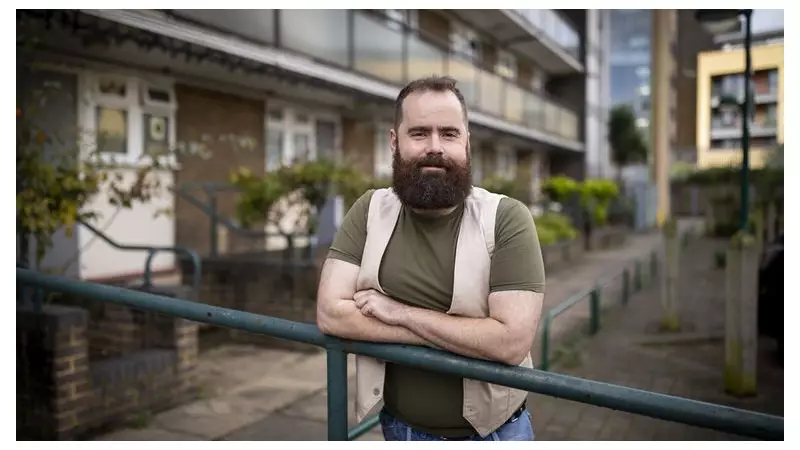
Sam Whelan Curtin, a 38-year-old social justice worker from Dublin, found property guardianship provided an affordable solution when relocating to London three years ago. His one-bedroom council flat in Poplar, east London costs £720 monthly - substantially less than the area's average rent of £1,031. However, his arrangement comes with unique requirements: guardians with his provider must volunteer for at least twelve hours monthly.
"It's a calculated risk," Sam explained, acknowledging the uncertainty of potentially receiving eviction notice at any time. "You could move in and get a notice a week later." Despite this instability, the financial benefits have made guardianship preferable to returning to London's competitive private rental market.
Adriana Faria: The Freelancer Gaining Space and Stability
Adriana Faria, a 49-year-old freelance set designer, has lived as a property guardian in east London for two and a half years. Her one-bedroom flat in a council estate scheduled for demolition in 2028 costs £1,025 monthly, combining licence fees and bills. For Adriana, guardianship offered not just financial relief but essential workspace that conventional rentals couldn't provide at affordable rates.

"Everyone who lives in London knows it is a nightmare," she remarked about the capital's housing market. "There is no reason to go back to renting. If I can't keep being a guardian, I will try to find a place to buy for myself."
Could Guardianship Address the Housing Crisis?
With 719,470 properties standing vacant across England according to Office for National Statistics data, property guardianship advocates argue that converting empty buildings could provide much-needed housing. Natasha Taylor, managing director of property management firm AdHoc, estimates that approximately half of vacant properties could potentially house guardians, though regulatory hurdles including HMO licensing and planning permissions present challenges.
Arthur Duke, founder of Live-in Guardians, has observed "a steady and significant increase" in enquiries from property owners seeking guardian solutions. He notes that guardianship "reduces waste, prevents high street decline and provides affordable housing at a time when it's badly needed," particularly benefiting key workers and young professionals.
The Regulatory Debate and Future Prospects
Professor Chris Bevan, a property law expert who has extensively researched the guardianship sector, acknowledges the potential for vacant properties to house people but emphasises the need for enhanced regulation. He advocates for local authority inspections to ensure properties meet decent home standards and greater involvement from housing ombudsmen.
"If the regulation is not put in place, then there is the threat of this sort of development of a substandard housing regime," Professor Bevan warned. "We should regulate the system to realise its potential."
While property guardianship clearly isn't suitable for everyone - with restrictions including bans on children, pets, and limitations on guest stays - it represents an increasingly important alternative for those priced out of conventional housing markets. As the UK's housing crisis deepens, this unconventional approach continues to attract both supporters who see its potential and critics who question whether it creates a two-tier system of housing rights.