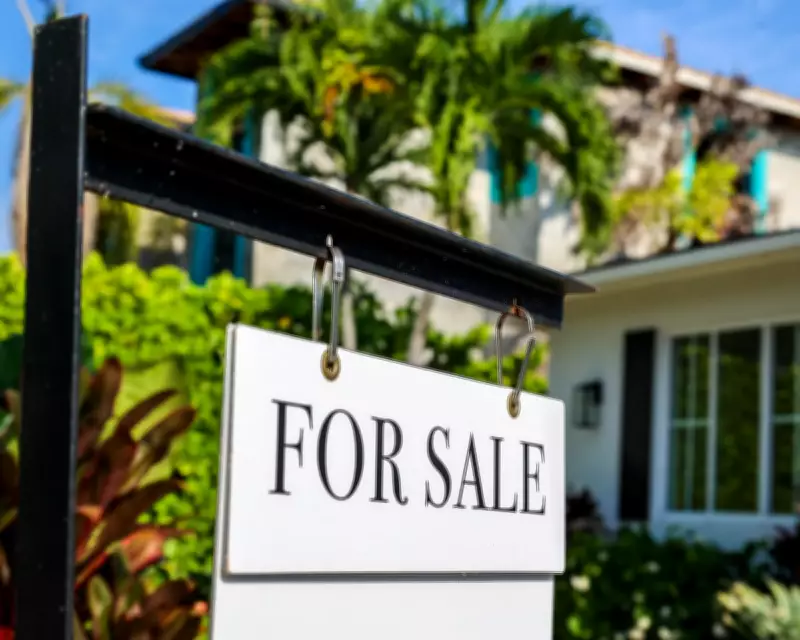
Florida's Real Estate 'Gold Rush' Attracts Super-Rich While Pushing Out Residents
To the casual observer, South Florida's real estate market appears to be flourishing with unprecedented prosperity. Miami is experiencing what experts describe as a genuine "gold rush" as ultra-wealthy buyers from across the nation compete for mega-mansions and luxury condominiums the moment they become available. This influx of affluent newcomers, including elite New Yorkers seeking refuge from urban pressures, has injected billions into Florida's thriving economy.
The Parallel Reality of Soaring Costs
Beneath this surface of opulence, however, exists a troubling parallel reality that threatens the state's long-term stability. As property values skyrocket and everyday expenses from housing and insurance to groceries and gasoline become increasingly burdensome, many Florida residents are contemplating a drastic solution: leaving the state entirely.
A comprehensive poll conducted by Florida Atlantic University (FAU) reveals that approximately half of Florida's current residents are seriously considering relocation due to the escalating cost of living. Among those contemplating departure, an overwhelming 80% specifically cite housing affordability as their primary concern.

Statistical Evidence of Growing Disparity
The evidence pointing toward an emerging crisis extends beyond anecdotal observations. Florida has now entered the top ten most expensive states to live nationwide, with housing costs significantly above national averages in numerous regions. The metropolitan area encompassing Miami and Fort Lauderdale—where newly constructed condominiums routinely command prices in the tens of millions—has become particularly problematic.
According to a Consumer Affairs report on housing affordability, this region contains three cities ranked among the top six nationwide where households spend 32% or more of their income on housing, dramatically exceeding the national average of 24%. This phenomenon has created what economists describe as a "house poor" population struggling to maintain basic financial stability.
Migration Patterns Reveal Contradictory Trends
Recent migration data highlights the contradictory nature of Florida's current demographic shifts. While Miami's millionaire population increased by a staggering 94% between 2014 and 2024, Miami-Dade County simultaneously experienced a net migration deficit exceeding 130,000 people from 2020 to 2023. Although not exclusively attributable to housing costs, this exodus represents a significant demographic shift that concerns urban planners and economists.
"Floridians believe in the American Dream, but they are paying dearly for it," stated Monica Escaleras, chair of FAU's Department of Economics, in her analysis of the poll results. "The Florida promise of sun, growth, and upward mobility remains alive, but it is getting expensive to hold on to."
Essential Services Face Workforce Challenges
The affordability crisis extends beyond residential concerns to threaten essential community services. Pediatricians, for example, are becoming increasingly scarce in both hospital systems and private practices throughout Florida. While multiple factors contribute to this shortage—including controversial state policies that deter medical professionals—the financial reality remains paramount.
Few newly graduated physicians burdened with substantial educational debt can afford to allocate disproportionate portions of their income toward housing expenses. Consequently, many choose to establish their careers in states with more reasonable living costs, creating healthcare accessibility challenges for Florida communities.
Developers Respond with Mixed Solutions
Recognizing the urgency of retaining essential workers in education, healthcare, retail, and other critical industries, both municipal governments and private sector partners have initiated several affordable housing projects throughout Miami. Among these developments is the upcoming Cloud One Residences in Wynwood, an 85-unit loft-style apartment complex paired with hotel accommodations and commercial spaces.

Sebastian Lüdke, chief executive and founder of Germany's ALP.X Group and co-developer of Cloud One, emphasizes that while his project isn't classified as affordable housing, it represents a conscious effort to enhance community livability. With starting prices between $400,000 and $500,000, the development aims to remain accessible to local residents while creating employment opportunities within the neighborhood.
"The entire aspect of affordability in the city is an important one, and it goes beyond affordability and into livability," Lüdke explained. "What is extremely important for Miami to evolve as one of the great three cities next to New York and Los Angeles is education, improving that from kindergarten to schools to universities."
Comprehensive Solutions Required
Lüdke and other development professionals argue that addressing Florida's housing crisis requires comprehensive investment across multiple sectors. Beyond affordable housing initiatives, improvements in public transportation infrastructure, healthcare accessibility, and educational systems are essential to creating sustainable communities.
"With the growth that Miami has seen, and with the challenges Miami has with traffic, education, and the availability of housing, this really needs to be a core focus for public administration and business people that contribute to investments in all these sectors," Lüdke emphasized. "My perception is that local people and business people are well aware of that."
As Florida continues to attract wealthy newcomers drawn by favorable tax policies and year-round sunshine, the state faces the critical challenge of balancing economic growth with community sustainability. Without strategic interventions addressing housing affordability and living costs, the very character of Florida communities risks permanent transformation.