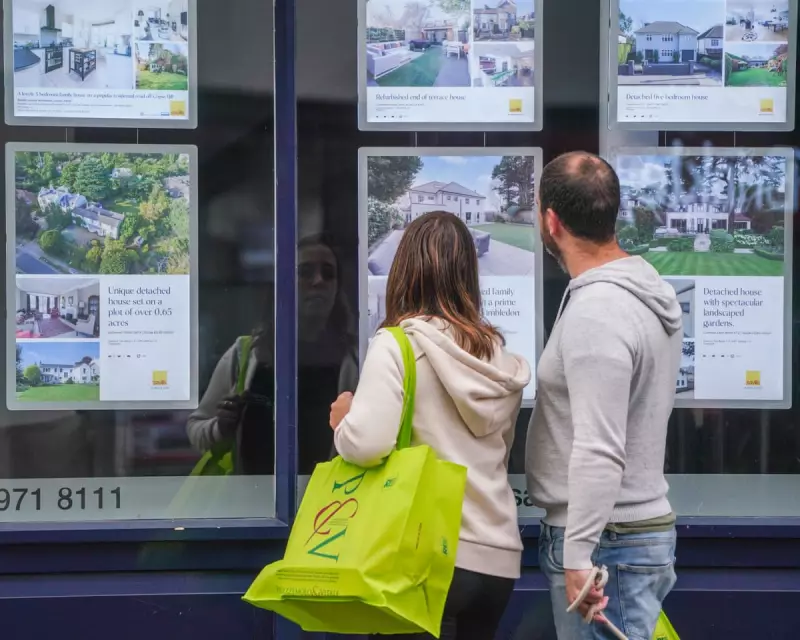
The Bank of England delivered an early festive boost to borrowers on Thursday, announcing its fourth interest rate cut of the year. The base rate was reduced from 4% to 3.75%, following previous cuts in February, May, and August.
Immediate Impact on Existing Mortgages
For the vast majority of homeowners, monthly payments will remain unchanged. This is because more than 7.2 million (86%) of Britain's 8.4 million residential mortgages are on a fixed rate.
However, the reduction brings immediate relief for around 533,000 households with a base-rate tracker mortgage. Their payments will fall in line with the Bank's decision. According to UK Finance, a typical tracker customer with an outstanding balance of £138,000 will see their monthly payment drop by approximately £28.77.

A further 509,000 borrowers on their lender's Standard Variable Rate (SVR) are in a waiting game. Lenders are likely to cut SVRs but are not forced to follow the base rate. If they do pass on the full cut, UK Finance estimates a typical monthly saving of around £13.88.
Future Winners: Remortgaging in 2024 and 2026
The real benefit of falling rates will be felt by those seeking new fixed deals. Simon Gammon, managing partner at Knight Frank Finance, noted lenders have been trimming rates for weeks and said: "Today's decision adds momentum to what we expect to be a highly competitive January." He suggested banks will undercut each other and that two-year fixed rates could dip below 3% by spring.
Currently, the average new two-year fix is 4.82%, but the best rates for those with significant equity are near 3.6%. This is a dramatic shift from early 2024, when the average two-year fix was about 5.7%.
Mortgage specialist Lorna Hopes of Smith & Pinching highlighted a key group: "The biggest winners might be the thousands of people due to come off a two-year fixed-rate deal in 2026 – they should be able to remortgage onto a much lower rate."
Mark Harris, CEO of SPF Private Clients, offered advice for those remortgaging soon: "You can book a rate now and review prior to completion – if rates have fallen by then, you can enquire about switching to a lower rate."
However, about 1.8 million fixed-rate deals are due to end in 2026. Those coming off cheaper five-year deals secured in 2021 (averaging 2.75%) will likely still face a significant payment increase when they switch to today's average five-year rate of 4.9%.
Savings Rates Set to Dip
While not directly tied to the base rate, the returns on many savings accounts are expected to fall. This cut is likely to be passed on to savers with easy-access accounts or other variable-rate products.
Before the announcement, the average easy-access rate was 2.56%, though top 'best buy' accounts paid up to 4.5%. Fixed-rate savings bonds, which lock money away for a set term, typically offer higher returns. On Thursday, the leading one-year fixed deals were paying just over 4.5%.
The Bank's move signals a continued focus on stimulating the economy, with the property market poised to be a major beneficiary as borrowing costs continue their downward trend.