The proposed DLR extension to Thamesmead may need to incorporate at least one additional stop to ensure the financial viability of a planned New Town development featuring up to 15,000 homes, according to expert testimony presented to the London Assembly.
Infrastructure Investment Crucial for Success
Dr Thomas Aubrey, a visiting Senior Fellow at the London School of Economics and Political Science, has cautioned that the current plan for just two new stations - Beckton Riverside and Thamesmead - might not generate sufficient returns to justify the infrastructure investment required for such a substantial housing project.
"When you're looking at the absolute costs of infrastructure, sometimes if you're only doing a couple of stations in terms of an extension, you just don't make it commercially viable," Dr Aubrey told the London Assembly Planning and Regeneration Committee.

European Models Suggest Larger Scale Needed
Drawing parallels with major European urban developments, Dr Aubrey emphasised that successful large-scale projects typically require more extensive infrastructure networks to achieve financial sustainability.
"A lot of the larger scale projects you can see across Europe, they often have to go a bit bigger to make those commercially viable," he explained. "So if you're looking at Thamesmead, actually extending it into Bexley may be actually necessary in order to make that a commercially viable proposition."
Transport for London's Current Plans
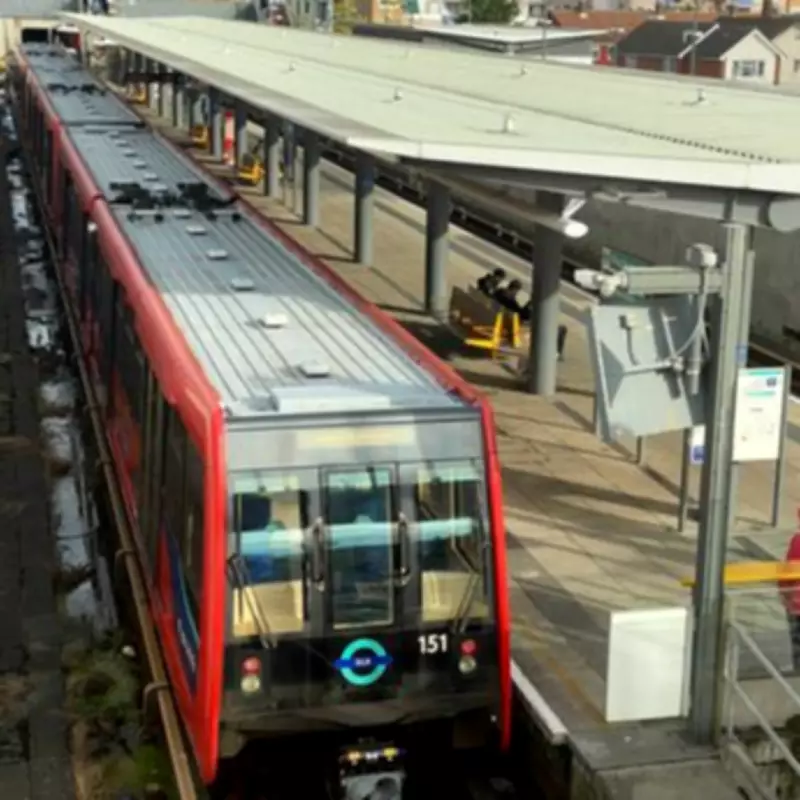
Transport for London's existing proposal includes extending the Docklands Light Railway across the river into Thamesmead with two new stations, while maintaining the possibility of further extension. The project received Chancellor Rachel Reeves' approval last year, with construction potentially completed by the early 2030s.
Bexley Council and other stakeholders have previously advocated for extending the line to Belvedere, though no concrete plans currently exist for this additional expansion.
Funding Challenges and Land Value Capture
Dr Aubrey highlighted potential funding limitations, suggesting that current mechanisms available to City Hall, including Land Value Capture, might prove insufficient for financing the new settlement. He noted that returns from constructing two stations would be substantially lower than those from developing five or six stations along the extended route.
"One way of trying to ensure that it does get funded and financed and get off the ground is that you actually have to have a larger bit of infrastructure," Dr Aubrey added, emphasising the importance of scale in making such projects economically feasible.
Historical Lessons in Urban Planning
The academic stressed that transport infrastructure must precede housing construction in any successful New Town development, ensuring future residents aren't left stranded without adequate connections.
"We have a bad example in this country of not putting the infrastructure in first," Dr Aubrey noted. "But if the station is there and then the houses start getting built - put the infrastructure in first."
Learning from Past Mistakes and Successes
Kane Emerson, Head of Housing Research at the YIMBY Alliance, pointed to Skelmersdale as a cautionary example of infrastructure failure. Designated as a New Town in 1961, the settlement suffered when its train station closed due to Beeching Cuts and major employers shut down, leaving residents without transport or employment opportunities.
Conversely, Mr Emerson highlighted Milton Keynes as a positive model, where a train station with rapid London connections and accessibility to the Oxford-Cambridge corridor has created significant opportunities for residents.
Development Ready to Proceed
Developer Peabody has indicated readiness to commence construction on the 100-hectare Thamesmead Waterfront site once transport infrastructure receives final approval. The proposed development has been described as a "no-brainer" by London Assembly Member James Small-Edwards, particularly given London's ongoing housing supply crisis.

The debate continues regarding the optimal scale of transport investment needed to support Thamesmead's transformation into a successful New Town that could provide 15,000 much-needed homes while remaining financially sustainable for all stakeholders involved.