Redefining Family: The Rise of Unconventional Living Arrangements
Across the globe, from Atlanta to rural Germany and the UK, people are consciously choosing to move beyond traditional nuclear family structures. These innovative households demonstrate that isolation need not be the default, offering compelling alternatives that provide emotional support, practical assistance, and a profound sense of community.
Four Generations Under One Roof in Atlanta
In Atlanta, Carolyn Martinez, 65, exemplifies how deep bonds can create family beyond blood relations. Her household spans four generations, including her 90-year-old mother, her adult daughter, and her three-month-old granddaughter. This multi-generational arrangement began decades ago when her mother, facing various disabilities, moved in permanently.
"My mum has lived with me literally all my adult life," Martinez explains. "She just wasn't able to live by herself." The household expanded further when Martinez's best friend of over thirty years moved in temporarily after a divorce twenty-five years ago. When her friend was diagnosed with breast cancer shortly after, the arrangement became permanent.

Now referred to as "Tía" (auntie in Spanish) by Martinez's children and grandchildren, this friend represents how friendship can function as family. "I could not have raised my daughter as a single mother without her," Martinez acknowledges. The household recently welcomed another generation when Martinez's daughter returned home during pregnancy.
"How many grandparents can say they get to hold their grandchild every day?" Martinez reflects. "It's a blessing." While acknowledging the busy nature of such arrangements, she emphasises the emotional and practical benefits: "There's always someone to say: are you OK? Is there something you need? You don't have that if you live alone."
Three Couples Transform a German Farmhouse
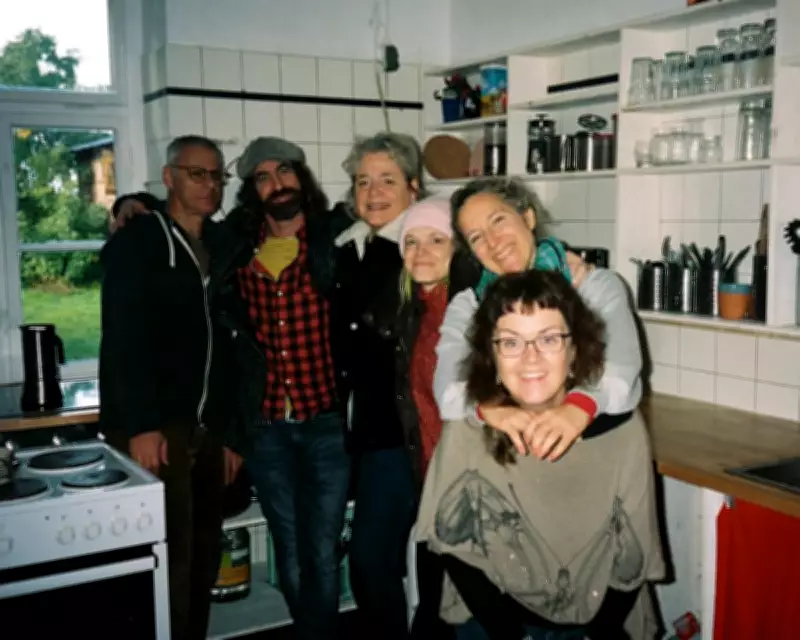
In rural Germany, Tracey Kelliher, a 48-year-old Irish musician, participates in an extraordinary communal living experiment. She and five others—three couples who barely knew each other—purchased an old farmhouse together during the pandemic. "We really followed our gut," Kelliher says. "I'm a calculated risk-taker—not a lunatic—but this just felt right."
The initial practical decision, driven by affordability and a desire for community, evolved into something deeper. When they first acquired the property, it lacked heating and running water. "We'd be wearing ski suits indoors," Kelliher recalls. "You could tell the temperature by how much you could see your breath." These challenging conditions unexpectedly strengthened their bond through shared tasks like chopping wood and collecting water.
What truly cemented their relationship surprised Kelliher. "Actually the real thing that's held us together is how we party," she reveals. Evenings around the fire with singing and dancing became the "glue" that transformed a practical arrangement into family. To formalise their commitment, they established a company with detailed contracts covering potential scenarios like breakups or inheritance issues.
Now four years into their experiment, with renovations nearly complete, their primary concern isn't conflict but maintaining closeness. "Our worry is that we might end up spending less time together—and none of us want that," Kelliher admits.
Co-parenting as Friends in Bristol
In Bristol, Natalie Bennett demonstrates how platonic relationships can successfully support child-rearing. She lives with her ten-year-old son Ruben and his father, Aaron—a longtime friend with whom she has never had a romantic relationship. When Bennett became pregnant unexpectedly, they chose to parent together while maintaining separate romantic lives.
"I didn't want all the parenting to fall on my shoulders as a single parent," Bennett explains. "I wanted to see if we could do things differently and parent as friends." After initially living together for two years, they separated before reuniting when Aaron's flatmate moved out.

Their arrangement includes splitting bills and childcare, sharing cooking responsibilities, and even co-owning their home while keeping finances separate. "It's not that different from parenting as a couple," Bennett observes. "We get the benefits of that without being in a romantic relationship." Their household extends further with Bennett's close friend Alex staying two nights weekly to help with childcare and cooking.
Bennett, who is researching single parents with important non-romantic relationships for her PhD, believes society undervalues such platonic bonds. "My son's grown up seeing that friends can be like family," she notes, challenging assumptions that co-parenting requires hostility or that romance represents the only valid intimacy.
Supportive Shared Housing in Philadelphia
Sara Anastazia, 47, and her friend Mia created a supportive living arrangement in Philadelphia while both navigating divorces. Initially sharing a five-bedroom home temporarily in 2023, they discovered unexpected benefits. "We kept noticing little ways to help each other out and support each other," Sara recalls, mentioning shared tasks like laundry, school preparations, and meal preparation that reduced costs significantly.
After separating briefly when the temporary arrangement ended, they found an upstairs-downstairs rental in August 2025. Sara now occupies the two-bedroom downstairs with her sons (19 and 16), while Mia lives upstairs with her children (14 and 7). They share meals regularly, maintain joint work sessions, and collaborate on community events while keeping costs down through shared internet and car insurance.
Both women feel strongly about inspiring others facing similar circumstances. "It is very important to both of us that we can support women in our local community who are trying to navigate difficult situations," Sara emphasises. They occasionally offer temporary accommodation to women in need, demonstrating how creative housing solutions can provide crucial support during transitions.
Cooperative Living in Chicago
Peter Reimer, 31, discovered cooperative living as an undergraduate and has embraced this model in Chicago since 2018. Living in a 22-person housing co-op, Peter met their partner at a co-op dinner, married, and now raises their two-year-old child within this community while expecting another.
"I can't imagine a better place to raise a child," Peter states. The arrangement offers substantial financial benefits, with rooms costing $500-$800 monthly—significantly below Chicago's market rates for studios or one-bedroom apartments. This provides access to extensive common spaces including large kitchens, dining areas, and outdoor yards that would be unaffordable individually.
The cooperative structure requires members to contribute approximately five-and-a-half hours weekly to communal chores like cooking and cleaning. Rent covers water and maintenance, while housemates collectively pay for electricity, heating, internet, food, and community funds. The support network proves invaluable for parenting, with housemates sometimes assisting with childcare when Peter's partner needs private space for remote therapy work.
"The community, solidarity, and mutual aid within the house are unparalleled," Peter affirms. While acknowledging the time commitment required for meetings and compromise, they consider this "a small price to pay" for the benefits received.
The Common Thread: Connection Over Isolation
These diverse stories from Atlanta, Germany, the UK, Philadelphia, and Chicago reveal a consistent theme: people are consciously choosing connection over isolation. Whether through multi-generational living, communal ownership, co-parenting friendships, supportive shared housing, or cooperative structures, these arrangements demonstrate that alternative models can provide:
- Emotional support networks that reduce loneliness
- Practical assistance with daily tasks and childcare
- Financial benefits through shared costs
- Flexible definitions of family beyond traditional boundaries
- Stronger community bonds through intentional living
As Tracey Kelliher observes from her German farmhouse experience: "Almost everybody wants it. People know isolation isn't the way forward." These innovative households suggest that reimagining how we live together might hold answers to contemporary challenges of loneliness, affordability, and the search for meaningful connection.