Hackney Council approves next phase of Woodberry Down regeneration
Hackney Council's new Green administration has approved Phases 4 and 5 of the long-running Woodberry Down estate regeneration, a project that aims to deliver 5,500 new homes. The decision, made at the first cabinet meeting chaired by new Mayor Zoë Garbett on June 29, has drawn criticism over the likelihood that some council tenants will have to move twice during the process.
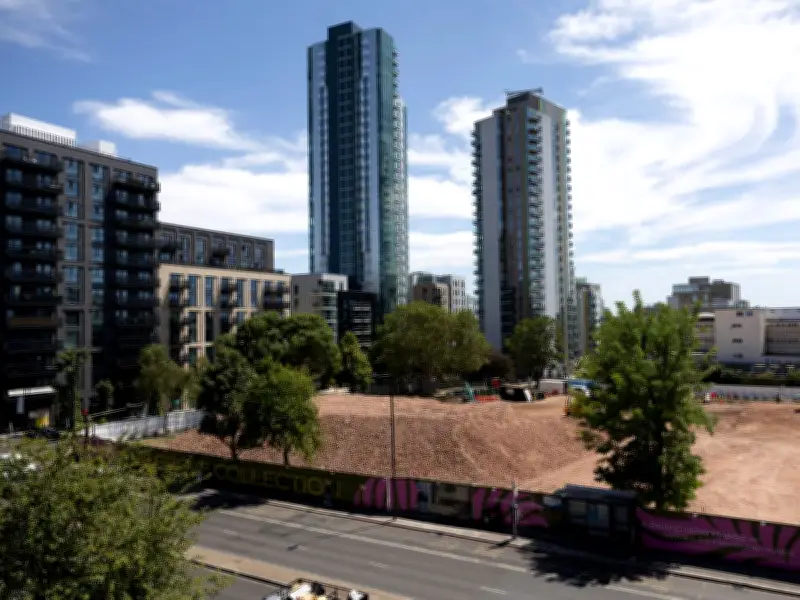
Councillor Alastair Binnie-Lubbock, Cabinet Member for Regeneration, Planning and Inclusive Neighbourhoods, stated that the latest stage would deliver 511 “high-quality, sustainable homes” and create “an exemplary new neighbourhood in the north west of the borough”. Phase 4 includes 90 homes for social rent (17.6%) and 132 shared ownership homes (25.8%), along with new commercial space and a public square on Woodberry Grove. The remaining properties will be sold at market rates.
History of the Woodberry Down regeneration
First planned in the 1990s, the Woodberry Down regeneration is a partnership between Hackney Council, Berkeley Homes, Notting Hill Genesis, Woodberry Down Community Organisation (WDCO), and the Manor House Development Trust. The scheme has demolished hundreds of older, dilapidated homes and rebuilt nearly 3,000 replacement homes to date. The council has long promised to rehouse secure tenants on the new estate once completed.

However, the approved schedule now requires up to 32 households to move twice—a practice known as “double decanting”—because demolition is outpacing redevelopment. Labour opposition members claim the Greens are backtracking on a previous commitment by the Labour administration to avoid moving residents more than once.
Labour criticises Green administration for U-turn
Woodberry Down councillor Sarah Young (Labour) accused the Greens of rowing back on promises. She said Labour had worked to prevent “social cleansing” caused by forcing tenants to move twice or leave the estate. Young noted that the decision also affects 132 households in temporary housing. “For all of these families, moving more times than they need to will be a huge upheaval and one we have made every effort to avoid to date,” she told the Local Democracy Reporting Service (LDRS).
Councillor Binnie-Lubbock acknowledged that double decanting was “less than ideal” but argued it was necessary to avoid costly delays. He estimated that delaying Phase 5 could add £13.5 million in costs and “jeopardise the whole project”. He disputed Labour’s claim of a “cast iron guarantee” and put the number of affected households at 21, not 32.
Previous double decanting and community concerns
In April, WDCO stated it was “pressing Hackney to ensure that no resident is moved twice unnecessarily”. According to council reports, 126 households were double decanted from four blocks in 2010 because the buildings were uninhabitable. Labour, which ran Hackney Council until May and oversaw the Woodberry Down regeneration, welcomed what it called the Greens’ “about turn” given the party’s past criticism of the project.
Before becoming Mayor, Zoë Garbett authored a report in March 2026 criticising the “failed” demolition-led approach to estate regeneration, using Woodberry Down as a case study. She said residents had “soured” on the development due to stress and uncertainty. “Too many broken promises and a lack of transparency by the developer means most of the trust they once had has evaporated,” she wrote. Her report concluded: “Residents across London are still living through the same failed model of estate regeneration, years of neglect, uncertainty and the very real risk of displacement.”
Green administration defends its position
The Greens’ 2026 manifesto pledged to “review and monitor ‘partnerships’ between the council and property developers, including all estate regeneration projects, ensuring the needs of the community are always the priority”. However, Mayor Garbett said her position had not changed, but her administration was “grappling with a lot of legacy decisions”. She stated: “We’re accepting where we are. This report isn’t even a planning decision, it’s about ensuring this phase can keep going. We want to make the best of it for residents.”