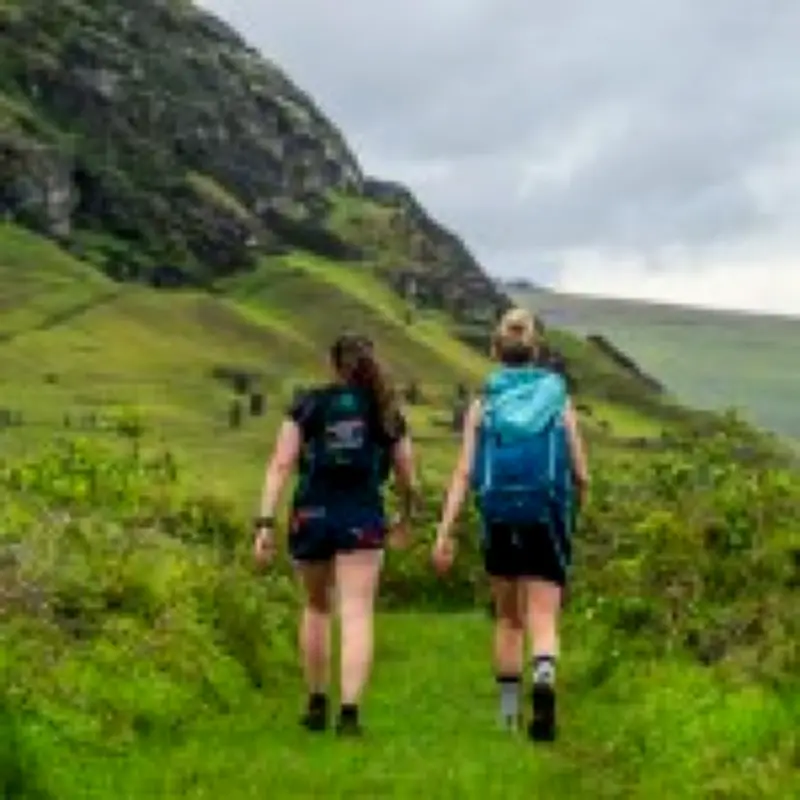
Wild horses trot alongside as giant stone moai lie face-down in the fudge-textured earth. This is not an average running route, nor an average race. Designed by UK adventure company Rat Race, this is believed to be the first ultra-marathon ever staged on Easter Island – one of the most remote inhabited places on Earth, according to the company.
What Happened: A 50km Ultra-Marathon on Easter Island
An estimated 7,750 people call Easter Island home, according to latest census data, almost exclusively in the coastal town of Hanga Roa. More than 3,500km from mainland Chile, the tiny volcanic island, known locally as Rapa Nui, is famous for its mysterious moai statues, believed to have been created between the 13th and 16th centuries. Around 1,000 of the giant stone figures are scattered across the landscape, some weighing more than 70 tonnes and standing almost 10 metres tall.
For the next week, they provided the backdrop to one of the most extraordinary running adventures. Rat Race specialises in taking runners to spectacular corners of the globe, with locations ranging from Iceland to Mongolia, but this felt like something else entirely. Alongside the race itself, the itinerary included three days of hiking and trail running to explore the island before tackling the main 50km ultra-marathon and rounding things off with a couple more days of adventure.

Details: The Journey and the Race
After landing at what must be one of the world's smallest international airports, all 39 runners checked into the same hotel. The group was wonderfully eclectic. Some had completed multiple 100-mile ultras, while others, like me, were stepping into the unknown. The youngest was 28, the oldest approaching 70, and everyone seemed equally excited to discover one of the world's most isolated islands.
The days leading up to the race were every bit as memorable as the event itself. Rather than simply flying in and running, we spent three days exploring the island on foot, gradually piecing together its remarkable history. One morning took us along a spectacular 16km coastal trail past ancient caves, ceremonial sites and crumbling archaeological remains before finishing at Anakena Beach. With its swaying palm trees, white sand and turquoise water, it's hard to believe this idyllic stretch of coastline belongs to the same island famous for mysterious stone statues.
Another day, we visited Puna Pau, the quarry where many of the moai's distinctive red topknots were carved, before continuing to Ahu Akivi, where seven moai stand gazing towards the Pacific. But it was Rano Kau that stole the show. Standing on the rim of the vast volcanic crater, I looked down over a freshwater lake ringed by lush vegetation while the endless Pacific glitters beyond. It's one of those places that makes everyone fall silent.
By the time we headed back towards Hanga Roa – the island's main town – following the coastline and skirting the island's tiny airport, it felt as though we'd explored an open-air museum. More importantly, the island no longer felt unfamiliar. So when race morning arrived, setting off at 7am felt less like the start of a competition and more like the grand finale to an unforgettable week of adventure.
Impact: The Race Experience and Aftermath
As dawn broke, we gathered at the start line, counted down together and set off across one of the world's most extraordinary landscapes. I'd completed a marathon before, but never 50km. Thankfully, Rat Race split the course into four stages with well-stocked aid stations, making the challenge feel far less intimidating than I'd imagined. Not that it was easy. One climb took us to Maunga Terevaka, the island's highest point, while another section left runners scratching their heads as GPS watches struggled to find the correct route. Mine eventually died altogether, as did my roommate Steph's, and we ended up joining forces with fellow runner Doug to get through the final miles.

The scenery made every aching step worthwhile. Wild horses grazed beside ancient archaeological sites. Giant moai appeared unexpectedly across rolling hills. Volcanoes rose from emerald-green grasslands while the Pacific stretched endlessly towards the horizon. Then, with around 5km remaining, the heavens opened. Roads through Hanga Roa transformed into rivers of reddish-brown water as the volcanic clay dissolved into something resembling hot chocolate. Nine hours after setting off, I crossed the finish line soaked, exhausted but grinning. It was hard to comprehend the distance I had covered.
Like other endurance challenges I've taken on, including mountaineering, the experience reinforced just how important mental resilience is. Throughout the day, I found myself constantly giving myself little pep talks, breaking the route into manageable sections and focusing only on putting one foot in front of the other. By the final stretch, my feet were pleading with me to stop. Thankfully, I escaped without blisters, but they felt heavy and every muscle in my legs ached from hours of alternating between power walking and occasional bursts of jogging. Crossing the finish line brought an overwhelming sense of relief and achievement, making every aching step worthwhile.
There was little time to rest after the race. We rounded off our trip with a hike around Ahu Tongariki, the largest ceremonial platform on Easter Island, before climbing to the summit of Poike, the island's second-highest volcano. But once the race was over and the other runners had departed, I checked into the luxurious Explora Rapa Nui for a well-earned recovery. The all-inclusive lodge blends seamlessly into the island's rugged landscape thanks to its organic architecture and offers guided hikes, cycling excursions and immersive cultural experiences. After covering 100km on foot, I happily gave those a miss, instead spending a couple of days unwinding in the spa, hopping between the hot tub, sauna and outdoor pool to soothe my weary legs. The lodge's fresh, organic menu also proved the perfect fuel for recovery after days of pushing my body to its limits. The moai-shaped medal is a special souvenir, but it's the island I'll remember.