US Sprinting's Doping Crisis: A Reckoning Before LA 2028
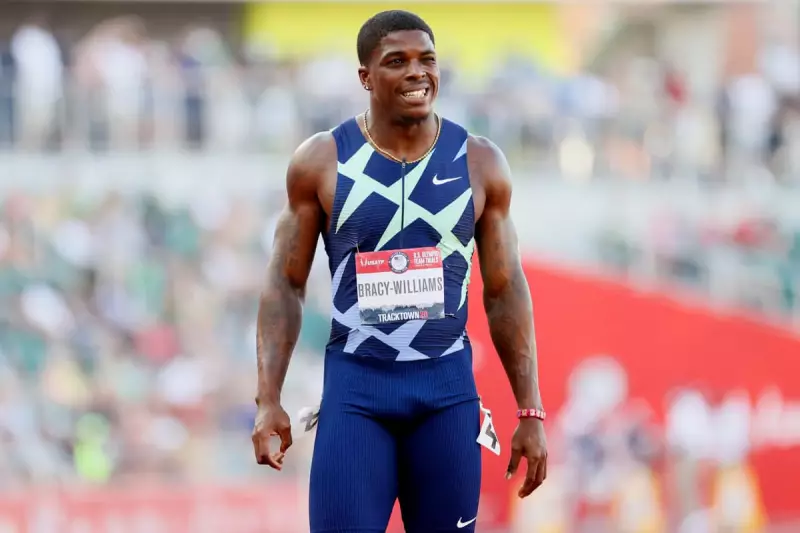
Marvin Bracy-Williams once aspired to join the ranks of legendary US sprinters like Carl Lewis and Michael Johnson. With a personal best of 9.85 seconds in the 100m, he possessed the speed but often found himself in second place, earning silver at the 2014 world indoors and the 2022 world championships. By 2023, at age 29, his failure to make the USA team for the world championships highlighted a growing sense of frustration and the relentless pressure of time in a sport where youth often prevails.
The Descent into Doping
According to Monzavous "Rae" Edwards, a former elite sprinter turned gym owner in Dallas, Bracy-Williams' struggles led him to question whether hard work alone could secure gold. Edwards recounted a conversation where Bracy-Williams expressed disbelief at his rivals' superiority, stating, "Everything I've done, I've done the right way ... My entire life I've always been looked at as second best." This mindset set the stage for a fateful decision in autumn 2023, when what began as a joke about doping escalated into a serious pursuit of performance-enhancing drugs.
Edwards, who had connections to an alleged steroid supplier, Paul Askew, described how Bracy-Williams reluctantly turned to testosterone, feeling compelled to level the playing field. "Marv didn't want to take drugs," Edwards explained, "Marv took drugs because he felt like he had to. The thing that I don't like about our sport is that if you don't take it, you don't make it." Askew has since been charged with conspiracy to influence international sport through doping, though he has not yet entered a plea.

Betrayal and Ban
In February 2024, Bracy-Williams tested positive for testosterone, a result that came swiftly after a whistleblower tipped off the US Anti-Doping Agency (Usada). Edwards revealed that an associate within Bracy-Williams' circle betrayed him, leading to targeted testing. "The only thing that got Marv caught is because Marv told [an associate about his doping]. They came and tested Marv the very next day," he said. In an attempt to reduce his sentence, Bracy-Williams cooperated with Usada to expose a broader drug network, but his efforts were undermined when he missed three tests, resulting in a 45-month ban announced in November.
The incident has fueled a culture of suspicion and snitching in US sprinting, with Edwards alleging that a specific insider provided the tip-off, though evidence remains uncorroborated. This atmosphere of distrust threatens to destabilise the sport's dominance, as athletes and coaches grapple with uncertainty over who might be informing on whom.
Coaching Controversies and Olympic Implications
Prior to his downfall, Bracy-Williams had switched coaches to train under Dennis Mitchell, a controversial figure in US sprinting. Mitchell, recently named Nike Coach of the Year, has a history that includes a 1998 doping ban and coaching athletes like Justin Gatlin, who also served a ban. Despite US Track and Field's endorsement, Mitchell's past raises questions about integrity in the sport.
Gabby Thomas, a triple gold medallist at the 2024 Olympics, has publicly criticised doping coaches, stating, "Doping coaches should be banned for life from coaching in the sport." Edwards echoed this sentiment, noting, "You can't just remove the cloud ... you failed [a dope test], you had athletes who failed." Mitchell's lawyer, Ryan J Stevens, defended him, emphasising his commitment to clean sport and denying any involvement in Bracy-Williams' choices.
The Road to LA 2028
With the LA Olympics just over two years away, US sprinting faces a critical juncture. The sport's blue riband events, traditionally dominated by American athletes, may be overshadowed by ongoing recriminations and distrust. Edwards warned that Bracy-Williams' case has not deterred others but rather encouraged greater caution among those involved in doping. "I think Marv's situation pretty much told the ones that are doing it we just got to be more careful," he said, highlighting the persistent challenges in enforcing anti-doping measures.

As the sprinting community navigates this turbulent period, the quest for gold in LA 2028 is clouded by ethical dilemmas and the spectre of further scandals, underscoring the need for transparency and accountability in the sport.