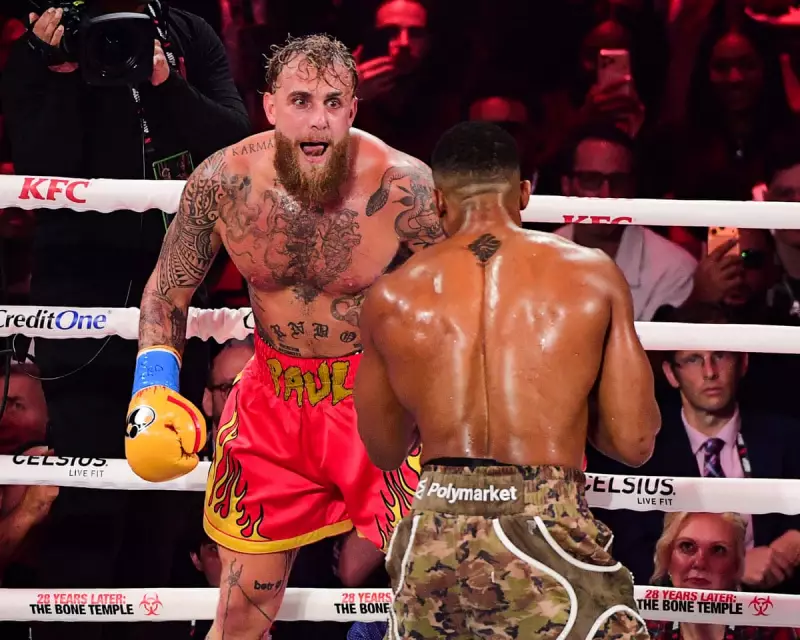
The neon-lit spectacle in Miami is over, but the debate it ignited about the soul of boxing is only just beginning. Anthony Joshua's decisive knockout of YouTube sensation Jake Paul at the Kaseya Center in Florida has left the sporting world grappling with the implications of an event that was as financially successful as it was, for many, artistically bankrupt.
A Sold-Out Spectacle and a Divisive Game Plan
The fight, streamed globally to Netflix's roughly 300 million subscribers, nearly sold out the 20,000-capacity arena, home to the NBA's Miami Heat. Ticket prices, which dropped as low as $31 by fight night, helped fuel the attendance. However, the atmosphere was described less as a traditional boxing crowd and more as a content farm, with phones ubiquitous and spectators often filming each other for social media.
Inside the ring, Jake Paul's strategy was met with swift disapproval. His evasive game plan, involving constant circling and minimal engagement in the 22-foot ring, drew boos from sections of the crowd within the first minute. Visibly exhausted after nine minutes, Paul threw fewer than ten punches per round before Joshua ended the contest, fracturing Paul's jaw in two places during the final assault.

The $138 Million Question: What Does This Mean for Boxing?
The event generated a reported purse of $138 million (£103m) to be split between the two fighters, a figure that underscores the colossal commercial appeal of the crossover clash. For some, this represents a dangerous new low for a sport with a long history of grift and corruption. They argue that the fight, which may not have been sanctioned in stricter jurisdictions like Las Vegas or by the British Boxing Board of Control, was an artless, cynical money-grab.
Yet, Jake Paul is not merely an aberration. His five-year boxing journey, which began as derided cosplay, has shown legitimate progress in a sport where late starters rarely succeed. He has dedicated time and resources to his craft, building a record against a procession of faded MMA fighters and celebrities. Paul is a brilliant businessman who has leveraged spectacle and notoriety into capital, with boxing providing just enough sporting legitimacy to make the enterprise scalable.
Ultimately, he gave the global Netflix audience the outcome many desired: to see him knocked out brutally by an elite professional. The clip of the finish is poised to become one of the most-viewed boxing videos online.
Broader Implications and Unlikely Benefits
The event's success is a stark proof of concept for streaming giants in the live sports arena. In an era where communal viewing experiences are rare, Netflix identified and capitalised on a massive, ready-made audience. This strategic move signals a potential future where even events like the Super Bowl could migrate from traditional broadcast.
Paradoxically, Paul's involvement in boxing has also yielded some positive ripple effects. Consider eight-division champion Amanda Serrano, the first fighter signed to Paul's promotional company. Previously unknown to casual fans and earning as little as $1,500 for a world title defence, she has since commanded multiple seven-figure purses thanks to the spotlight Paul's fame brings. The women's title fights on Friday's undercard were widely considered the highlight of the evening.
For Paul, the future remains bright. He is set to earn at least $70 million from the fight, his personal brand is stronger than ever, and his crossover appeal is undeniable. Some commentators even speculate about a future in politics.
Boxing itself, a sport built on real preparation, pain, and consequence, will likely survive the Jake Paul era. The more troubling reflection is on the society that propelled a 13-fight novice to the forefront of a merit-based sport. The event held up a mirror, and the image it reflected was of a world increasingly driven by spectacle, outrage, and the relentless pursuit of content—a world heading not to higher ground, but to the next viral moment.