The upcoming bout between YouTube star-turned-boxer Jake Paul and former heavyweight world champion Anthony Joshua is more than just a fight. It is a stark symbol of how the sport of boxing has fully embraced the digital age's attention economy, where fame and online clout are currencies as powerful as traditional sporting pedigree.
The Original Attention Economy
Long before social media algorithms, boxing mastered the art of selling spectacle. Promoters like Don King understood that controversy, charisma, and larger-than-life personalities sold tickets and pay-per-views. The sport's history is built on narratives that extended far beyond the ring, tapping into cultural and political tensions.
The Paul vs Joshua fight, scheduled for late 2025, represents the latest, loudest iteration of this old logic. Anthony Joshua, with his Olympic gold medal and multiple world title reigns, embodies the traditional path to boxing supremacy. In contrast, Jake Paul represents the new frontier: a digital influencer who leveraged a massive online following to command a seat at the sport's top table.

This clash highlights a fundamental shift. Where once fame was a byproduct of athletic achievement, it can now be the primary credential. Paul's journey, fighting a mix of fellow influencers, retired athletes, and lower-tier professionals, was meticulously designed for viral moments and social media engagement, proving that a new, direct-to-consumer model could bypass boxing's old gatekeepers.
A New Media Playbook
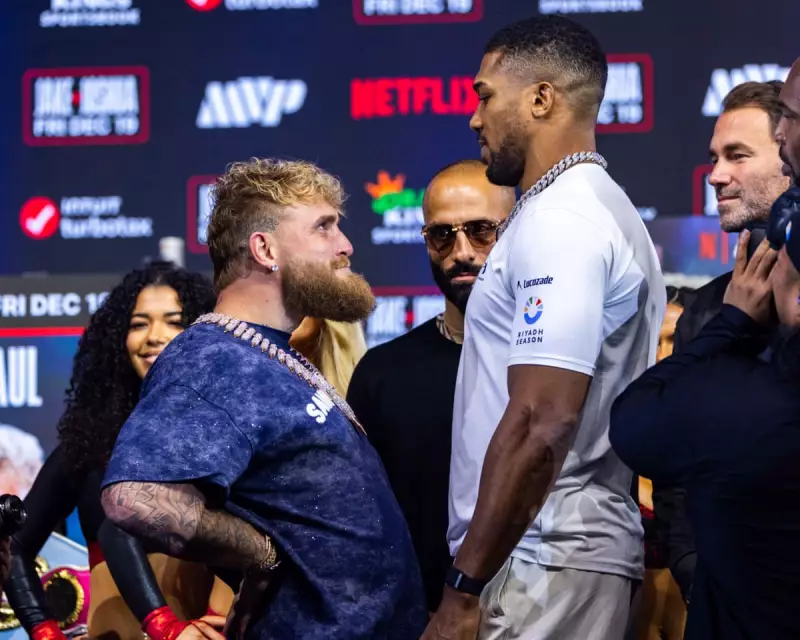
The promotion for this fight operates on a different wavelength to traditional boxing build-ups. It leverages the tools of the digital era: relentless content creation, behind-the-scenes access, and personality-driven narratives that play out across YouTube, Instagram, and TikTok. The press conferences are engineered for shareable clips and online reaction.
This approach has democratised access in one sense, allowing figures like Paul to enter the arena. However, it also raises questions about the sport's competitive integrity and long-term health. When the metrics of success are as much about views and engagement as they are about rankings and titles, the very definition of a "worthy" contender is transformed.
For Anthony Joshua, this fight is a pragmatic step. It offers a financial reward unmatched by most traditional bouts and a chance to engage with a vast, younger audience that the sport has struggled to reach through conventional means. He is adapting to the new marketplace, where a fighter's brand must exist powerfully both inside and outside the ring.
What This Means for Boxing's Future
The Paul vs Joshua event is not an anomaly; it is a signpost. It confirms that the business of boxing is irrevocably intertwined with the mechanics of online attention. The influencer boxing phenomenon, pioneered by the Paul brothers and others like KSI, has forced the entire industry to reconsider its promotional playbook.
The potential consequences are multifaceted. Purists may decry the sidelining of dedicated contenders who have spent years climbing the rankings. Yet, the massive revenues and global spotlight these events generate can trickle down, raising the profile of the entire sport. The risk is a bifurcated landscape where spectacle fights for digital audiences exist alongside, but rarely intersect with, the traditional championship circuit.
Ultimately, the fight in late 2025 is a culmination. It shows that boxing, the original attention economy, has simply found louder, faster, and more pervasive tools. The bout between the digital disruptor and the established champion is a metaphor for the sport itself, grappling with its past while being pulled forcefully into a future where everyone is a content creator, and every fight is a media event.