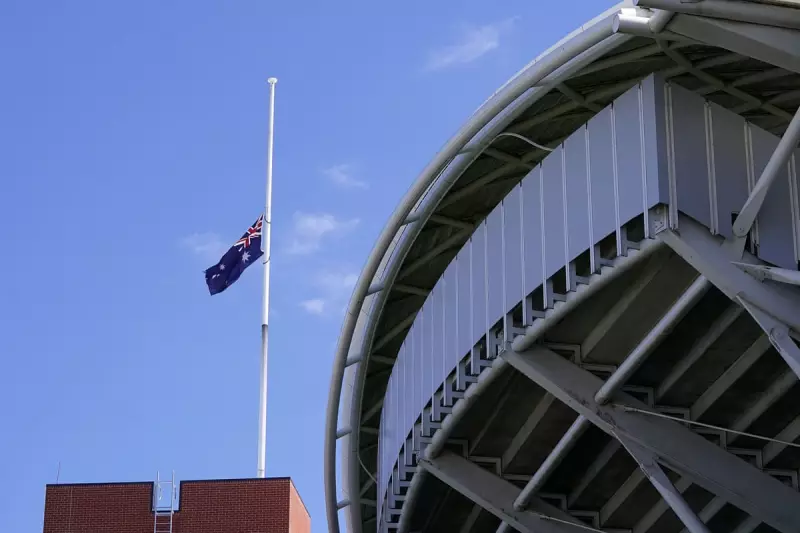
The Australian flag flies at half-mast outside Adelaide Oval, a sombre symbol of a nation in mourning as it prepares to host the third Ashes Test from Wednesday. The sporting spectacle unfolds in the immediate wake of the Bondi beach atrocity, the most heinous act of terror in Australia's history, which claimed at least 15 lives during a Hanukah celebration.
A Nation in Slow-Motion Shock
In the days since Sunday's massacre, Australia has existed in a state of profound, slow-motion shock. The round-the-clock news coverage has done little to dispel a palpable sense of a country irrevocably changed. While the Christmas Test match was never officially postponed, its context has been fundamentally altered. Heightened security is the most immediate practical consequence, with entry to the ground expected to take longer and armed patrols from the Security Response Section visible around the Oval's perimeter.
The match was set to begin with a moment of reflection led by South Australia's premier, Peter Malinauskas. Australian captain Pat Cummins articulated the national mood, stating the attack had "hit home pretty hard". State authorities, including Police Commissioner Grant Stevens, have been at pains to state there is no specific policing link between the events in Sydney and South Australia. Yet the emotional and societal linkages are inescapable.

Adelaide's Pulse: Tensions Beneath the Surface
A mile from the cricket ground, the Adelaide Holocaust Museum and Andrew Steiner Education Centre became a focal point for public mourning. Premier Malinauskas and opposition leader Ashton Hurn laid flowers there, with the premier subsequently pledging half a million dollars in funding to the centre. This gesture underscores a deeper, more troubling national narrative.
The museum itself, a day before the Test, appeared quiet. However, signs of recent strife were visible: scrubbed stonework on its front wall, a legacy of repeated antisemitic graffiti attacks following the Hamas kidnappings of October 2023 and Israel's military response. CCTV had previously captured local neo-Nazi groups performing fascist salutes outside. Adelaide's Jewish community, though small at around a thousand people, reports common antisemitic incidents, with synagogues requiring security guards and facing regular vandalism.
This local tension reflects a stark national trend. A report by the Executive Council of Australian Jewry notes that antisemitic incidents have tripled in the past two years. A disturbing narrative arc has emerged: an arson attack on a Bondi kosher business in November 2024, the burning of the Adass Israel Synagogue in Melbourne in December, and cars set alight with anti-Jewish slogans in Sydney this January.
Sport as a Window to a Fractured World
Into this fraught atmosphere strides the timeless pantomime of an Ashes Test. The announcement of Australia's team even sparked a tide of social media abuse directed at batsman Usman Khawaja, based on his past expressions of concern for Palestinian suffering in Gaza. This incident highlights how sport now holds up a camera to the world's most intractable conflicts, becoming a stage where broader societal tensions are reflected and sometimes amplified.
Rabbi Yossi Engel of Adelaide's Chabad SA synagogue noted the symbolic weight of the attack's location, describing Bondi Beach as "a symbol of open Australia... about as plain good old Aussie as it gets." The violation of that symbol has shaken the national psyche. As the Test proceeds in Adelaide and the tour moves to Sydney for the New Year, the sounds and images of this Ashes series will be forever preserved against this backdrop of horror and reflection, a sporting contest forever intertwined with a national tragedy.