Brazil's Cricket Revolution: A Small Town's Big Impact
In the south-east of Brazil, approximately 250 kilometers north of São Paulo, lies the town of Poços de Caldas, home to around 150,000 residents. Known for its thermal baths and unique geological features, this town has an unexpected passion: cricket. Roberta Moretti Avery, president of the Brazilian Cricket Confederation (BCC), describes a scene where locals proudly wear English and Australian cricket shirts, creating an atmosphere that feels foreign in the heart of Brazil.
The Accidental Origins of Cricket in Poços de Caldas
The introduction of cricket to Poços de Caldas was a matter of chance. In 2000, Matt Featherstone, a former Kent cricketer, moved to the town after falling in love with a Brazilian woman he met in London. He brought the sport with him, planting the seeds for what would become a thriving community. A few years later, Moretti Avery, who had initially found cricket boring during her time in England, was convinced by her English husband to give it a try upon returning to her hometown. Surprisingly, both individuals hailed from Poços de Caldas, leading to a serendipitous convergence of cricket enthusiasts.
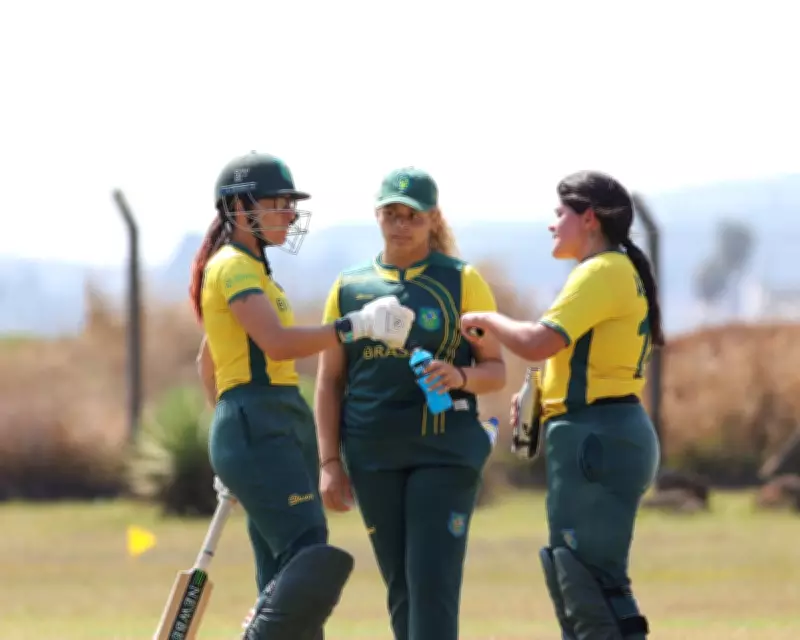
Moretti Avery eventually became captain of the national team and now leads the BCC. From having no organized cricket before Featherstone's arrival, the region now boasts 7,000 regular players under the age of 30, with most under 17. The mayor of Poços de Caldas even suggests that cricket might be more popular than football locally. Across Brazil, the sport has attracted 12,000 participants, primarily from underprivileged backgrounds, with initiatives like kit donations and community programs in orphanages.

Expanding Reach and Global Recognition
The Brazilian Cricket Confederation has been instrumental in spreading the sport. In 2023, it organized presentations, competitions, and festivals for 44,000 people, increasing to 80,000 in 2024, and reaching 100,000 last year, with a focus on women and girls. The BCC now has centrally contracted international teams, mostly composed of native Brazilians, and even produces its own cricket bats. This growth has caught the attention of the International Cricket Council (ICC), which views Brazil as a key driver of global expansion.
Will Glenwright, the ICC's head of global development, highlights Brazil and Nigeria as exciting growth markets. The ICC's annual census shows a 24% year-on-year increase in participation, with countries like Japan, Germany, and Italy also contributing to this surge. The recent men's T20 World Cup was leveraged to boost global interest, with the ICC broadcasting matches in languages such as Urdu, Nepali, Japanese, and Bahasa for the first time, and using AI to produce highlights in Arabic and Portuguese.
Digital Engagement and Future Prospects
Digital strategies have played a crucial role in this expansion. During the T20 World Cup, the ICC saw significant traffic increases on its website: 42% in the Netherlands, 52% in South Africa, 72% in Italy, 145% in Japan, and 600% in Zimbabwe. Finn Bradshaw, the ICC's head of digital, notes that broadcasts in non-traditional languages, like Japanese for the India vs. Pakistan match, attracted unexpected viewership, indicating growing global fandom.
The ICC's goals are multifaceted: increasing participation, enhancing performance, and monetizing content. With cricket's imminent return to the Olympics, interest is expected to rise further. In Brazil, the ICC has provided guidance and funding for two decades, helping local administrators build sustainable pathways for players. Moretti Avery reports that Brazilians are starting to embrace cricket as their own sport, with communities feeling connected to a larger global network.
This transformation underscores how a small town in Brazil has become a standard-bearer for cricket's global growth, inspiring similar movements from East Timor to Nigeria and reshaping the sport's international landscape.