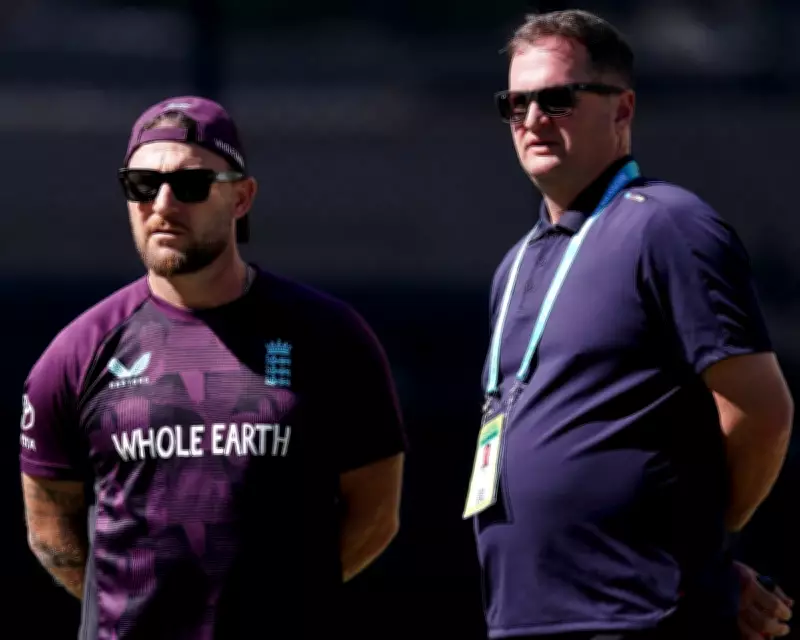
ECB Faces Backlash Over Decision to Retain McCullum and Key
The England and Wales Cricket Board has opted to maintain the status quo by keeping Brendon McCullum as the men's head coach and Rob Key as team director, following a disappointing Ashes series that ended in a 4-1 defeat against Australia. This move, while avoiding the financial and logistical complexities of terminating McCullum's contract which runs until 2027, has been met with significant public discontent and internal questions about the team's direction.
Public Anger and Test Cricket's Enduring Importance
Despite the rise of shorter formats like the Hundred, which returns in July with its vibrant, fast-paced entertainment, Test cricket continues to hold a special place in the hearts of English fans. The emotional response to England's Ashes loss underscores this, with social media and public discourse reflecting lingering anger that was not fully assuaged by a valiant semi-final exit in the T20 World Cup. ECB chief executive Richard Gould acknowledged that this decision might not be popular, emphasizing that Test viewership has increased by 25% over the past four years and remains the top format across all age groups in England.
Strategic Missteps and Leadership Rifts
The Ashes campaign was marred by a series of questionable decisions that backfired. Fast bowlers were underprepared due to injury fears, batters failed to adapt to Australian conditions, and selection loyalty to players like Ollie Pope led to talents like Jacob Bethell being sidelined until the series was lost. More concerning was the apparent philosophical split between captain Ben Stokes and head coach Brendon McCullum. During critical moments, such as the third Test, England's typically aggressive approach wavered, with McCullum offering only a cryptic "Good question" when asked about the sudden caution.

The Path Forward: Evolution and Accountability
Gould and ECB chair Richard Thompson have chosen to "run towards the danger" by retaining the current leadership, a decision that now places the onus squarely on them. The briefing on Monday outlined peripheral tweaks, including the addition of a bowling guru and a new selector, but lacked concrete details on how phrases like "adapt" and "evolve" will be implemented. Key's call for greater "consequence" for poor performance raised eyebrows, given the team's record of losing four major Test series against Australia and India under this setup.
Rebuilding Trust and Team Cohesion
While McCullum initially revitalized the team with an aggressive philosophy, recent results have exposed vulnerabilities. The relationship between Stokes and McCullum appears to have been mended through honest conversations, with Key insisting there is alignment in their aggressive approach, contrary to perceptions of a blocking-versus-slogging divide. However, winning back public confidence will require more than home victories against New Zealand and Pakistan this summer. England must better engage with the domestic game, ensure merit-based selection, and demonstrate consistent strategic unity to move beyond the Ashes debacle.