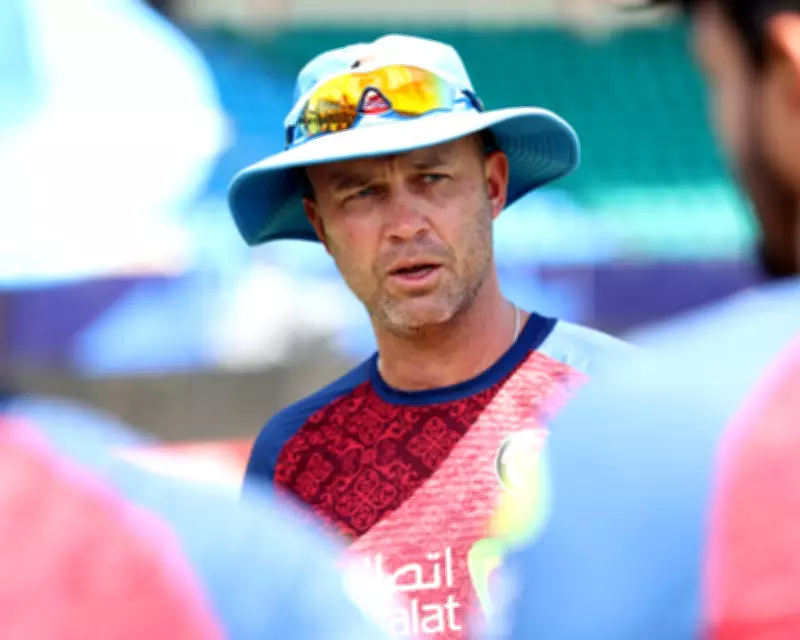
Jonathan Trott: A Coach's Journey from England to Afghanistan
Jonathan Trott, the former England batsman, now serves as the head coach of the Afghanistan cricket team, yet he has never set foot in the country he represents. In a revealing interview, Trott reflects on his playing career, his current coaching challenges, and his future aspirations, including a potential role with the England team.
From Ashes Glory to Coaching Ambitions
Think back to the England cricket team of the late 2000s and early 2010s, and Jonathan Trott was often seen as the relatable figure among the squad. Beyond the more intense personalities, Trott emerged as an everyman, with a dual passport and a receding hairline, who became a crucial part of a nearly dominant Test side. For four remarkable years, he was present at all the significant moments, including a dream debut at The Oval in 2009, where he scored an Ashes century, helping secure a 2-1 victory. His contributions extended to overseas wins in Australia and India, as England ascended to the top of the world rankings.
Cult status was cemented during the 2010 Ashes series in Australia, where Trott's performances under pressure irritated the hosts. Notably, he executed a direct hit from square leg to run out Simon Katich in the opening over of the Adelaide Test. At Melbourne, he remained unbeaten on 168, standing alone on the pitch as the Australians departed, a gesture that highlighted his self-absorbed and eccentric nature. These traits, once seen as quirks, have made him a stylistic reference point for critics of the current English side.

Empathy and Experience in Coaching
Watching recent Ashes series from his home in Birmingham has evoked mixed memories for Trott. His second Ashes tour in 2013-14 turned into a collective nightmare, with an ageing team struggling under the strain of back-to-back series. Trott recalls this period as "ridiculous", noting that the relentless schedule ultimately broke the team. The lowest point came when he was forced to leave the tour due to a stress-related illness, an experience that has deeply influenced his coaching philosophy.
Empathy is critical in his role, Trott emphasises. Without it, players may struggle to connect with him. He draws on his own experiences to understand the game's challenges, particularly in unforgiving environments like Australia. "I'll never forget how tough it can be as a country," he says, highlighting the importance of supporting players during difficult times. He defends the current England team, pointing out that Australia's strength should not be overlooked in critiques.
Critiquing the Critics and Future Prospects
Trott expresses frustration with former players who publicly criticise the England team, stating, "It annoys me when I see people throwing darts when they don't know exactly what they're throwing at." He believes ex-players should remember their own struggles and avoid biting the hand that fed them. This perspective stems from his deep connection to the sport's culture, as seen in his praise for young players like Jacob Bethell, whose character and maverick style he admires.
Currently, Trott is focused on his role with Afghanistan, contracted until the end of the T20 World Cup. He has worked to add structure to a talented but raw team, helping them evolve from underdogs to competitive contenders. "The biggest thing is for them to just believe in themselves," he notes. However, his coaching journey is unique; he has never visited Afghanistan due to political and safety concerns, and the team operates in exile, avoiding politics in the dressing room.
Navigating Challenges and Eyeing England
In a region fraught with political tensions, Trott praises his players' resilience, acknowledging the risks they take, such as supporting exiled female cricketers on social media. He has adapted to cultural and language barriers, using body language and clear messaging to communicate effectively. This experience has broadened his understanding of cricket's global scale.

Looking ahead, Trott is candid about his ambitions. "I'd love to coach England one day. Definitely," he admits, expressing a desire to achieve more with the national team. While he enjoys the pressure of international coaching, his honesty and bluntness reveal a clear path forward, should his time with Afghanistan conclude. This interview offers a glimpse into the mind of a coach balancing past glories with future dreams.