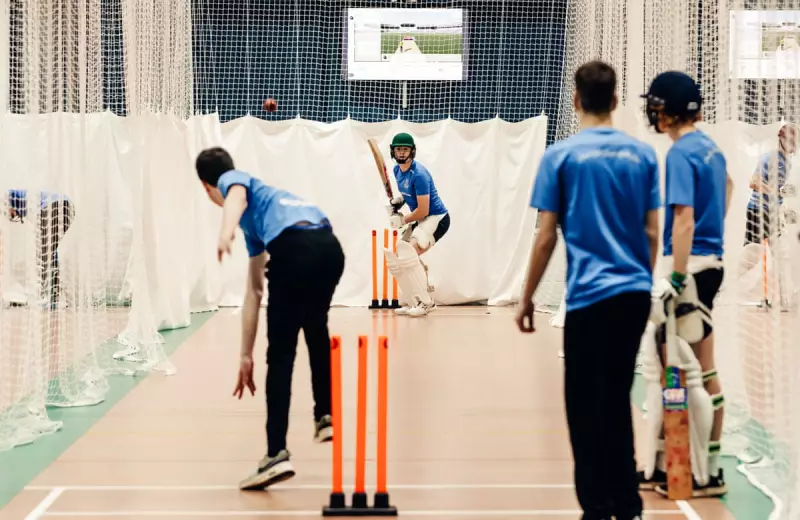
In a repurposed tennis hangar just off the A27 near Brighton, a quiet revolution is taking shape. The Square One cricket centre in Falmer, now the second-largest indoor cricket facility in the world, is not just about scale. It represents a fundamental challenge to the traditional, often exclusionary, culture of the sport.
Breaking the Wheel: A New Philosophy for Cricket
The driving force behind Square One is a trio of innovators: former Kent spinner Rob Ferley, Brighton University sports scientist Dr James Wallis, and entrepreneur Rod Aldridge. Their shared frustration is with cricket's persistent barriers—of language, culture, and access—which they believe have been inadequately addressed by decades of reports from the England and Wales Cricket Board (ECB).
"The existing ECB programmes haven't worked," states Dr Wallis, highlighting a cycle of failure. "To keep going back with the same processes is the definition of insanity." Their mission is stark: to accept the findings of the recent ICEC report that labelled cricket as sexist, racist, and elitist, and to build a practical, scalable alternative from the ground up.

Colour, Chips, and a Common Language
Walking into the Falmer centre is a jarringly welcoming experience, deliberately designed to be free of the dread that can greet newcomers in traditional, grey-net environments. Two key innovations are immediately apparent.
First, the nets feature a colour-coded rainbow mat on the bowling surface. This visual system, developed by Wallis over 15 years, replaces opaque jargon like "good length" with a universal, non-verbal language. The batting areas are similarly marked with coloured zones, training the brain without relying on inherited cricket terminology.
Second, the centre employs microchipped cricket balls. Each delivery's speed and trajectory are recorded on a screen, while batters face a virtual stadium with field placements, seeing exactly where their shots go and how many runs they score. This gamified, data-rich approach makes practice addictive and provides comparable metrics, potentially helping to identify talent that might otherwise be overlooked in regions with fewer opportunities.
From State Schools to the Elite Game
Square One's location is integral to its ethos. It sits adjacent to the Brighton Aldridge Community Academy (BACA), a co-ed state school. By literally "taking the gate down," students seamlessly move from classroom to world-class facility, embodying the project's commitment to sport as enrichment for the 95%, not just the private school minority.
The ambition, however, stretches far beyond Falmer. "We want to have 150 Square Ones around the country," says Ferley. The model is designed to be scalable: repurposing old tennis courts or spare land near schools and communities currently underserved by cricket.
The project also casts a critical eye on entrenched practices. Ferley is particularly scathing about hard-ball cricket for young children, which he argues unfairly rewards early physical development and can be traumatic. "Why have we decided they need to learn this lesson at 10?" he asks, advocating for a reassessment of how the sport is introduced.
Bazball and Beyond: Empowerment as Standard
The conversation inevitably turns to the current elite ethos of Bazball. Ferley, who knows England managing director Rob Key well, sees both alignment and divergence. He praises the autonomy and positive environment created by Ben Stokes and Brendon McCullum, but questions the potential lack of openness to diverse ideas and technical challenges.
"Bazball is seen as this breath of fresh air," Ferley observes. "It shouldn't be revolutionary, should it? It's just making people feel empowered. Why, in cricket, is it seen as revolutionary to come up with some different ideas?"
This question lies at the heart of Square One. It is a tangible, entrepreneurial attempt to break cricket's "bloody wheel" of exclusion. By stripping back the sport's coded language, leveraging technology for accessibility, and prioritising inclusion from a child's first encounter, the team in Falmer is not just building a cricket centre. They are proposing a new blueprint for the game itself.