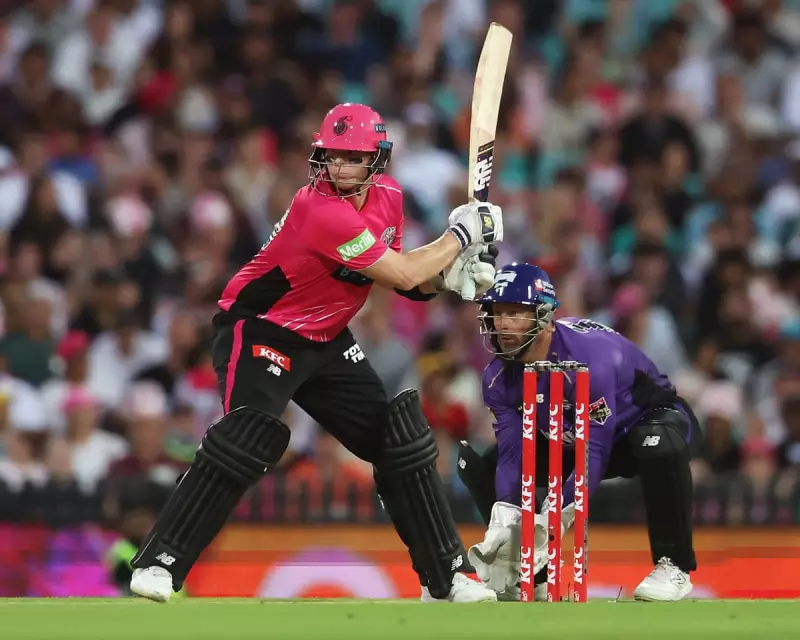
Steve Smith's Stellar Big Bash Form Arrives Too Late for World Cup Consideration
Steve Smith has been displaying magnificent batting form in the Big Bash League for the Sydney Sixers, amassing an impressive 275 runs across just five innings, including one spectacular century. This remarkable performance comes at an intriguing time for the Australian cricketer, whose relationship with the shortest format of the game has historically been somewhat complicated.
Consistent Excellence in the BBL Tournament
The statistics speak volumes about Smith's current dominance. His recent innings of 65 runs from 43 balls propelled the Sydney Sixers into the Big Bash final, showcasing his ability to adapt his classical technique to the demands of T20 cricket. This followed earlier performances including an unbeaten 19 in a rain-affected match, a blistering 100 from just 41 deliveries in the Sydney derby, a solid 54 against Brisbane, and a fighting 37 in Perth where he appeared the only comfortable batter during a team collapse.
These five innings have produced an average of 68, demonstrating remarkable consistency in a format known for its volatility. Smith now has the opportunity to cap this excellent tournament run by helping his team secure the championship against Perth Scorchers in their home territory.

World Cup Selection Timing Creates Frustrating Paradox
The timing of Smith's resurgence creates a fascinating paradox within Australian cricket. Despite this rich vein of form, the batter will not be travelling to India and Sri Lanka for the upcoming T20 World Cup, with selectors having finalised their squad weeks before his Big Bash exploits reached their peak.
This situation has inevitably sparked debate among cricket followers, with many questioning whether selectors made the correct decision in overlooking Smith. However, deeper analysis suggests the selectors' reasoning has merit. Big Bash performances at the SCG represent a different challenge entirely from facing world-class bowlers like Jasprit Bumrah and Kuldeep Yadav in high-pressure World Cup matches in Delhi.
Historical Context and Format Challenges
Smith's relationship with T20 cricket has always been complex. While he first represented Australia in the shortest format back in 2010 as a utility player, his true dominance emerged briefly around 2016 during the peak of his Test career. His overall T20 record remains solid rather than spectacular, with an international strike rate of 125 and an IPL strike rate of 128.
When Australia phased Smith out of their T20 setup nearly two years ago, the decision appeared logical. The explosive power-hitting requirements of modern T20 cricket seemed at odds with Smith's more classical, accumulative approach. His brief return to the format in 2024, opening the batting in New Zealand at his own request, yielded limited returns and ultimately saw selectors settle on more dynamic combinations featuring Travis Head, David Warner, and Mitchell Marsh.
The Olympic Dream as Driving Motivation
Interestingly, Smith's current focus extends beyond immediate World Cup selection. The cricketer has set his sights on a more distant prize: representing Australia at the 2028 Los Angeles Olympics, where cricket will make its return to the Games programme.
This Olympic ambition explains Smith's renewed commitment to the shortest format. He has already retired from one-day international cricket to concentrate on T20 development, engaged in specific gym routines to enhance his six-hitting power, and explored opportunities in emerging competitions including America's Major League Cricket, England's Hundred, and proposed European leagues.
Future Prospects and Selection Dilemmas
While Smith won't feature in the imminent World Cup, his current form suggests he remains in contention for future T20 assignments. His remarkable Test resurgence, with five centuries in his last twelve matches, indicates a player experiencing a genuine career renaissance rather than temporary form.

The question remains whether this red-ball excellence can translate consistently into white-ball success. Most batters in their late thirties face diminishing returns, but Smith continues to defy conventional career trajectories. Should he maintain this standard and even elevate his T20 game further over the coming seasons, selectors would face a compelling dilemma when considering future tournaments.
For now, Smith's immediate focus remains on securing Big Bash glory with the Sydney Sixers. If he can produce another match-winning performance in the final, it will represent a fitting conclusion to a tournament where he has emphatically demonstrated that class, as they say, is permanent.