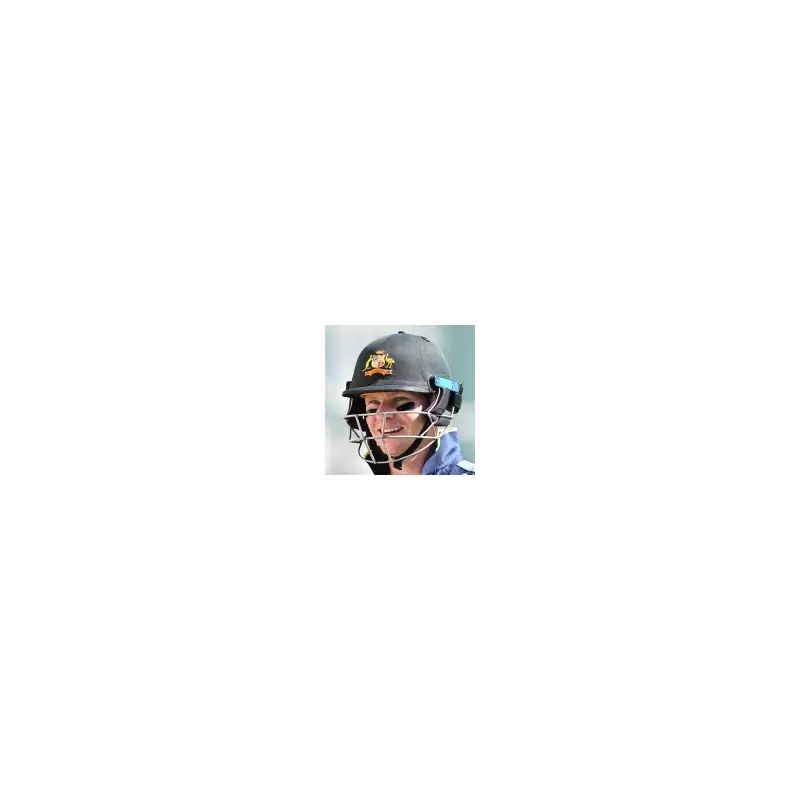
Australian batting maestro Steve Smith has adopted a striking new look for the second Ashes Test against England at the Gabba, sporting black anti-glare tape under his eyes. The move comes as the world number four Test batter seeks every advantage in the challenging day-night conditions.
The Chanderpaul Connection: Seeking Advice from a Legend
Smith's distinctive 'war paint' is not a fashion statement but a calculated performance aid. He revealed the inspiration came directly from West Indies great Shivnarine Chanderpaul, who famously wore similar strips throughout his illustrious career. Smith proactively messaged Chanderpaul for advice, asking whether he used chalk or strips.
"He said it was the strips, and he thinks it blocks out 65 per cent of the glare," Smith told reporters in Brisbane. "And he also said, 'I've seen photos and you're wearing them the wrong way', so yesterday I put them on the right way." Convinced by the feedback, Smith confirmed he would wear the tape for the pink-ball contest, claiming he noticed a positive impact during training.

The Science of Sight: Does Eye Black Actually Work?
The theory behind the tape is simple: natural skin reflects light, which can cause glare and impair an athlete's vision. The matte black strips are designed to absorb all light, theoretically making it easier to track a fast-moving ball, especially under floodlights. However, scientific consensus on its effectiveness is mixed.
Some studies, including one from Yale University, suggest eye black can reduce glare and improve contrast sensitivity. Conversely, other research, like a University of New Hampshire study, found its impact was only noticeable from short distances. Famously, the US show MythBusters concluded in 2008 that there was no significant difference in glare reduction between black tape and light-coloured makeup.
Despite the debate, the practice is entrenched in sport. Baseball icon Babe Ruth used a greasy black substance under his eyes in the 1930s, while NFL legend Tom Brady was a fervent believer in its benefits.
Smith's Pink-Ball Challenge and Australia's Series Lead
Smith's search for an edge is particularly focused on overcoming his relative struggles in day-night Tests. While he boasts a formidable average of 58.31 with 35 centuries in traditional day matches, his average dips to 37.04 with just one hundred under lights.
"It's a tricky one," Smith admitted, discussing the pink ball. "The ball reacts obviously differently to a red one. It can change quickly. It can start moving randomly." His innovation comes after a modest personal contribution in the first Test in Perth, where he scored 17 and 2* as Australia secured a crushing eight-wicket victory to go 1-0 up in the five-match series.
That win was spearheaded by Travis Head's blistering 123 from just 69 balls – the second-fastest century in Ashes history. Smith will be hoping his new visual aid helps him produce a similarly match-defining innings as the iconic series moves forward.