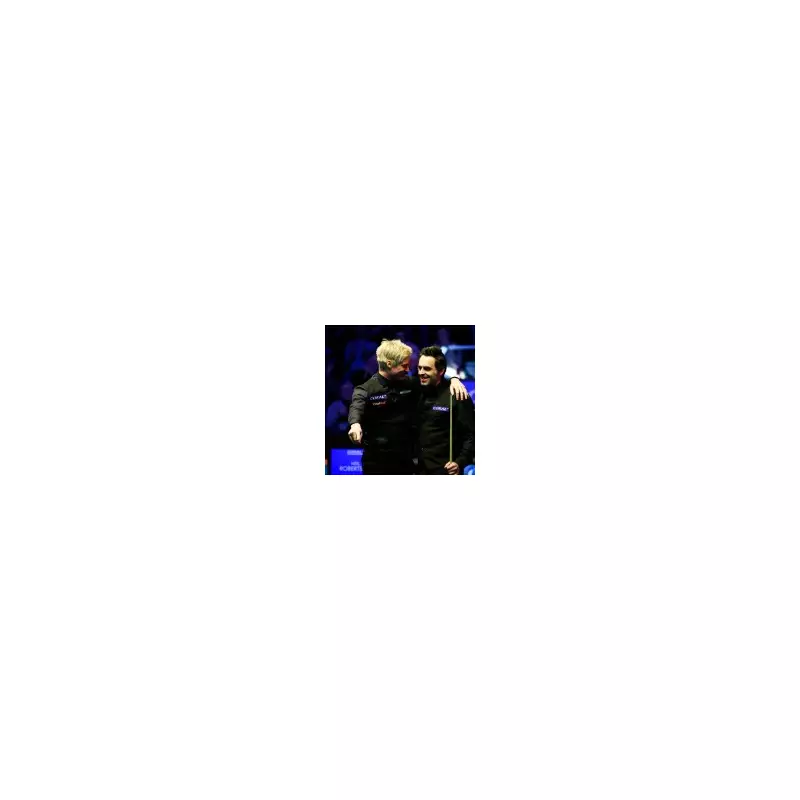
Snooker professional Neil Robertson has revealed how a single act of sportsmanship from Ronnie O'Sullivan over a decade ago left a permanent mark on his own conduct within the sport.
The Australian, known as 'The Thunder from Down Under', was scheduled to face 'The Rocket' at the Masters on Wednesday evening. However, O'Sullivan withdrew from the tournament last week, citing medical reasons. His place in the match against Robertson will be taken by Chris Wakelin, as the 44-year-old Australian pursues a third Masters title.
The Natural Role Model
Robertson, whose career boasts 26 ranking titles and the status of the greatest non-British player in snooker history, has navigated the professional tour with a notably controversy-free demeanour. Since turning professional in 1998, he has been a model of composure, avoiding the table-punching outbursts or confrontational interviews seen elsewhere.

Speaking to Metro at last week's Championship League, Robertson explained this is simply his nature. "It's just natural. It's just my personality, maybe being Australian, that easy-going nature of thinking everything will be all right," he said. He emphasised that being a role model was never a conscious effort but "common sense", particularly when considering who might be watching interviews.
He is critical of rehearsed, cliché-ridden sports interviews, stating: "I can't stand watching a sport and someone gives an interview and it's all full of cliches... I just find that so boring." For Robertson, honesty and compelling insight are what fans truly appreciate.
The Lesson in Defeat: O'Sullivan's 2010 Masterclass
The true test of a sportsperson's grace often comes in defeat, especially after a major final. Robertson learned a powerful lesson in this regard not from a loss, but from observing Ronnie O'Sullivan's reaction to one.
In the 2010 World Open final in Glasgow, Robertson defeated the then-world champion and world number one. O'Sullivan's gracious runner-up speech left an indelible impression. "He's world champion and world number one, and he dispatched me like world champions and number ones do," O'Sullivan said at the time.
Recalling the moment, Robertson noted: "Runner-up speeches are pretty tough, but I beat him in the final and he was so complimentary afterwards... that actually made me feel really good." He contrasted this with speeches designed to make the winner "feel terrible", a practice he believes is wrong.
The impact was familial as well as personal. "My mum, my dad and [wife] Mille were like, 'Oh wow, Ronnie was so nice!'" Robertson shared. "When I lifted the trophy, it felt better that he'd given me that respect."
Paying the Lesson Forward
Robertson later applied this lesson himself. After a heavy 10-2 defeat to Shaun Murphy in the 2015 Masters final, where he admitted he "played terrible", he chose grace over bitterness.
In his runner-up speech, he told Murphy, "Welcome to the Triple Crown club." He received texts afterwards praising the "unbelievable speech". Robertson reflected: "It would have been easy to be bitter in that moment but that would have taken a lot of what Shaun had just achieved away. I think it's important to do that. It's just respect. It's not hard."
Understanding and Empathy Beyond the Table
Robertson also shed light on his strong relationship with O'Sullivan, who has offered him advice over the years. He believes his public support for the snooker legend and his honest approach have fostered mutual respect.
Furthermore, Robertson feels a personal understanding of some challenges O'Sullivan has faced. His wife Mille's experiences with anxiety and depression have given him insight. "I can appreciate what he's going through," Robertson said. "I think a lot of people maybe just don't. And I think I've just always been honest with him as well. No cloak and dagger stuff... and I think he kind of likes that."
As Robertson continues his campaign at the Masters, the legacy of that 2010 encounter in Glasgow remains a cornerstone of his philosophy: that respect and honesty are the simplest yet most powerful virtues in sport.