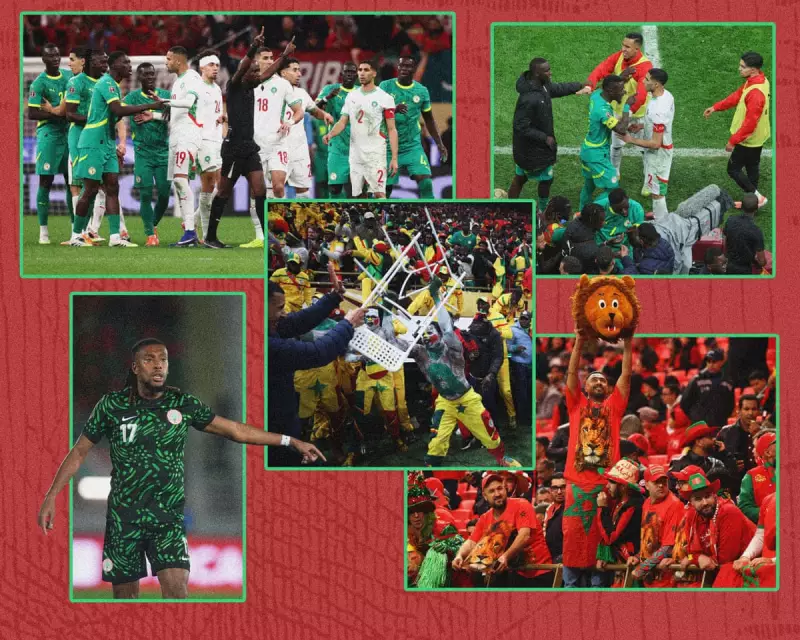
The 2025 Africa Cup of Nations concluded in dramatic and controversial fashion in Morocco, leaving a series of pressing questions for the continent's football governing body. A tournament that promised a showcase of elite African football was ultimately overshadowed by a refereeing debacle in the final, though it also highlighted individual brilliance and set new standards for infrastructure.
Refereeing Standards Plunge into Crisis
Just one year after the 2024 edition in Côte d'Ivoire was praised for its exemplary officiating, the standard of refereeing at Afcon 2025 took a significant step backwards. Many observers link this decline to the sudden dismissal of Noumandiez Doué, the Ivorian head of CAF's refereeing department, on the eve of last year's African Nations Championship.
The situation reached its nadir during the final between hosts Morocco and Senegal. The referee, Jean-Jacques Ngambo Ndala from the Democratic Republic of the Congo, made a series of contentious decisions. His ruling to disallow a legitimate Senegal goal—by blowing for a foul before the ball entered the net, thus preventing a VAR review—sparked outrage. A later decision to award Morocco a late penalty proved the final straw.

In an unprecedented protest, Senegal's coach, Pape Thiaw, led his team off the pitch. It was only the intervention of captain Sadio Mané, who understood the grave implications of abandoning a continental final, that persuaded the team to return and complete the match. The Confederation of African Football now faces a herculean task to restore credibility, requiring an independent and ethically robust refereeing department capable of withstanding political pressure.
Stars Shine Despite Turmoil
Amid the controversy, several footballing stories provided positive highlights. Nigeria's Alex Iwobi, finally deployed in his preferred free role by coach Éric Chelle, was a revelation. The 29-year-old Fulham midfielder, nephew of legend Jay-Jay Okocha, earned his second Afcon bronze medal, displaying exceptional vision and passing that orchestrated Nigeria's attack.
Mali's Belgian coach, Tom Saintfiet, also earned widespread praise for his tactical intelligence, particularly in a group-stage match against Morocco. His vocal defence of the tournament's traditional two-year cycle, against proposed changes, resonated with many who cherish Africa's football heritage.
Legacy and Lessons for 2027
Morocco set a formidable benchmark for future hosts with its world-class stadiums and pristine pitches in Rabat, Fez, Marrakech, Casablanca, Tangier, and Agadir. This was a stark contrast to the dangerous surfaces seen in past tournaments, such as Gabon 2017. The co-hosts of the 2027 edition—Uganda, Kenya, and Tanzania—now have a significant challenge to match these facilities.
However, the tournament was hampered by uncharacteristically poor winter weather, with cold, wind, and rain affecting several matches, including the opener and final. This contrasted sharply with the successful summer-held 2019 tournament in Egypt and raised questions about future scheduling.
Despite the heartbreak of losing the final, extending their wait for an Afcon title to at least 51 years, the Moroccan people demonstrated a profound passion for the game. Manager Walid Regragui, who has overseen a remarkable transformation in the national team over three and a half years, pleaded for continued faith in the project, noting that Senegal's consistency in reaching finals is the result of sustained effort.
The 2025 Afcon will be remembered for its dramatic climax and the urgent need for officiating reform. As the football world looks ahead, the lessons learned in Morocco will be crucial for safeguarding the integrity and celebration of Africa's premier sporting event.