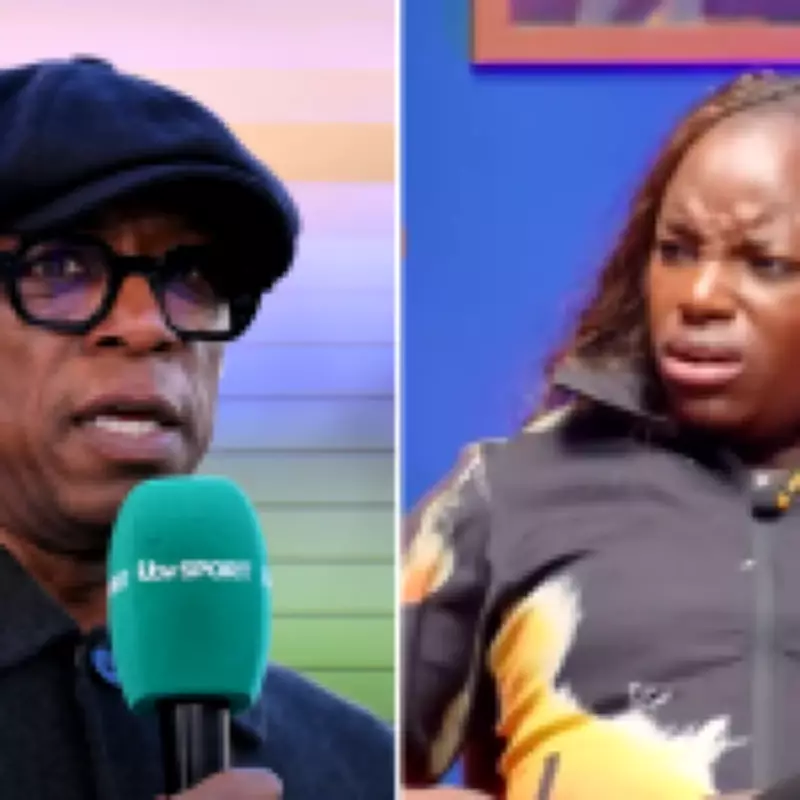
Former England international Eni Aluko has once again voiced strong criticism towards fellow pundit Ian Wright and major broadcasters BBC and ITV regarding their selection of analysts for women's football coverage. Aluko, who earned 105 caps for England during her distinguished playing career, has raised concerns about the allocation of premium punditry roles in the women's game.
Renewed Criticism of Ian Wright and Broadcast Decisions
In a recent appearance on the 90s Baby Show podcast, Aluko reiterated her previous comments about Wright's involvement in women's football coverage. She specifically questioned why both BBC and ITV chose to include male pundits in prominent positions during England's Euro 2025 final victory against Spain last July.
"In the women's game the opportunities are even more limited, so the main characters of the show should be the women," Aluko stated emphatically. "Men should be part of that. I'm not saying anybody should be excluded, I believe in diversity wholeheartedly, but the same way we've played a role in the men's game that's a supporting role, you're part of the ensemble, you're never going to get the premium final games, it should be the same way for women's football."
Questioning Pundit Selection for Major Finals
Aluko highlighted what she perceives as a significant imbalance in broadcasting decisions. She noted that during the Euro 2025 final, BBC's punditry team included former Manchester City defender Nedum Onuoha alongside Ellen White and Steph Houghton, while ITV featured Ian Wright alongside Emma Hayes and Kaz Carney.
"Last year, at the Women's Lionesses final, I'm sat in the stands, I wasn't on ITV for the final, Fara Williams was sat next to me," Aluko revealed. "Fara Williams has 172 caps for England, something ridiculous, I think she's the most-capped player, she's sat in the stands."
The former Chelsea striker pointed out that between herself and Williams, they possess nearly 300 international caps yet were overlooked for punditry positions in favour of male analysts.
Calling for Greater Protection of Women's Football Opportunities
Aluko expressed strong views about protecting opportunities within women's football, drawing parallels with how the men's game operates. "I think we need to gatekeep the women's game in a way that the men's game is gatekept," she argued. "What I mean by that is, and you've heard me talk about the journey of women's football, it's taken a while, it's taken a lot of blood, sweat and tears to get the women's game to where it is now."
She emphasised the historical struggle women have faced in football, stating: "There's a lot of people, including me, who have planted a lot of seeds to be reaping what we're reaping now... TV, money coming into the game, investment, and it's still growing. From my perspective, we didn't go through all of that – blood, sweat and tears – for women to be second place in our own sport."
Addressing the Broader Issue Beyond Individual Personalities
Aluko was careful to clarify that her criticism extends beyond any single individual. "It's nothing against Ian, it's nothing against them, I'm just saying broadly speaking we need to be aware of that because if we're building a game where the limited opportunities are now being taken by men, where we can't go into the men's game and get the same opportunities, we're stuck."
She highlighted the disparity in opportunities between genders in football broadcasting, noting: "I've never done a major final in men's football for eleven years, I've done three World Cups, men's Euros, Champions League, I've never had that opportunity, and maybe rightly so, I'd probably say rightly so because again, I think the guys should always be ahead of me, the main guys."
Proposing Solutions for Greater Fairness
When asked about potential solutions to address the imbalance, Aluko suggested that increasing female representation in men's football coverage could create more equitable opportunities. "I think that would make it more fair," she responded. "If I'm not doing the women's final but I'm getting a job doing the men's final then it is what it is, but I can never do the men's final so the only way I have an opportunity is to do the women's final but now I can't do the women's final, and I can't bring all of that experience and insight."
Aluko concluded by emphasising the importance of representation, stating: "And let's be honest, what I represent for young girls who want to be footballers, who want to be broadcasters, is way more than what Ian Wright represents."