The Unlikely Joy of Football's Worst Moments
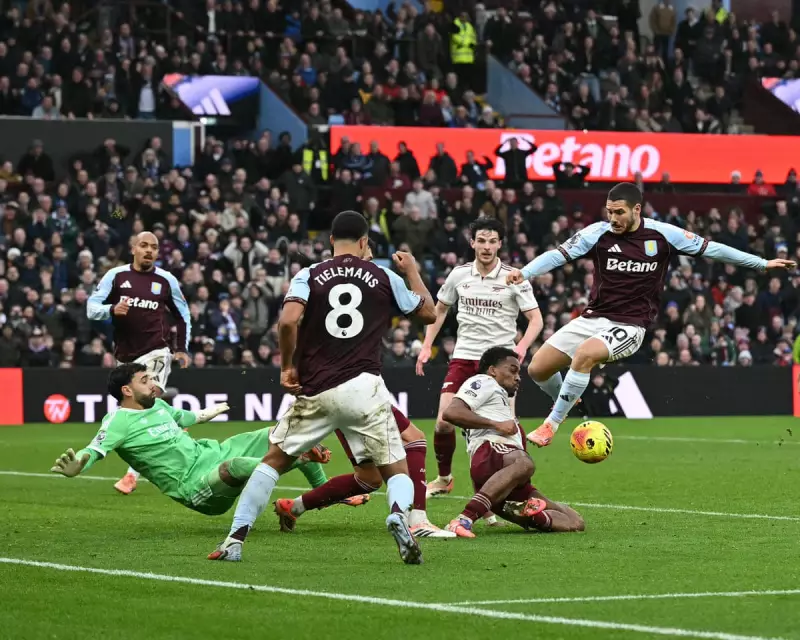
In a dramatic Premier League encounter last December, Aston Villa secured a late, scrambling victory over Arsenal in a match that epitomised football's unpredictable nature. While such moments often dominate headlines, there exists a parallel universe within the sport that celebrates not the sublime, but the ridiculous. This is the world of the 'kacktor' – a German term that has recently entered football's colourful lexicon, literally translating as 'sh!t goal'.
The Linguistic Invasion: German Words in Football
Football has always borrowed from European languages, but in recent years, German terms have particularly embedded themselves in the sport's vocabulary. Beyond the tactical sophistication implied by words like 'raumdeuter' (space investigator), there exists a playful adoption of terms describing football's more farcical elements. The 'bananenflanke' (banana-shaped cross) and 'gurkenspiel' (cucumber game, meaning a boring match) have found their way into conversations among dedicated fans.
This linguistic borrowing represents more than mere affectation. It reflects football's global nature and the shared experiences that transcend borders. Whether subtly deploying a French 'merci' at a coffee chain or describing a hangover recovery as 'the greatest remontada since Barcelona's 6-1 win over PSG', football fans worldwide understand this coded language of borrowed terms.

Celebrating Catastrophe: The 'Kacktor' Phenomenon
The term 'kacktor' gained prominence through a compilation by German broadcaster WDR, showcasing the worst goals of 2025. These aren't just ordinary misses; they're spectacular failures that achieve a kind of perverse artistry. From Borussia Dortmund II's Franz Roggow converting a wild own goal after a goalmouth scramble that defied belief, to Jan Himel of SG Oberense 2 inexplicably picking out the top corner of his own net under minimal pressure, these moments transcend mere error.
Patrick Bruns' towering header for Alemannia Salzbergen deserves particular mention – converting a rebound into his own goal mere seconds after opponents ASV Altenlingen had produced an equally spectacular miss. These aren't just mistakes; they're performances, each with its own tragicomic narrative.
English Contributions to the 'Worst' Canon
English football hasn't been immune to this phenomenon. Stockport County recently submitted their entry for future 'worst goals' compilations during their 3-2 victory over Rotherham. Goalkeeper Ben Hinchliffe launched what should have been a routine counter-attack, only for the ball to strike the bent-over backside of teammate Joe Olowu, ballooning back over Hinchliffe's head into an empty net. The helpless watching of both players transformed a professional match into pure slapstick.
While awards like the Puskás celebrate football's most beautiful goals, there exists an equally passionate appreciation for its most comical failures. As one commentator noted, 'You can keep your Puskás awards, your Big Website top 100s, Fifa's The Best ceremony. Football Daily is, from this day forward, only interested in The Worst.' This isn't cynicism, but rather an acknowledgment that football's joy comes in many forms, including the shared laughter at its most absurd moments.
Beyond Goals: Football's Broader Absurdities
The celebration of football's ridiculous side extends beyond goals. Recent weeks have seen Manchester City's Erling Haaland issuing a grovelling apology after his team's unexpected defeat in the Arctic circle fishing town of Bodø, prompting questions about whether top teams can 'do it on a wet, cold Tuesday night' in such unlikely locations.
Meanwhile, Jude Bellingham has found himself defending against accusations of being a 'thirsty playboy' who 'loves alcohol too much' – allegations he dismissed after celebrating a goal with a gesture mocking his critics. 'It feels like anyone now can get a camera, say what they want and the whole world just believes them with no evidence,' Bellingham noted, highlighting how football's narratives extend far beyond the pitch.

The Global Game's Shared Language
From German 'kacktors' to French loanwords, from Arctic circle upsets to accusations against English stars in Spain, football continues to develop a rich, shared vocabulary that transcends national boundaries. The sport's ability to generate both sublime skill and spectacular failure creates a common ground for fans worldwide, whether they're discussing a 'raumdeuter's' intelligent movement or laughing together at a goalkeeper's unfortunate encounter with a teammate's backside.
As we anticipate WDR's next end-of-year compilation of terrible goals, we can revel in the knowledge that football's appeal lies not just in its beauty, but in its capacity for glorious, shared absurdity – a quality perfectly captured by that most German of terms: schadenfreude.